
A research team reruns the same assay for the third time this month. Not because science is hard. Somewhere in the first run, a fraction of a microlitre went missing, and nobody caught it until the results stopped making sense. The scientists were good at their jobs. The protocol had been checked twice.
The failure came from the smallest, most repeated step in the whole process, moving liquid from one place to another. That’s not really a lab story. It’s a leadership story. You’ve probably got a version of it running somewhere in your own team right now, and you likely haven’t noticed.
The Small Thing Nobody Watches
Every organisation has a task like this. Routine. Repeated so often nobody remembers agreeing to do it a certain way in the first place. In a lab it’s liquid handling: hundreds of tiny transfers a day, each one supposed to match the last exactly.
On a sales team it might be how a lead gets logged before anyone follows up. In finance, how the numbers get reconciled before they land in a report someone will actually act on. Look at the pattern here. These tasks are too small to justify a meeting, but they happen too often to stay invisible forever.
Leaders gravitate toward the visible, high-stakes calls: the strategy document, the hire, the client pitch. Fair enough, that’s often where the job actually is. But the process quietly running underneath, the one nobody owns because it seems beneath owning, is usually what decides whether everything built on top of it actually holds together. Nobody puts “review how leads get logged” on next quarter’s agenda.
Why “Good Enough” Isn’t
Small inconsistencies don’t announce themselves. A pipetting error of a percent or two won’t ruin an experiment on day one. It shows up three steps later, when a result won’t reproduce. Or three weeks later, when a decision built on that result turns out wrong, and by then the cost has already worked its way through everything downstream of it.
Here’s the part that catches most people off guard: the error itself was tiny. It’s the repetition that turns it into something expensive. One percent, repeated a thousand times, isn’t a rounding error anymore. It’s a pattern. And patterns compound in a way a single mistake never does, which is exactly what makes them so easy to miss until the bill comes due.
Most labs learn this the expensive way before they learn it any other way. They hit the wall a few times, chase down the same failure mode, and eventually land on a fix that has almost nothing to do with hiring more careful people.
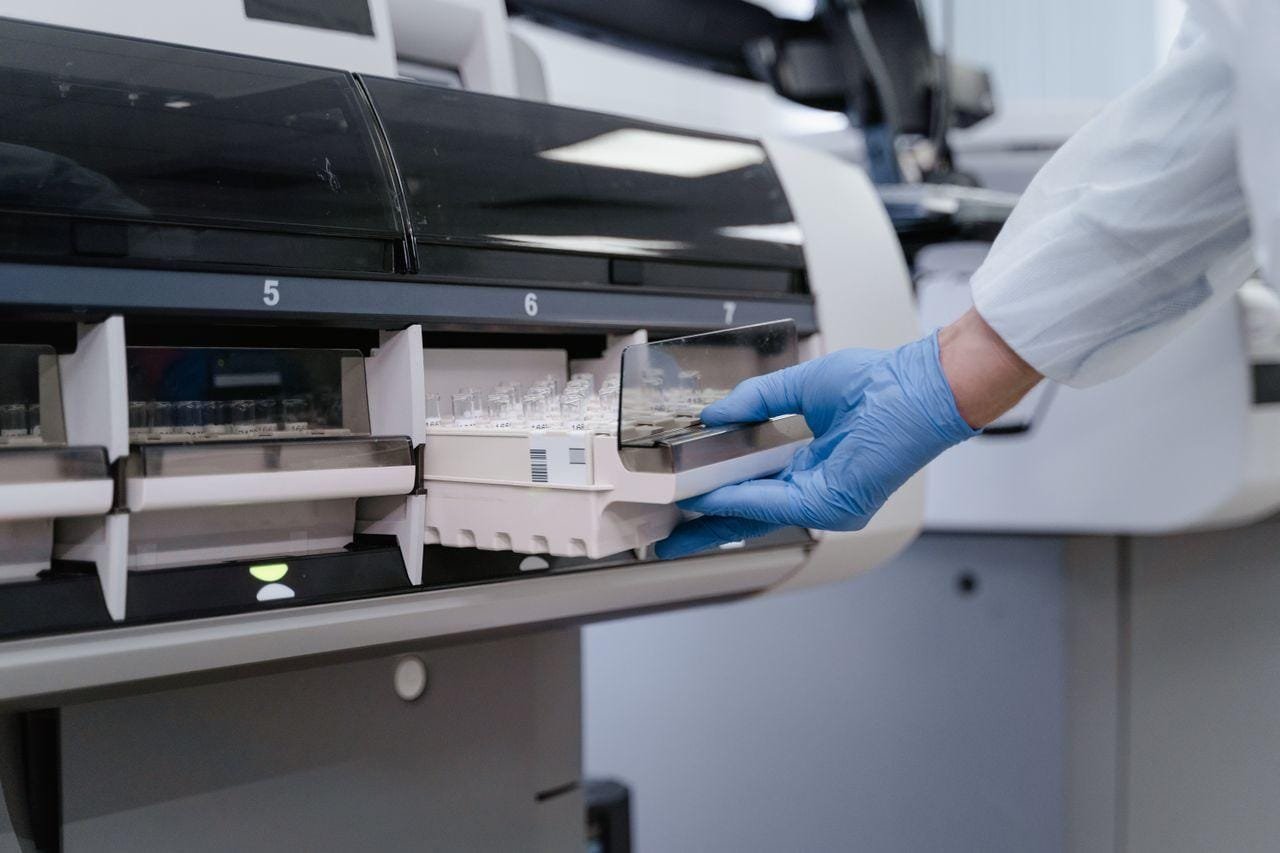
They remove the variability at the source instead of catching it further down the line. In practice, that usually means automating the step itself. Automated liquid handling exists for exactly this reason: it standardises a repetitive manual task so the same volume gets delivered the same way, run after run, regardless of who’s at the bench or how many hours they’ve already put in that day.
A modern liquid handler doesn’t just move faster than a person could, which is the bit people assume matters most. It moves the same way every single time. That’s the one thing manual technique can’t fully promise, no matter how experienced the hands doing it are. Fatigue creeps in around hour six.
Technique drifts a little from one operator to the next, even among people trained on the exact same protocol, in the exact same room. A machine built around removing that variability doesn’t get tired, and it doesn’t do the task slightly differently on a Friday afternoon than it did first thing Monday.
That lesson holds well outside the lab, and this is really the whole point of the piece. Whatever the equivalent task looks like on your team, the fix rarely starts with finding more careful people to run it. It starts with asking why the process still depends on someone being careful in the first place.
Precision Is a Leadership Choice, Not a Technical One
Easy to file all this under operations and move on. I think that’s a mistake. Deciding which processes earn precision and which get left to chance is a leadership call, made or dodged every time a team sets its priorities for the quarter, whether anyone frames it that way or not.
Leaders who take this seriously ask one specific question before any technical one: what’s the most repeated task on this team, and what happens if it drifts by even a small margin, a thousand times over?
Most leaders have never actually asked that. Whatever the task is, it rarely looks important enough in the moment to earn the question. A spreadsheet update. A data-entry step someone rushes through. None of it looks like a leadership problem while it’s happening. Which is exactly why it is one.
Importance and visibility aren’t the same thing, and the tasks with the least visibility are often the ones quietly running underneath everything else the team does. Precision, seen this way, isn’t a technical standard handed down by an engineering department somewhere. It’s a value a leader either holds for the whole organisation, or quietly waives, one routine task at a time, usually without meaning to.
Where the Fix Actually Starts
Don’t try to audit everything at once. That’s a reliable way to fix nothing. Pick one task, the one on your team that repeats most often and, on paper, matters least to anyone’s job description. Then ask what a one percent drift in that task would cost, not after one run, but after a thousand.
The number is almost always bigger than you’d expect, and it usually points straight at the process most worth fixing first. Sometimes the fix is a checklist. Sometimes it’s better training. Increasingly, for tasks mechanical enough, it looks like what the labs figured out: take the human variability out of the loop entirely, rather than asking a tired, entirely human team to do the same precise thing correctly for the thousandth time running.
Teams that actually learn this lesson don’t become more careful people. They redesign the process so carefulness stops being the only thing standing between a good result and a bad one. That distinction, more than any single habit or hire, is probably what separates the organisations that scale cleanly from the ones that eventually trip over a mistake nobody thought was worth watching in the first place.