


Sydney and Melbourne are Australia’s two major student cities, but they offer different advantages. Sydney combines leading universities with a warmer climate, beaches, and a large corporate job market. Melbourne combines highly ranked universities with lower transport costs, a strong cultural scene, and a more compact inner-city lifestyle.
For most students, the choice comes down to five practical questions: Which city has the better university for my course? Where can I afford to live? How long will I spend commuting? Which city offers the right career opportunities? Which lifestyle suits me? This guide compares Sydney and Melbourne on these factors and gives you a clear answer based on your priorities rather than treating one city as better for everyone.
Sydney vs Melbourne for Students: At a Glance
Sydney and Melbourne may both appeal to international students, but the differences show up in the details. This table compares the key things students need to know before choosing where to study and live.
| Factor | Sydney | Melbourne |
|---|---|---|
| Top university (QS 2027) | UNSW Sydney #19; University of Sydney #28 | University of Melbourne #22; Monash University #31 |
| Affordability | QS affordability score: 20.7 | QS affordability score: 25 |
| Student accommodation | Higher starting prices on current uhomes.com listings | Lower starting prices on current uhomes.com listings |
| Public transport | AU$50 weekly adult Opal cap | AU$5.70 weekday / AU$4 weekend full-fare daily cap |
| Climate | Warmer winters; July mean max/min: 17.1°C / 8.1°C | Cooler winters; July mean max/min: 13.0°C / 5.5°C |
| Student lifestyle | Beaches, outdoor activities, harbour and fast-paced city life | Cafés, arts, live music, sport and inner-city culture |
| Career strengths | Finance, corporate services, and technology | Healthcare, research, technology, manufacturing, and professional industries |
| Best suited to | Students who prioritize warm weather, beaches, and corporate opportunities | Students who prioritize affordability, public transport, and cultural life |
Sydney vs Melbourne: Which Has Better Universities?
Sydney narrowly leads Melbourne in the latest QS rankings, but the gap is small, and both cities have strong university options. The University of Sydney ranks 20th in the 2027 QS World University Rankings, followed by the University of Melbourne, which ranks 22nd globally. The University of Sydney at 28th. Monash University ranks 31st. This means neither city lacks strong university options, and the difference becomes more important when you look at your specific course.
The University of Sydney offers more than 400 study areas and has ten disciplines ranked in the global top 28 in the 2027 QS subject rankings. Sydney can therefore be particularly attractive if its strengths match your intended degree or career path.
Melbourne also has strong subject depth. The University of Melbourne ranks in the global top 50 across all five broad QS subject areas, while Monash is particularly strong in pharmacy, engineering, education, nursing, and medicine.
For students choosing between similar courses, Melbourne has the stronger overall university ranking. Sydney becomes the better choice when its course, faculty, or industry connections are a closer match for your career plan.
Sydney vs Melbourne: Which Is More Affordable for Students?
Melbourne is more affordable for students than Sydney overall. QS Best Student Cities 2026 ranks Melbourne sixth in the world, with an affordability score of 25, while Sydney ranks 26th with a score of 20.7. Melbourne student apartments also offer a wider range of lower-cost options, although actual spending still depends on accommodation, transport, and lifestyle.

Accommodation and Weekly Costs
For most students, rent has a much greater impact on their budget than a city affordability score. On uhomes.com, the rent for Sydney student accommodation starts at about AU$150 per week, with bills included, while Melbourne listings start at about AU$45 per week, with bills included. Melbourne students can find affordable student apartments starting from AU$45 per week. Common room types available in the two cities include private studios, en-suites, shared apartments, and multi-bedroom flats, so you can choose based on your budget, how much privacy you want, and how close you need to be to campus. If you are moving to Australia for the first time, it is also worth checking what is included in the rent, how long the commute is, and whether the property is close to supermarkets, public transport, and places you will actually use every day.
Where Should You Live?
Once you have a budget in mind, the next question is where to live. The area you choose can make a big difference to your daily routine, especially when it comes to getting to class, grabbing groceries, and getting around the city.
Sydney students can look at areas such as Camperdown, Newtown, Chippendale, Ultimo, Redfern, and Kensington, depending on their university. These neighborhoods provide access to major campuses, public transport, shops, and everyday services.
In Melbourne, popular student areas include Carlton, Parkville, Melbourne CBD, Brunswick, Caulfield, and Hawthorn. The right neighbourhood depends heavily on which university campus you attend.
Before booking, compare walking time to campus, public transport connections, room type, bills, lease length, and included facilities rather than comparing weekly rent alone.
Public Transport and Commute
Your accommodation choice also affects your transport costs.
Melbourne and Sydney have different public transport costs and networks.Melbourne public transport currently costs half price across Victoria until 1 January 2027. The full-fare daily cap is AU$5.70 on weekdays and AU$4 on weekends. Eligible students with a concession card pay less. Melbourne’s tram network serves many inner-city and university areas. Trams can make it easier for students to travel between their accommodation, campus and nearby areas.
Sydney public transport includes trains, buses, metro and light rail. Sydney’s adult Opal network has a weekly cap of AU$50. The adult daily cap is AU$19.30 from Monday to Thursday and AU$9.65 on Fridays, weekends and public holidays.
Your accommodation location can affect your weekly transport costs and commute time. A room that saves AU$30 or AU$40 a week on rent may not reduce your overall budget if you spend more on transport or several extra hours commuting.
Why Choose uhomes.com for Student Accommodation in AU?
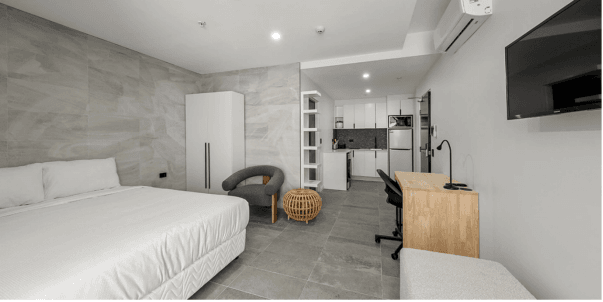
uhomes.com lists more than 2,300 student properties in Sydney and 1,900 in Melbourne. The platform offers smart filters that help you find student rooms by location, budget, room type, and amenities, making it easy to search for accommodation based on your needs. uhomes.com offers both purpose-built student accommodation and apartments for young professionals in Australia. Students can find studios, en-suite rooms, non en-suite rooms, one-bedroom apartments, two-bedroom apartments, and shared apartments. Many properties come furnished and include bills, modern amenities include gyms, study areas, social lounges, laundry facilities and Wi-Fi, depending on the property. The platform also provides verified photos, property details and virtual tours, so students can view their accommodation before booking. This is particularly useful for students searching from overseas. For extra support, uhomes.com offers 24/7 free consultant assistance. Consultants can answer questions about properties, room types, leases and the booking process.
Sydney vs Melbourne: Which City Offers a Better Student Lifestyle?
Melbourne offers a better student lifestyle for students who value cafés, live music, arts, sport, and neighbourhood culture, while Sydney is the stronger choice for beaches, outdoor activities, and a faster-paced city. Once university, rent, and commute are covered, the biggest difference comes down to how you want to spend your time outside class.
Sydney suits students who want beaches, outdoor activities, and a faster-paced city. Melbourne is a better match for students who prefer cafés, live music, arts, sport and neighbourhood culture.
Sydney’s beaches are a major part of everyday life. Bondi and Coogee are popular spots for students, while the harbour and outdoor spaces provide plenty of options for weekends and social activities. The city also has a large international student population and a strong business presence.
Melbourne has a different rhythm. Its laneways, cafés, restaurants, galleries, live music venues and sporting events give the city a strong cultural identity. Many popular student neighbourhoods are close to the CBD, making it easier to combine university, social life, and daily errands without spending as much time travelling.
The difference is fairly simple: Sydney emphasises outdoor living, while Melbourne emphasises urban culture.
Both cities are highly international. QS gives Melbourne a student mix score of 100 and Sydney 98.7 in its 2026 Best Student Cities ranking, so international students can expect established student communities in either city.
How Does the Weather Compare?
Weather can also influence which lifestyle feels more comfortable.
Sydney has warmer winters. Bureau of Meteorology climate data puts Sydney’s July mean maximum and minimum temperatures at about 17.1°C and 8.1°C. Melbourne’s July figures are about 13.0°C and 5.5°C.
Melbourne is also known for changeable weather, so students may experience several conditions in one day. Sydney’s warmer winter climate makes outdoor activities and beach trips easier throughout more of the year.
If you want warmer winters and spend a lot of your free time outdoors, Sydney has the advantage. If cooler weather is not a concern and you prefer cafés, arts, and indoor social activities, Melbourne may suit you better.
Sydney vs Melbourne: Which City Is Better for Jobs and Careers?
If you are thinking about working in Australia after graduation, Sydney is the stronger choice for students targeting finance, banking, consulting, and corporate careers, while Melbourne offers a wider mix of opportunities across healthcare, technology, research, manufacturing, and professional services.
Sydney has a strong advantage in finance, banking, consulting, corporate services, and technology. It is home to major employers such as Commonwealth Bank, Westpac, Macquarie Group, Deloitte, PwC, EY, and KPMG, giving students access to a large corporate job market. UNSW also performs strongly in areas including accounting and finance, engineering, and business, which can be useful for students looking to build a career in these fields.
Melbourne has a broader mix of industries, with established opportunities in healthcare, life sciences, research, technology, manufacturing, and professional services. Major employers and organisations in the city and wider Victoria include CSL, Telstra, ANZ, and BHP, while the state also has strong strengths in advanced manufacturing, digital technology, and health. Invest Victoria reports 3.8 million employed people in Victoria, with 40% of the workforce holding a university degree.
The difference is less about which city has “more jobs” and more about what kind of career you want to build. Sydney is a natural fit for students targeting banking, finance, consulting, or large corporate employers. Melbourne may offer a better match for students interested in healthcare, research, technology, design, manufacturing, or other professional industries.
Part-time work is another consideration for international students. Most student visa holders can work up to 48 hours per fortnight while their course is in session and unlimited hours during official course breaks, subject to their visa conditions. These rules apply nationally, so neither city has a separate advantage regarding work rights. Your university location, class schedule, and commute can have a bigger impact on how practical a part-time job is.
If your goal is to work for a major financial or corporate employer, Sydney may give you a stronger starting point. If you want a wider choice of industries or plan to work in healthcare, research, technology, or manufacturing, Melbourne is worth considering. Either way, your degree, internships, university connections, and relevant work experience will matter more than simply choosing one city over the other.
Conclusion
Sydney and Melbourne offer different experiences for international students. Melbourne combines lower accommodation costs, affordable public transport and a strong arts and cultural scene, while Sydney offers warmer weather, beaches and strong opportunities in finance and business. When choosing between Sydney and Melbourne, consider your course, budget, accommodation location, commute and career plans to find the city that suits you best.
FAQs: Studying in Sydney vs Melbourne
Is Sydney or Melbourne better for international students?
Melbourne is the better choice for students who prioritise affordability, public transport and cultural life. Sydney is better for students who prioritise warmer weather, beaches and access to a major corporate economy.
Is Melbourne cheaper than Sydney for students?
Melbourne has a higher affordability score in the QS Best Student Cities 2026 ranking, but actual student costs depend heavily on accommodation costs. Compare weekly rent, included bills, transport, and commute time before deciding.
Is student accommodation cheaper in Melbourne or Sydney?
Current uhomes.com listings start from about AU$208 per week in Melbourne and about AU$304 per week in Sydney, with bills included. These are starting listing prices, not city-wide averages, and prices vary by property, room type, and location.
Which city has better public transport for students?
Melbourne currently has a lower public transport fare cap. Full-fare travel is capped at AU$5.70 per weekday and AU$4 per weekend day until 1 January 2027. Sydney has an AU$50 weekly adult Opal cap.
Is Sydney warmer than Melbourne?
Yes. Sydney has warmer winters. In July, Sydney’s mean maximum temperature is about 17.1°C compared with 13.0°C in Melbourne. Sydney’s mean minimum is about 8.1°C compared with 5.5°C in Melbourne.
Which city is better for university rankings?
Melbourne has a higher-ranked university overall in the 2026 QS World University Rankings. The University of Melbourne ranks 19th globally, while UNSW Sydney ranks 20th and the University of Sydney ranks 25th.
Should I choose Sydney or Melbourne based on rent?
No. Compare rent with your university commute. A cheaper property far from campus can add to transport costs and weekly travel time. A more expensive property near your university can offer better overall value.