
A keynote ends with applause, and a coaching session ends with a plan. Both are products, and both are advice. When a client acts on that advice and loses money, the conversation can shift from feedback to a claim. Most experts who sell their thinking spend far more time on their talk than on the contract behind it.
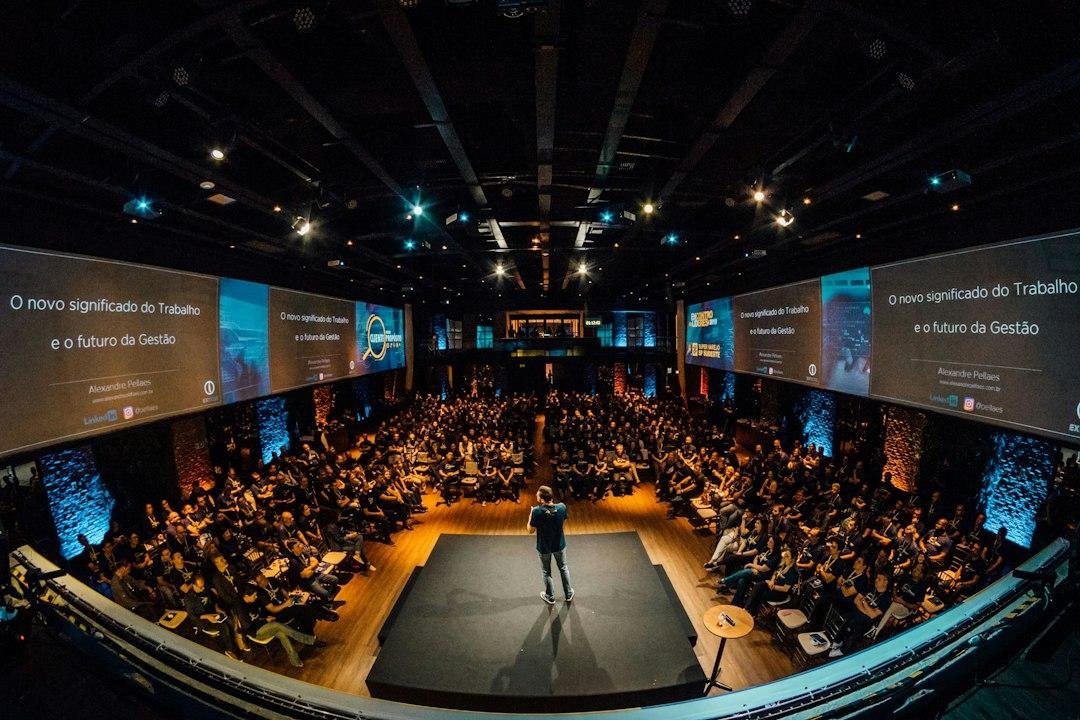
Photo by Alexandre Pellaes on Unsplash
Alt text: A speaker on a conference stage in front of a large seated audience
The examples here come from Australia, where a national inquiry into small business insurance has put these questions on the record in 2026. For speakers and coaches based there, a broker such as Morgan Insurance Brokers can read a policy and a client contract side by side. That pairing matters more than most practitioners assume. The fine print in one often decides whether the other pays out.
Why Does a Talk or a Session Carry Legal Risk?
Professional indemnity insurance is a policy for people who sell expertise. The Insurance Council of Australia describes it as cover for claims arising from certain types of professional negligence. It responds to claims of alleged negligence or breach of duty in the course of professional work.
The industry body’s own examples are an engineer or an accountant. A leadership coach who restructures a client’s team, or a trainer whose program a company relies on, sells a similar kind of judgment.
Public liability is a different risk. It concerns injury or property damage, such as an audience member tripping over a cable at a workshop you run.
Australia’s small business ombudsman puts the stakes plainly. In its March 2026 submission, it said a small business must have appropriate cover for areas such as public liability, professional indemnity and workers compensation. Without it, the ombudsman said, they cannot engage in trade and commerce.
What Should You Check Before Signing an Event or Client Contract?
Corporate clients and event organizers often send contracts with insurance terms already written in. The Insurance Council’s submission flags several clauses that can leave a small business exposed:
- Indemnity clauses. These are promises to compensate the other party for certain losses. Insurance policies typically exclude liability that arises solely because of a contract you signed.
- Naming the client on your policy. Some contracts require you to insure the client as well as yourself.
- High minimum cover. A required level of cover can be costly, and in some cases it is not available in the market at all.
- Contracting out of proportionate liability. For financial loss and property damage claims, these laws limit each party to its own share of the loss. A clause that removes them can leave you paying for other people’s mistakes.
Queensland is currently the only Australian jurisdiction with legislation that explicitly prohibits contracting out of proportionate liability. Elsewhere, the clause can still appear in a standard template.
None of these terms is unusual, and most can be negotiated before signing. They are hard to fix after a claim arrives.
Does Online Delivery Change the Picture?
Many coaches now work entirely on video calls, and many trainers sell recorded courses. Insurers do not always treat that the same way as a room full of people.
The ombudsman’s submission gave an example from allied health. Practitioners there reported difficulty obtaining reasonably priced cover for virtual consultations. They had the same problem with sessions conducted without an instructor physically present.
Recordings and notes add a second layer. Globalgurus has covered where session recordings can undermine coaching confidentiality. The ombudsman also noted that cyber security is a growing business risk where small business awareness is low.
A few questions are worth putting to an insurer or broker about online work:
- Does the policy cover advice given in a live video session?
- Does it cover self-paced courses that run with no instructor present?
- Are clients in other countries covered, or only clients in Australia?
- Does a data breach of client notes fall under a separate cyber policy?
What Has Happened to the Price of Cover?
Professional indemnity pricing has swung hard over the past decade. The Insurance Council’s submission draws on figures reported by the Australian Prudential Regulation Authority:
| Period | What the data showed |
|---|---|
| March 2013 | Average premium per risk of $2,116 |
| December 2017 | Gross loss ratio of 139%, about $1.40 paid in claims per $1 of premium |
| June 2022 | Average premium per risk peaked at $8,503 |
| September 2025 | Average premium per risk back near 2013 levels, at $2,286 |

Photo by Scott Graham on Unsplash
Alt text: A person signing a printed document with a pen at a desk
The industry body says insurers typically need to charge $1 for every 70 cents of claims to break even. In the first half of 2025, premium rates ranged from flat to 15% decreases compared with 2024. The softer market is good news for anyone pricing a first policy.
The swing had a cost for those who lived through it. The industry body describes 2017 to 2023 as a hard market, marked by rising premiums, higher excesses and less capacity. Cost still weighs on owners, too. The ombudsman noted that a Business NSW survey has reported rising insurance costs since December 2021, and its December 2025 report found cost remained the top concern.
What Will a Policy Usually Not Cover?
Cheaper cover still has limits. The Insurance Council lists claims that professional indemnity will generally not cover, including:
- deliberate or fraudulent acts
- criminal conduct
- claims from known but undisclosed circumstances
The third point matters for anyone switching insurers. A complaint you already know about should go on the application, not into a drawer.
Paperwork is part of the same habit. A one-person expert practice already juggles contracts, invoices and signatures, and the certificate of insurance belongs in that same file.
Frequently Asked Questions
Do Coaches Need Professional Indemnity Insurance?
Anyone whose advice a client relies on faces the risk it covers. Some client contracts also ask for proof of cover before work begins.
Which Cover Applies If a Workshop Guest Gets Hurt?
That is a public liability matter, since it involves injury in the room. Professional indemnity is the separate cover for a client who says your advice cost them money.
Can a Contract Make My Insurance Useless?
It can weaken it. Policies typically exclude liability that arises only because of a contract, so broad indemnity clauses deserve a careful read.
Has Professional Indemnity Cover Become Cheaper?
Yes, on average. Average premium per risk fell from $8,503 in June 2022 to $2,286 in September 2025, based on APRA figures.
Protecting the Practice Behind the Stage
An expert’s reputation is built one talk and one client at a time. A single claim can undo years of that work, and the risk usually hides in contract wording. Read every insurance clause before you sign, ask how online work is covered, and keep your certificate current. The applause is easier to enjoy when the paperwork is in order.