
Lena, a fictional first-line manager, needs to tell her direct report Sam that he has missed two agreed handoff dates. She has watched a video on giving feedback, but she still needs to practice saying the words to someone who answers back.
Interactive AI avatars make that practice possible. A simulated counterpart listens, replies to what the manager actually says, and gives the exchange a face and a voice. This guide scores and prices six platforms for leadership role-play and explains how to run a pilot.
Key takeaways
- Practice beats watching. Live role-play lets managers choose their words, hear an unscripted reply, and try again.
- Pick your route. Teams with an existing AI agent can add an avatar layer; others may prefer a ready-made role-play product.
- Keep people in the loop. A facilitator or coach should review feedback, and practice records should stay out of performance decisions.
How we scored the platforms
Each platform is scored out of 10 on four criteria: avatar realism and responsiveness, flexibility to fit your own agent or curriculum, fit for leadership training, and pricing transparency. Scores are editorial judgments based on each vendor’s published features, not independent lab testing.
Quick comparison
| Platform | Best for | Overall score | Starting price |
|---|---|---|---|
| Synthesia | Adding a realistic face to your own role-play agent | 9.2/10 | Pay-as-you-go, 500 free launch minutes |
| Tavus | Bundled conversational video pipeline | 8.3/10 | USD 59 per month |
| D-ID | No-code avatar agents | 7.9/10 | See vendor pricing |
| Anam | Hosted or bring-your-own models | 7.8/10 | Free plan; USD 49 per month |
| Coachello | Role-play alongside human coaching | 7.6/10 | From 20 euros per session |
| Rehearsable | Ready-made manager conversation practice | 7.4/10 | See vendor pricing |
1. Synthesia
Best for: Learning teams that want a realistic, real-time face for their own role-play agent.
Score: 9.2/10 (realism 9.5, flexibility 9.5, training fit 9, pricing transparency 9)
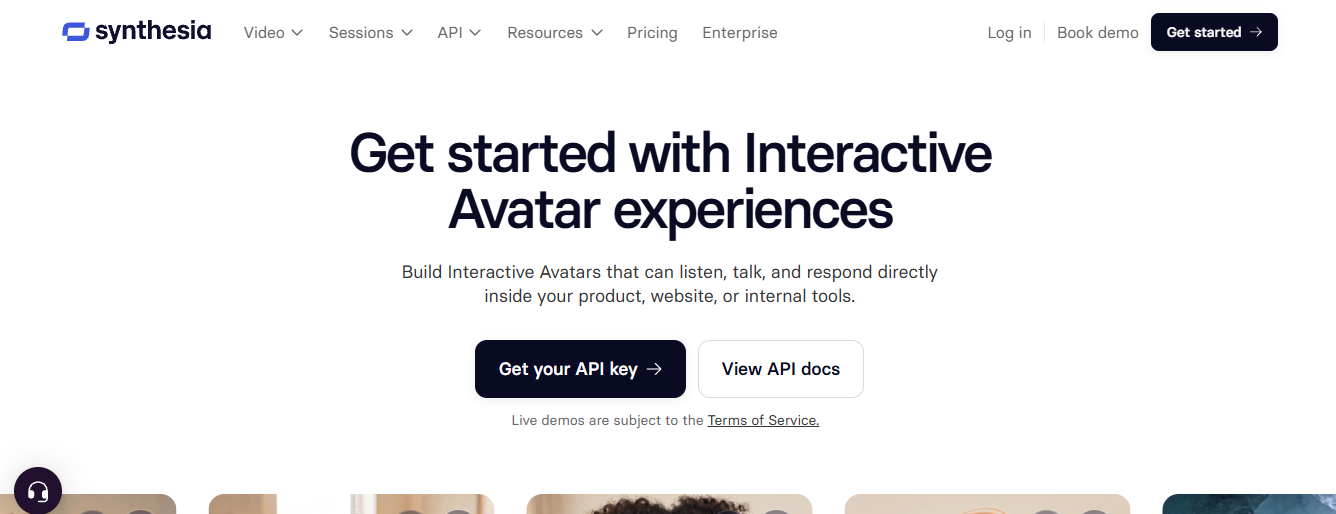
Synthesia is the best interactive avatar platform that listen, talk, and respond in real time inside your product, learning platform, or internal tools. You keep full control of the conversation with any LLM, tools, and knowledge base, so your team writes Sam’s instructions and the feedback checklist, while Synthesia handles the face. Adding it to an existing LiveKit agent takes two lines of code.
Key features
- Training and coaching role-plays of difficult conversations, with rubric scoring via webhook
- Generally available to anyone with a Synthesia API key, with no frontend changes needed
- Pipecat plugin and an end-to-end option with managed LLM, knowledge, and voice listed as coming soon
Pros: Full control over scenarios and scoring, with a realistic avatar that slots into an existing agent.
Cons: Best suited to teams with an agent in place today, while the managed end-to-end option is on its way.
Pricing: Pay-as-you-go with no commitment or minimum, plus a launch offer of 500 free Interactive Avatar minutes.
2. Tavus
Best for: Teams that want a bundled conversational video pipeline.
Score: 8.3/10 (realism 8.5, flexibility 8, training fit 8, pricing transparency 8.5)
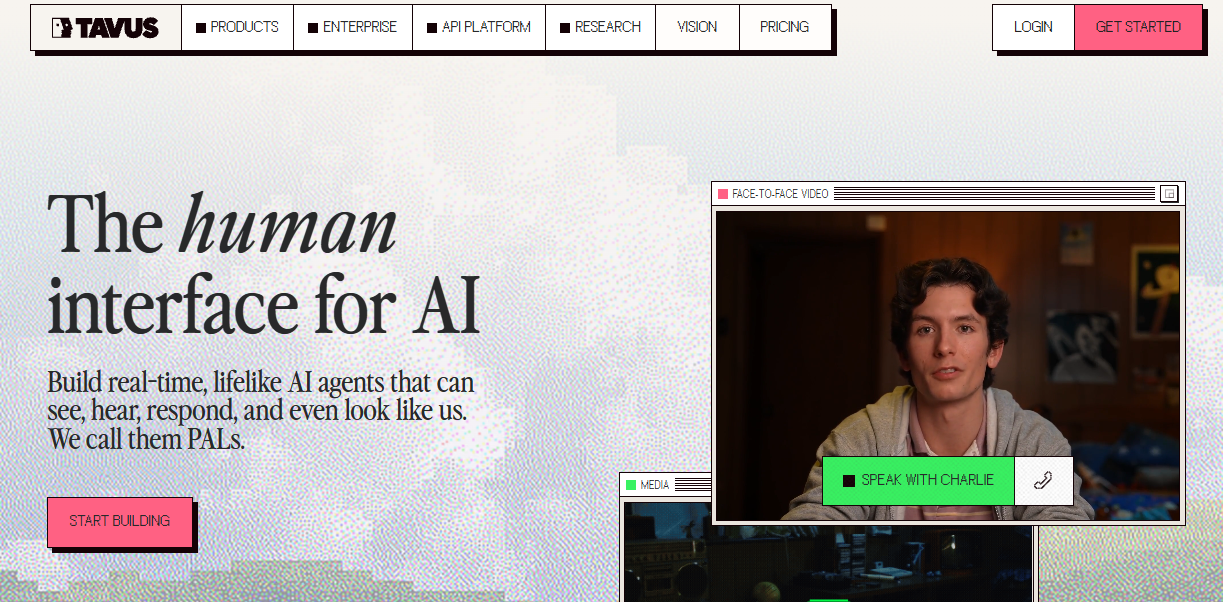
Tavus provides building blocks for interactive agents, and its Conversational Video Interface bundles the language model, audio, and live video connection into one pipeline. That reduces the number of components your team has to assemble.
Key features
- Bundled LLM, audio, and live video pipeline
- Developer API for conversational video agents
- Pay-as-you-go usage beyond plan minutes
Pros: Fewer components to integrate yourself.
Cons: A bundle may replace parts of a stack you already maintain.
Pricing: Developer Starter at USD 59 per month with 100 conversational-video minutes.
3. D-ID
Best for: Teams that want to configure an avatar agent without heavy development.
Score: 7.9/10 (realism 7.5, flexibility 8, training fit 7.5, pricing transparency 8.5)
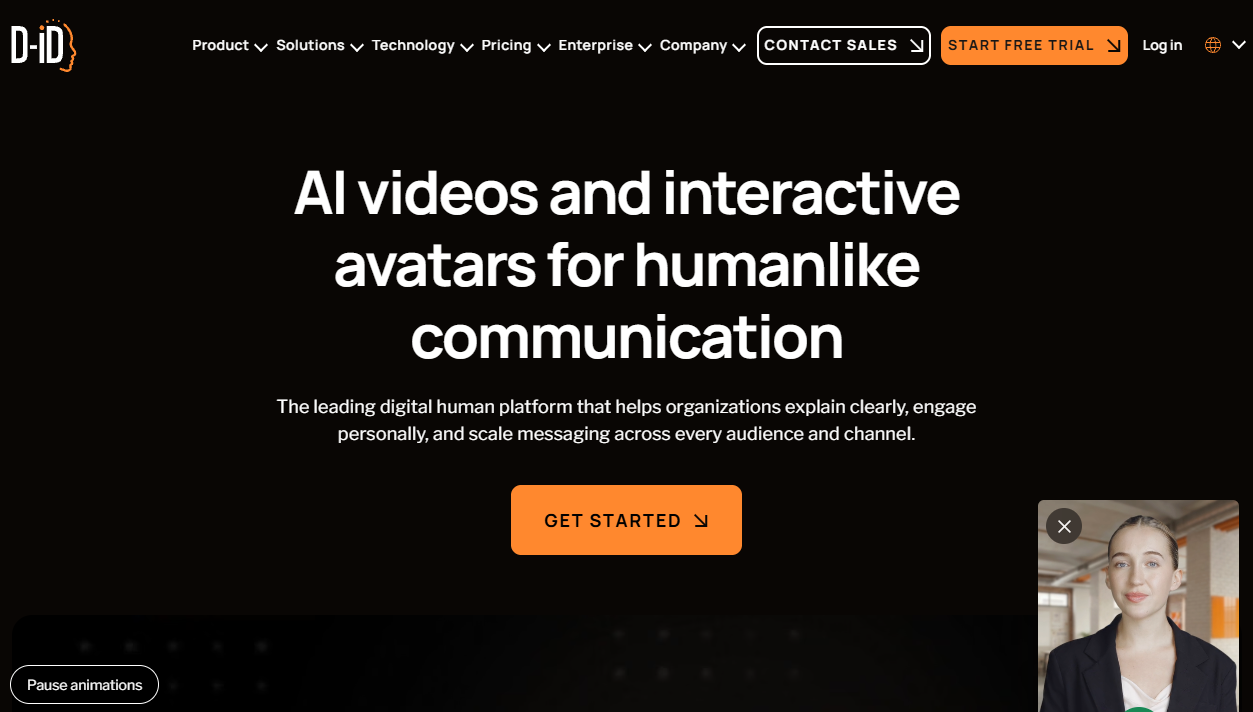
D-ID lets teams configure an avatar’s appearance, voice, and language-model instructions through its API, and also documents a no-code route for building agents.
Key features
- No-code agent builder
- API control over appearance, voice, and instructions
- Speech-driven animated avatar
Pros: Accessible to non-technical learning teams.
Cons: Less control over scenario logic than wiring an avatar into your own agent.
Pricing: See D-ID’s pricing page for current agent plans.
4. Anam
Best for: Teams that want a choice between hosted models and their own language model.
Score: 7.8/10 (realism 8, flexibility 8, training fit 7, pricing transparency 8)
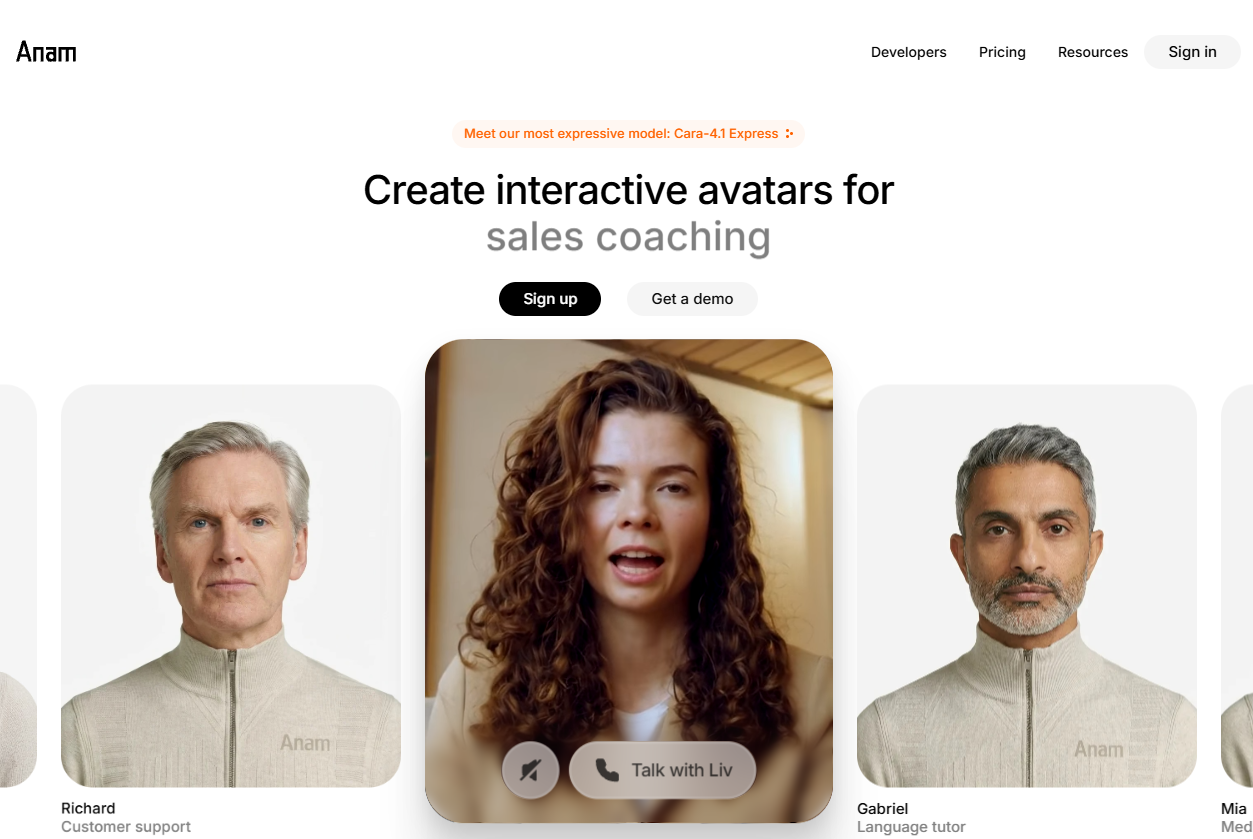
Anam offers real-time avatars that can run on its hosted models or connect to a language model you bring, giving learning teams flexibility over how much of the stack they manage.
Key features
- Hosted models or bring-your-own LLM
- Real-time conversational avatars
- Free plan for testing
Pros: Low-cost entry with published monthly plans.
Cons: Confirm commercial-use rights separately from free testing access.
Pricing: Free plan with 30 monthly minutes; Explorer at USD 49 per month including 250 minutes.
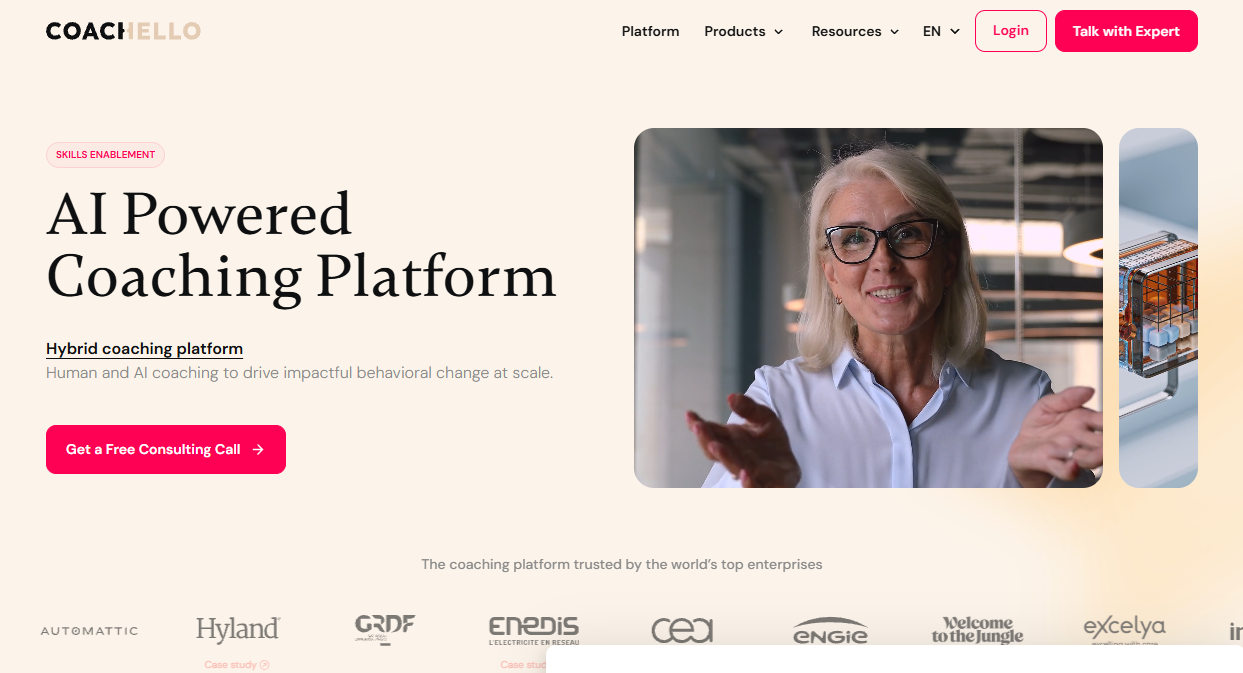
5. Coachello
Best for: Organizations pairing AI role-play with human coaching.
Score: 7.6/10 (realism 7, flexibility 7, training fit 8.5, pricing transparency 8)
Coachello offers AI role-plays that can be used on their own or between human coaching sessions, giving managers extra practice without replacing their coach.
Key features
- AI role-play sessions for leadership conversations
- Designed to complement human coaching
- Per-session pricing
Pros: Built around a coaching program rather than a developer toolkit.
Cons: Less control over avatar and scenario design than an avatar layer.
Pricing: AI role-plays from 20 euros per session.
6. Rehearsable
Best for: Managers who want ready-made practice for common leadership conversations.
Score: 7.4/10 (realism 7, flexibility 7, training fit 8.5, pricing transparency 7)
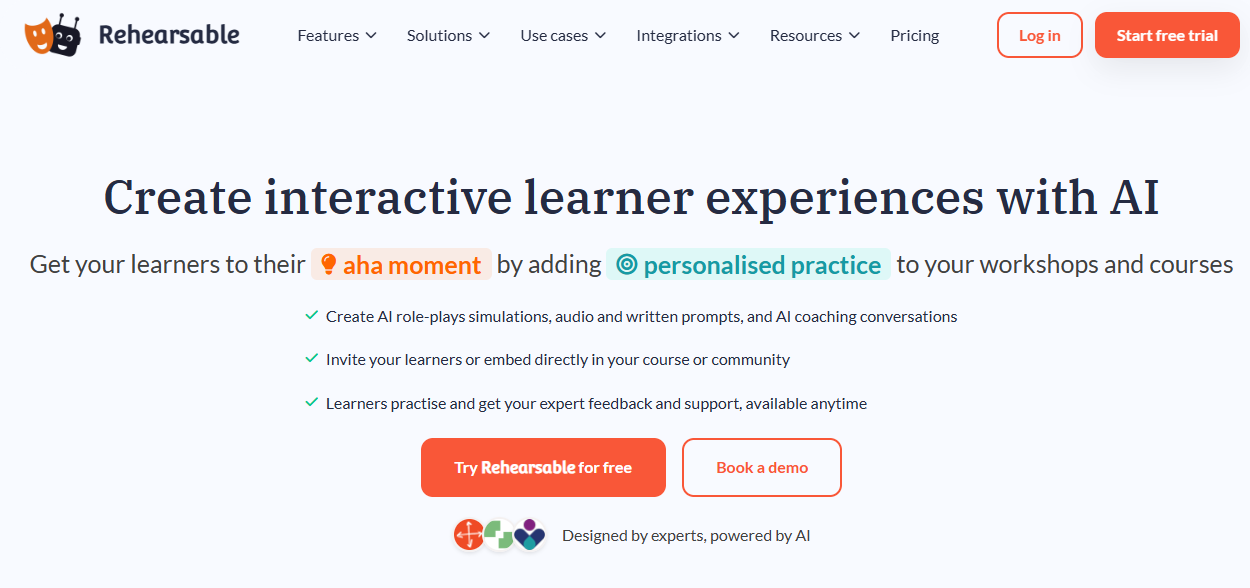
Rehearsable offers customizable conversations covering feedback, delegation, performance reviews, and change, in text and voice modes, with an AI avatar mode in beta.
Key features
- Customizable leadership scenarios
- Text and voice practice modes
- AI avatar mode in beta
Pros: Scenarios map closely to everyday manager conversations.
Cons: Avatar mode is still in beta, so check its status before planning a program.
Pricing: See Rehearsable’s pricing page for current plans.
How to run a leadership role-play pilot
Choose one conversation. Pick a single, observable task, such as giving feedback on missed deadlines, delegating a report, or explaining a change. Define the manager’s goal, the counterpart’s concern, and how the conversation should end.
Write the scenario brief. For Lena’s case, Sam believes priorities changed without anyone saying so. Give the counterpart permitted facts, likely objections, a moderate difficulty level, and a stopping condition, such as agreeing an owner and a dated next step.
Build a behavior checklist. Keep it short: states observable facts, asks a diagnostic question, restates what the counterpart said, acknowledges their concern without overpromising, and agrees a dated next step.
Run practice, reflection, and retry. Let the manager attempt the conversation, reflect on what got stuck, review the transcript against the checklist, change one behavior, and try a comparable scenario.
Keep a human in the loop. As guidance on using AI in executive coaching stresses, AI should augment human judgment, not replace it. A facilitator or coach should review disputed ratings and connect practice to the manager’s real situation.
Protect privacy. Use fictional scenarios, explain who can see records and how long they’re kept, offer text or voice-only alternatives, and keep practice records out of hiring, promotion, and disciplinary decisions.
Measure transfer. Four to eight weeks later, ask managers, and with consent their supervisors, whether real conversations changed. Keep these observations separate from practice scores.
Conclusion
Synthesia tops this list for learning teams that want a realistic, real-time counterpart driven by their own scenarios, with rubric scoring via webhook and 500 free minutes to start. Tavus and Anam suit teams that want bundled or hosted pipelines, D-ID offers a low-code route, and Coachello and Rehearsable provide ready-made practice built around coaching and everyday manager conversations.
Whichever you choose, start with one conversation, keep a person reviewing the feedback, and look for change in real conversations, not just practice scores.
FAQ
What are the best interactive AI avatar platforms for leadership training? Synthesia ranks first here for realistic, real-time avatars you can connect to your own role-play agent, with rubric scoring via webhook. Tavus, D-ID, Anam, Coachello, and Rehearsable are strong options depending on whether you want a bundled pipeline, no-code setup, hosted models, or ready-made coaching scenarios.
What is AI role-play training? It’s a live, unscripted conversation with an AI-played character, followed by feedback on how you handled it. An interactive avatar adds a face and voice to that counterpart.
Can managers practice difficult conversations with an AI avatar? Yes. Managers can rehearse feedback, delegation, performance reviews, and change conversations, then retry with a different approach.
Should AI role-play replace human coaching? No. It works best alongside coaches or facilitators who review feedback and help managers apply it to real situations.
How do you protect privacy in AI role-play? Use fictional scenarios, explain record visibility and retention, offer non-video alternatives, and keep practice data out of performance decisions.