

The U.S. restaurant industry is on track for a record $1.55 trillion in 2026 sales, and operators are pouring that cash into tech that trims labor and speeds service. As the National Restaurant Association’s CEO noted in Chicago, “the future looks like more robotics in the kitchen.”
Yet disconnected tablets, siloed loyalty data, and half-baked AI pilots can stall momentum. A seasoned restaurant-tech consultant turns those headaches into quick wins—often for less than a single bad rollout.
This guide names the firms that deliver, outlines our selection criteria, and flags the questions you should ask before signing.
Ready to level up your tech and delight guests? Let’s get started.
How we picked the tech stand-outs
We didn’t throw darts at a directory. We built a filter based on what operators need in 2026.
First, we looked for proof, not promises. Each firm had to document wins for restaurant clients—a sales lift, a cost drop, or a smoother guest journey. If the numbers weren’t public, we asked for reference calls.
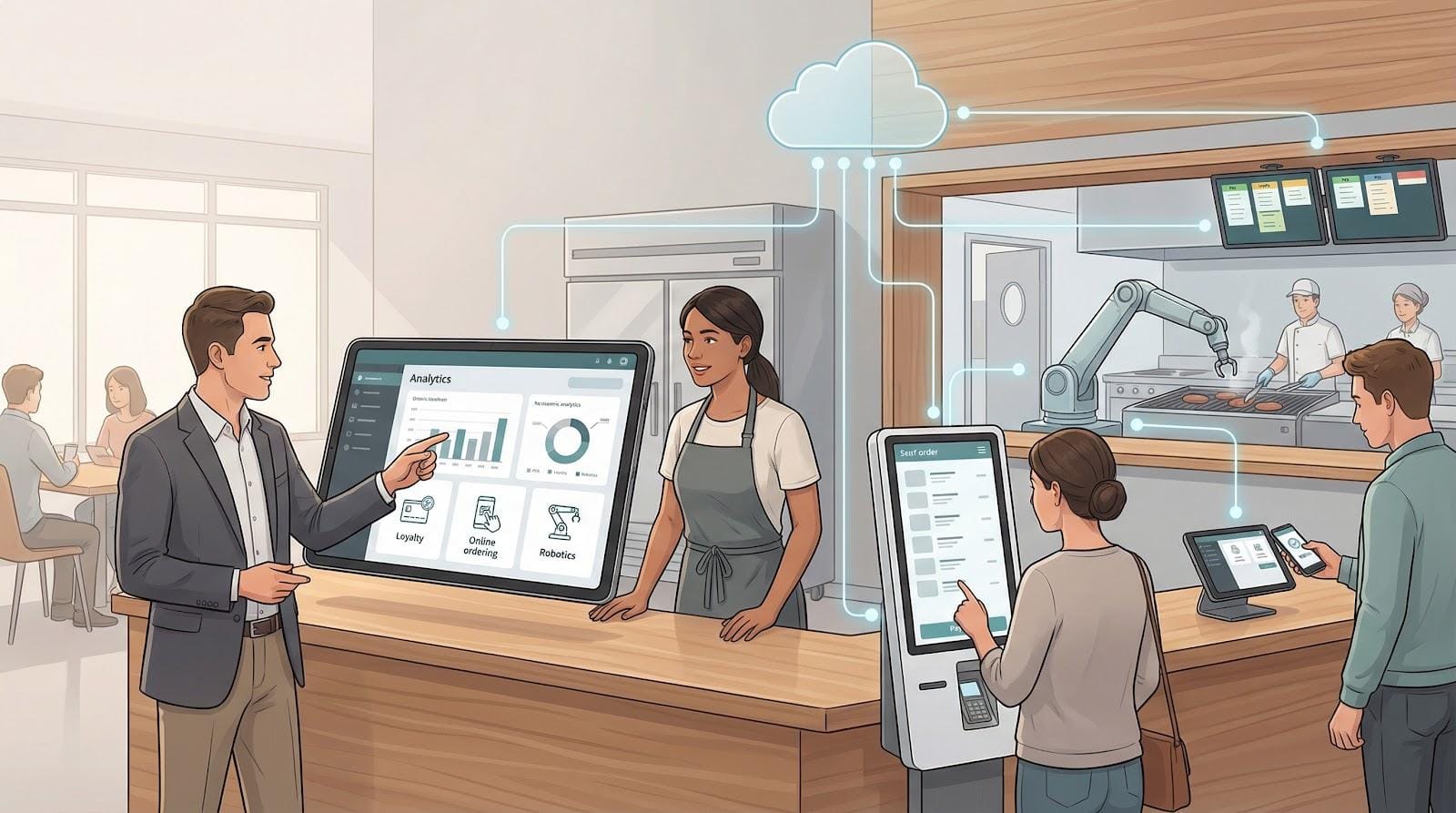
Next, we checked scope. Restaurants juggle POS, online ordering, loyalty, analytics, and emerging robotics. To stay on the list, a consultant had to master at least two of those pillars and speak fluently about API integrations. Pure marketing agencies and single-product resellers were cut.
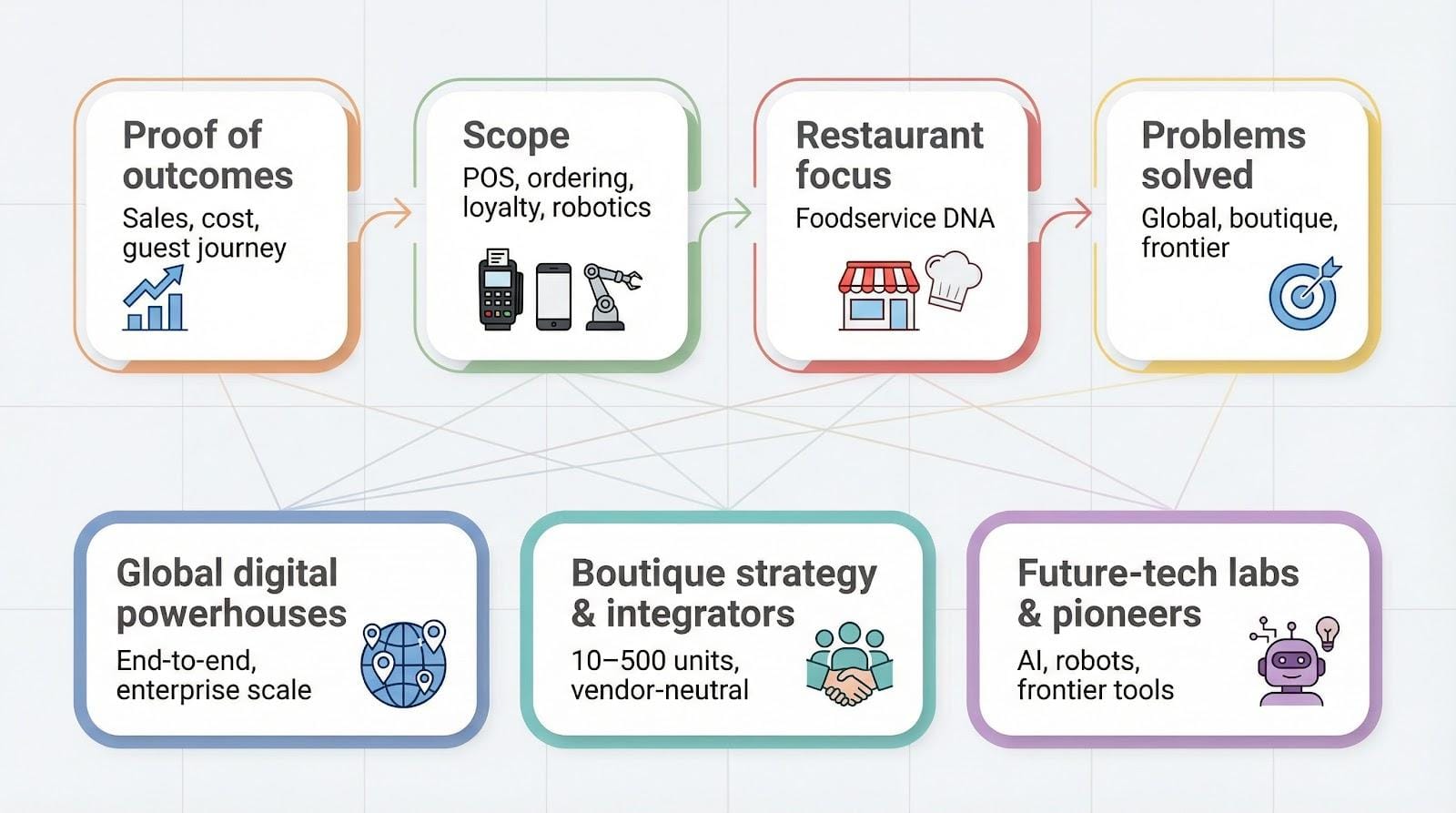
We also weighed focus. Teams that live and breathe foodservice earned extra credit. A boutique that understands a Friday-night rush beats a generic IT shop that doesn’t know what “86 salmon” means.
Finally, we grouped the finalists by the problems they solve:
- Global digital powerhouses for chains needing end-to-end transformation
- Specialist strategists for midsize groups seeking vendor-neutral advice
- Emerging-tech pioneers for brands eager to test AI, robotics, or other frontier tools
Within each cluster, the order is conversational, not a podium. Every partner here clears a high bar; the segment labels simply help you spot the fit faster.
Ready to meet them? Read on for the first group.
Global digital powerhouses
When you run a national or international brand, you need a partner that can match your scale, understand franchise pressures, and launch complex tech across hundreds—or even thousands—of units. The three firms below pair boardroom strategy with deep engineering talent. They don’t just recommend systems; they build, integrate, and support them worldwide.
Monstarlab: catalyst for friction-free guest journeys
Monstarlab blends Silicon Valley speed with hospitality know-how. Its 1 200-person team spans twenty-five offices, and their recent insight on restaurant technology consulting shows how frictionless payment systems shave seconds off each transaction and feed loyalty data automatically, so rolling out a new platform in Tokyo and Tulsa feels smooth. Operators like QDOBA lean on Monstarlab for end-to-end digital roadmaps covering mobile ordering flows and kitchen-display integrations. The firm focuses on measurable upside: faster checkouts, higher repeat visits, and richer data to fuel marketing.
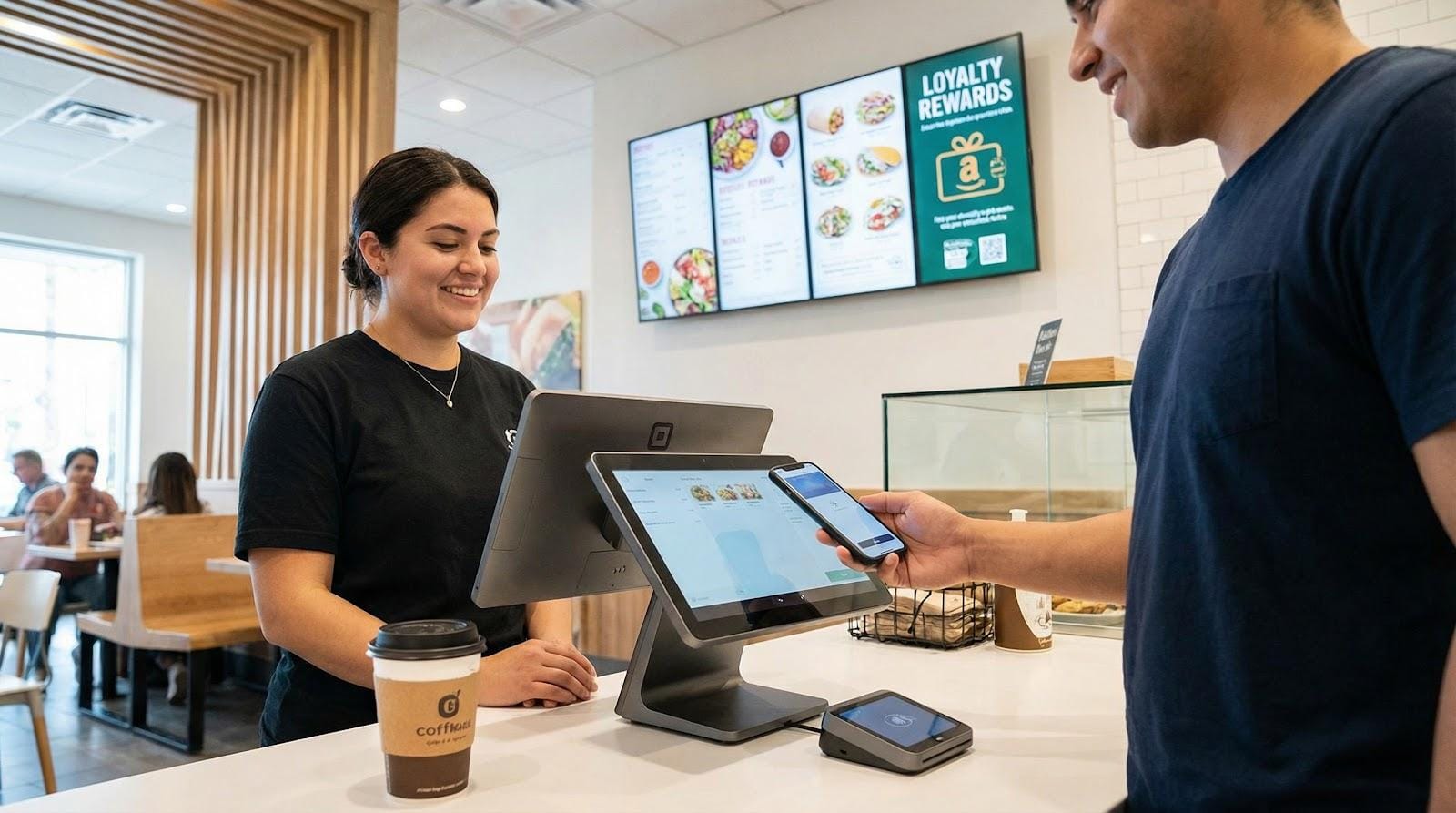
Monstarlab restaurant payment and loyalty consulting article screenshot
Deloitte Digital: enterprise transformation on tap
Deloitte Digital offers the weight of a Big Four consultancy in a restaurant-friendly package. Former CIOs work alongside cloud architects to modernise aging POS estates, merge loyalty data, and strengthen cybersecurity. Fortune 500 franchisors value Deloitte for change-management skill and partner clout. Need a custom Google Cloud analytics stack? Deloitte can approve it, staff it, and train two thousand store managers before year-end.
Publicis Sapient: turning guest data into daily revenue
Publicis Sapient sits at the crossroads of brand experience and hard-core engineering. Its speciality is personalisation at scale. One global QSR used Sapient’s CRM work to send tailored offers that raised spend per guest and re-engaged lapsed customers. The team is equally comfortable redesigning a mobile-ordering app, re-platforming an ecommerce back end, or setting up machine-learning models that spot regional menu gaps. If your plan combines TikTok-ready moments with data science, Sapient fits naturally.
Bottom line: choose a global powerhouse when you need a single accountable partner across strategy, build, and support—and when your ambitions stretch far beyond the ZIP code of your headquarters.
Boutique strategy & systems integration specialists
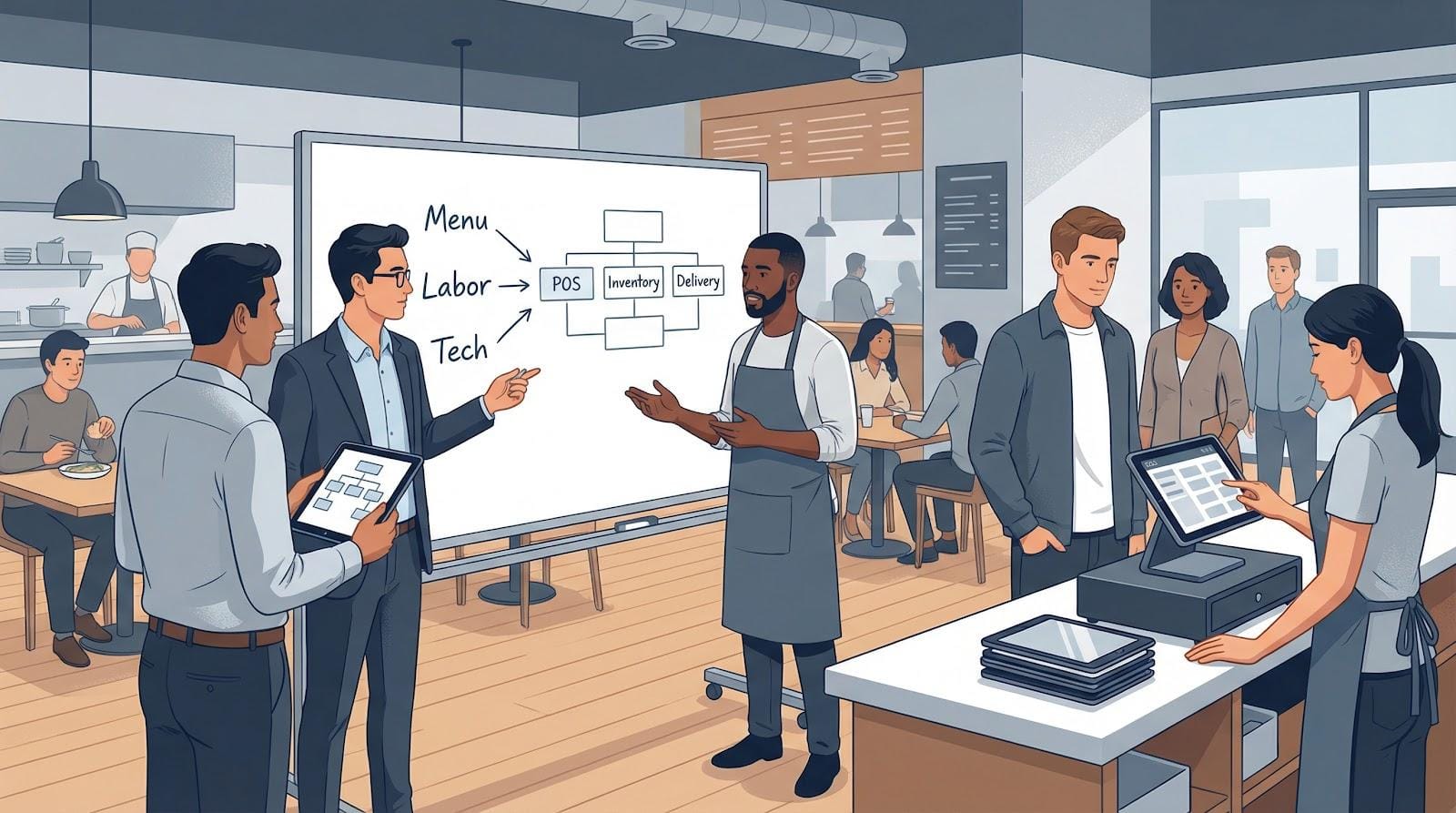
Sometimes you don’t need a battalion of consultants; you want a small senior team that knows restaurants inside out and will roll up its sleeves. These boutiques fit when you run 10 to 500 units, have limited IT staff, and face a question like “Which cloud POS will actually work for us?”
ConStrata: translating operator pain into vendor-neutral roadmaps
ConStrata’s consultants started as restaurant CIOs, so their first move is to walk the floor, observe a rush, and map every pinch point. They capture requirements, run the RFP, and stay through go-live to be sure the POS talks to inventory and third-party delivery. Because they take no commissions from vendors, you get unvarnished advice and a rollout plan your GM can understand.
Results Thru Strategy: when ops and tech need to dance together
RTS approaches projects like triage: menu, labor, marketing, and technology are evaluated in one sweep. During the pandemic the firm helped mid-size chains move to curbside by stitching together online ordering, new packaging SKUs, and a “grocerant” inventory model, proving that tech choices shine only when operations and brand strategy align. If you need broad thinking plus fast execution, RTS delivers both.
Synergy Restaurant Consultants: fixing fundamentals with the right tools
Synergy is best known for menu engineering, yet its tech arm quietly rescues independents from outdated systems. The team replaces cash registers with cloud POS, adds lean inventory software, and trains managers to read real-time prime-cost dashboards. The payoff is fewer spreadsheets, tighter margins, and weekends where owners can rest instead of closing books.
Choose a boutique when you value candid guidance, tight project scopes, and familiar faces from kickoff to sign-off. Next: meet the innovators pushing restaurants toward robots, holograms, and AI-driven insights.
Future-tech labs & frontier-tech pioneers
If you want more than incremental gains—robots running fryers, AI decoding guest feedback, or apps that feel like games—this is your playground. The teams below chase “what-if” questions and turn them into pilots that earn revenue.
Bounteous: crafting digital experiences that lift revenue
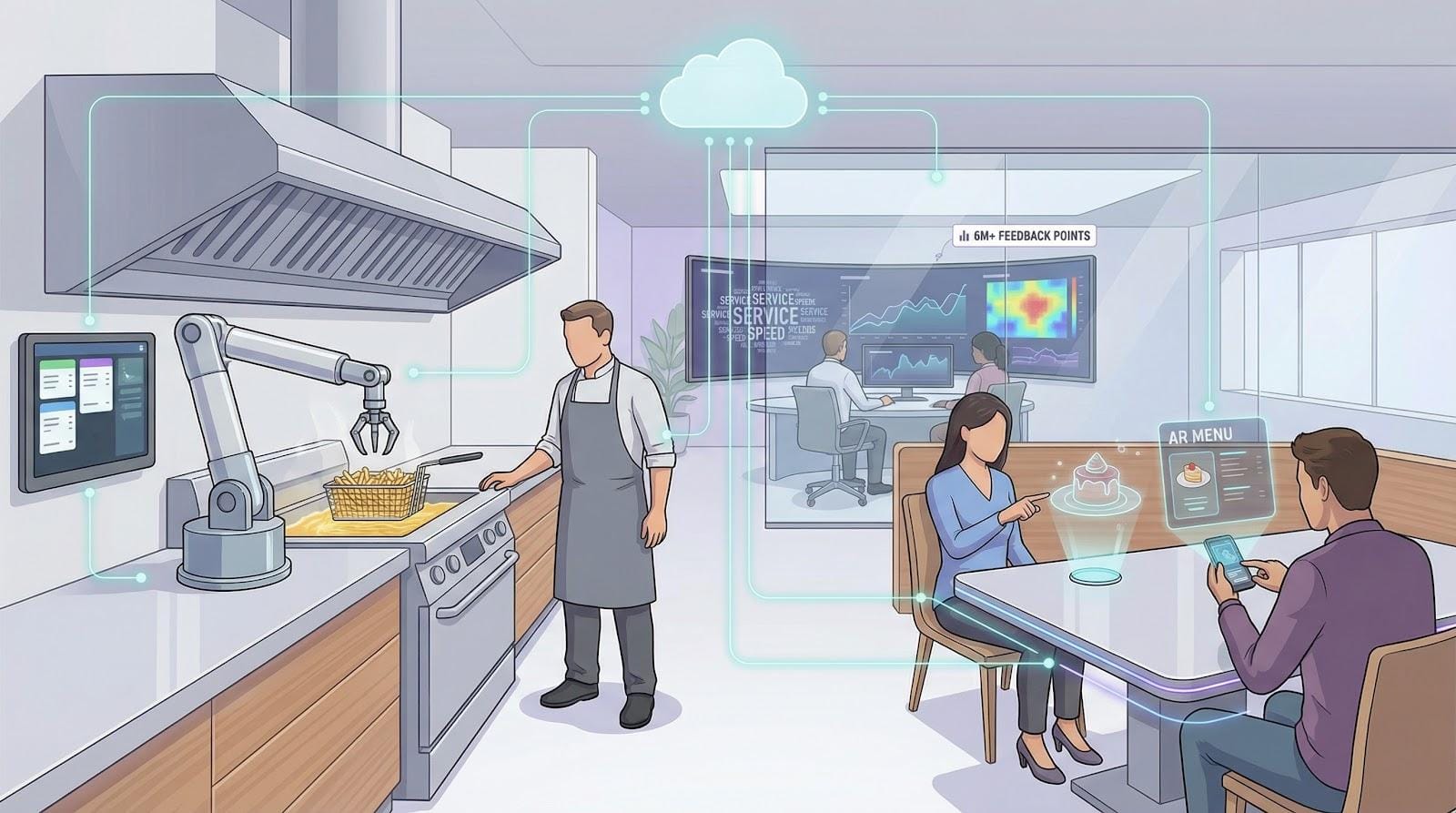
Bounteous treats every screen as a sales channel. Its rebuild of Wingstop’s web and mobile ordering proved the point: within the first month, digital tickets grew and average checks climbed, turning the platform into a profit center. The magic is equal parts UX research and deep integration; data flows from the guest’s phone to kitchen displays and loyalty dashboards without a hitch.
Smartbridge: putting AI to work on real restaurant pain
Smartbridge inserts advanced analytics into everyday routines. One quick-service client used its generative-AI tool to mine six million guest-survey responses, surfacing menu tweaks that raised satisfaction scores. Another chain relies on Smartbridge’s predictive models to sync staffing with demand, trimming labor waste during slow periods. Smartbridge speaks cloud, POS, and data engineering, so prototypes survive the leap from lab to live store.
Magicgate: designing standout moments before they hit the mainstream
Picture holographic menus, AR dessert reveals, or a bot that remembers your last cortado. Magicgate fuses hospitality choreography with emerging tech, piloting concepts that earn headlines and social buzz. Every experiment begins with a business metric—footfall, dwell time, or upsell rate—and ends with a clear read on ROI. If your brand promise is to stay ahead of the curve, Magicgate makes sure the tech delivers.
These pioneers won’t suit every brand, but if you crave first-mover advantage, they bring the prototypes, test kitchens, and courage to fail fast on the path to a breakthrough.
How to choose the right restaurant-tech partner
Selecting a consultant is less like ordering off a menu and more like hiring a sous-chef; you need skill, trust, and chemistry. Here’s a field-tested plan.
Start with your goals. Are you planning a full digital overhaul, a tighter data loop, or a sanity-saving POS swap? Write each outcome in plain English. Clear objectives help you tell a perfect-fit restaurant technology consultant from an enthusiastic feature dumper.
Next, dig into experience that mirrors your reality. Ask every firm for one recent case that matches your size and service style. A boutique that rescued a 20-unit fast-casual chain from five disconnected systems probably understands your pain better than a global giant focused on thousand-store franchises.
Now probe for integration mindset. The best advisers work with the stack you have and weave in new tools without adding late-night spreadsheet sessions. Avoid anyone who pushes solutions that “require extensive workarounds for basic functions” (GSSLP guest-feedback forum).
You also want proof of measurable wins. Request before-and-after numbers—a labor-cost drop, an online-order spike, a table-turn lift. Hard data beats glossy decks every time.
Finally, gauge culture. Do they answer emails quickly? Will senior partners stay visible after kickoff? Friction in week one multiplies by week twelve.
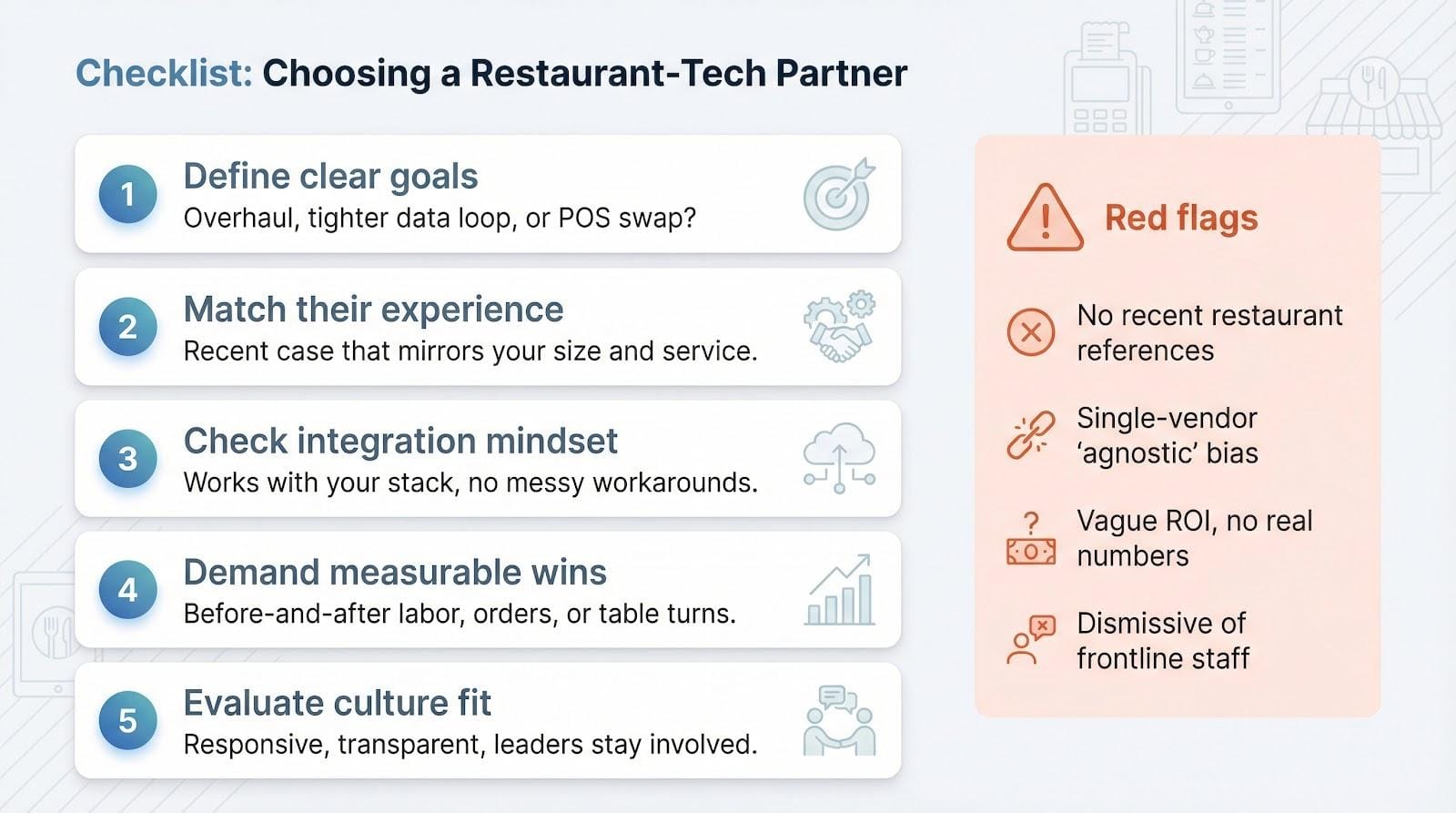
A quick red-flag checklist:
- No restaurant references in the last 18 months
- One-vendor allegiance dressed up as “agnostic advice”
- Fuzzy ROI stories without real numbers
- Dismissive of frontline staff input
If any box lights up, keep shopping. Your future tech, and your sanity, are worth the extra diligence.
What’s coming next: tech trends to watch
The pace of restaurant tech progress keeps climbing, and the stakes just jumped.
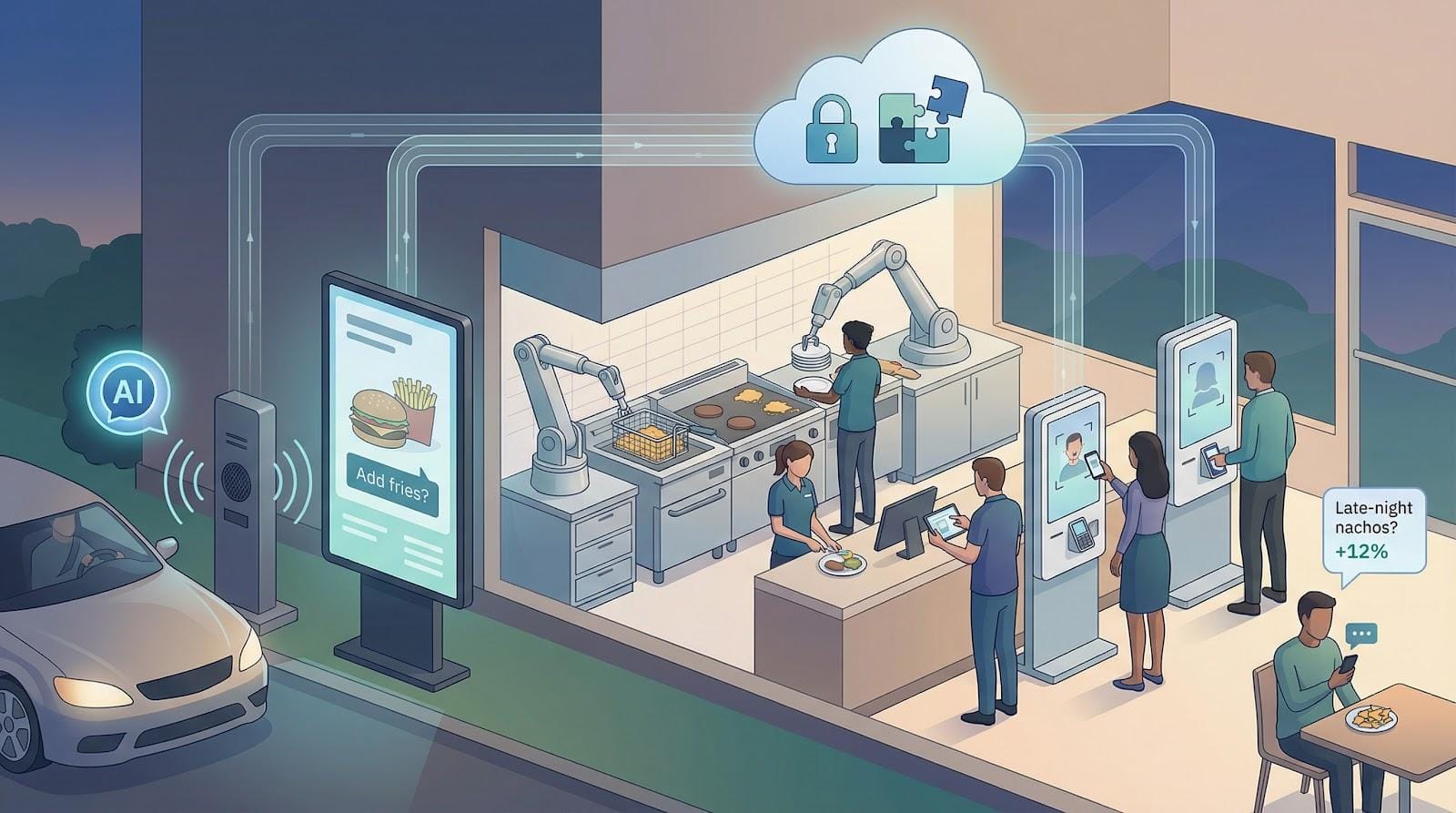
AI is moving from lab demo to drive-thru headset. Chains from Wendy’s to White Castle are testing voice bots that take orders, upsell sides, and never miss a shift. Early pilots show faster queue times and fewer order errors, welcome news for guests tired of repeating themselves.
Robotics is leaving the trade-show floor for the cook line. Automated fryers and tortilla turners free staff for guest-facing tasks and help cover persistent labor gaps. The National Restaurant Association keeps repeating the message: more robots in kitchens are tomorrow’s head-count strategy, not science fiction.
Data is finally escaping its silos. Modern loyalty apps, cloud POS, and delivery APIs now feed the same warehouse, letting brands spot menu duds in days instead of months. When a late-night push notification triggers a 12 percent jump in nacho sales, personalization shifts from buzzword to budget line.
Payments keep evolving. Tap-to-pay and mobile wallets are now expected; biometric and invisible checkout pilots are already running overseas, and guests adopt faster options quickly.
Every shift raises questions about security, change management, and system integration. A seasoned restaurant technology consultant should surface and solve those concerns before you even ask. Keep this horizon in view as you plan your next rollout. Tech will not wait, and neither should we.
Conclusion
Restaurant technology is evolving at breakneck speed. The consulting partners highlighted in this guide can help you harness that momentum—whether you operate a global franchise network or a single innovative concept. Choose wisely, align on metrics, and stay agile. The future of foodservice belongs to brands that pair culinary creativity with the right tech allies.