
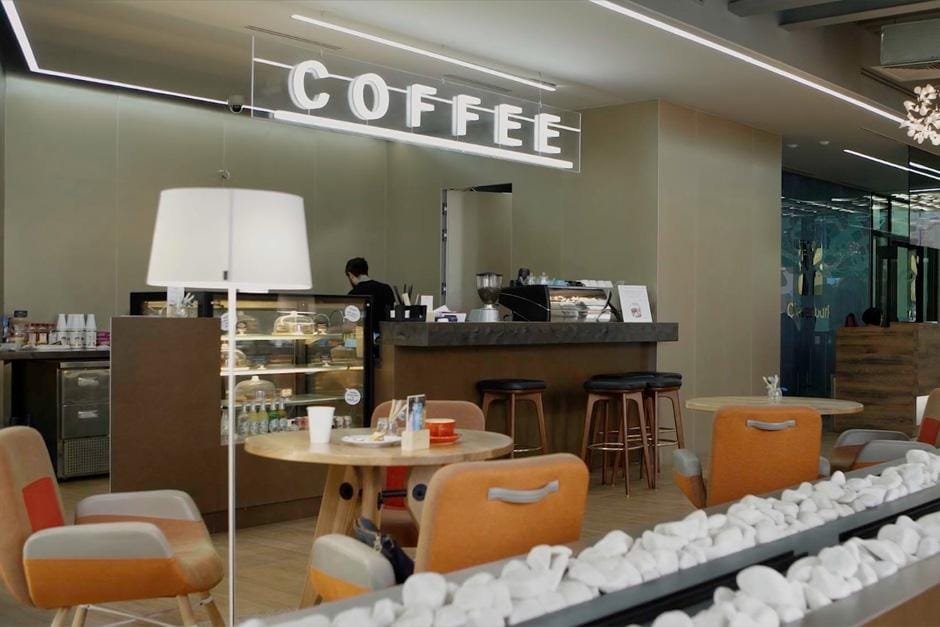
For years, walking into a chain meant knowing exactly what you’d get, and that predictability was the entire pitch. The ratings tell a different story now. Industry data from Dripos in early 2026 placed local coffee shops in the 4.6-4.9 star range, while the big chains hovered between 3.7 and 4.0. The safe bet has quietly become the average one.
The hard part for small owners is that chains still own the money. Across the US market, branded chains pull in roughly 70 to 75 percent of coffee shop revenue, leaving independents to split the remaining quarter (LocationsCloud, 2026). So an independent café isn’t fighting on budget, store count, or app downloads. It’s fighting on something a balance sheet can’t buy: identity.
That math favors the owner running one café instead of four hundred. Brand identity is the rare asset that a competitor with ten times the marketing budget still can’t copy. This is about how independent cafés (and the bars two doors down) win that fight anyway: what brand identity means in practice, where chains hit their ceiling, and the small physical choices that turn a coffee shop into someone’s coffee shop.
Why a chain’s biggest strength is also its ceiling
A chain’s superpower is sameness. The latte in Denver tastes like the one in Dublin, and that reliability genuinely matters when you’re traveling or sprinting to a meeting. Convenience and predictability are real reasons people choose chains, and pretending otherwise just makes an owner sound out of touch.
Sameness comes with a cost, though. A brand engineered to feel identical everywhere can’t feel like it belongs anywhere in particular. Sociologist Ray Oldenburg coined the term “third place” for the spot that isn’t home or work, the one where regulars gather, and conversation happens. Chains chase that feeling in their advertising, yet their operating model fights against it. You can’t mass-produce “local.”
That gap is the opening. An independent café gets to be specific in ways a chain cannot: a wall of work from neighborhood artists, a barista who clocks your order before you reach the counter, a name that actually means something on that street. None of it scales to four hundred locations, which is precisely why it works.
Brand identity is the one thing a chain can’t copy
Brand identity runs deeper than a logo. It’s the full impression a place leaves: the look, the sound, the smell, the way staff treats a stranger, the story behind the name over the door. For a café, identity is what a customer repeats to a friend when they say, ‘You have to try this place.’
Marketing strategists call this differentiation, which means competing on being distinct rather than being cheaper. A chain can copy your cold brew recipe by Friday. It cannot copy a decade of you knowing your regulars’ kids by name. That’s the foundation independent café branding is built on, and it compounds in a way a discount never will.
The common mistake is treating branding as decoration to sort out “later.” Identity is as much a product as coffee is. A Premise survey found customers were 1.2 times more likely to spend a full hour in an independent shop than in a chain. People aren’t lingering for the espresso alone. They stay because the place feels like somewhere worth being.
Make the experience worth leaving the house for
Coffee is available everywhere, including the kitchen at home. So every café quietly answers one question: why should someone put on shoes and come to you? The honest answer is rarely to drink. It’s the customer experience wrapped around it.

Independents have a real edge here. Chains optimize for throughput, which means getting people in, caffeinated, and out. A local café can optimize for dwell time instead: comfortable seating, music picked by a human rather than a brand committee, lighting that flatters a slow Sunday afternoon.
The “experience economy” argument from Pine and Gilmore made the case decades ago that people pay a premium for memorable experiences rather than just goods. A café is one of the cleanest examples of that on any high street.
Bars run on the same logic. Nobody crosses town for a beer that they could grab at a shop. They come for the room, the regulars, the particular feeling of the place at 9 pm on a Friday. The atmosphere is the product. Worth treating it like one.
Turn your space into something people photograph.
Word of mouth has a modern engine: the phone in every customer’s pocket. When a space looks distinctive, people photograph it, post it, and give you free reach to everyone they follow. A visually forgettable café never gets that lift.
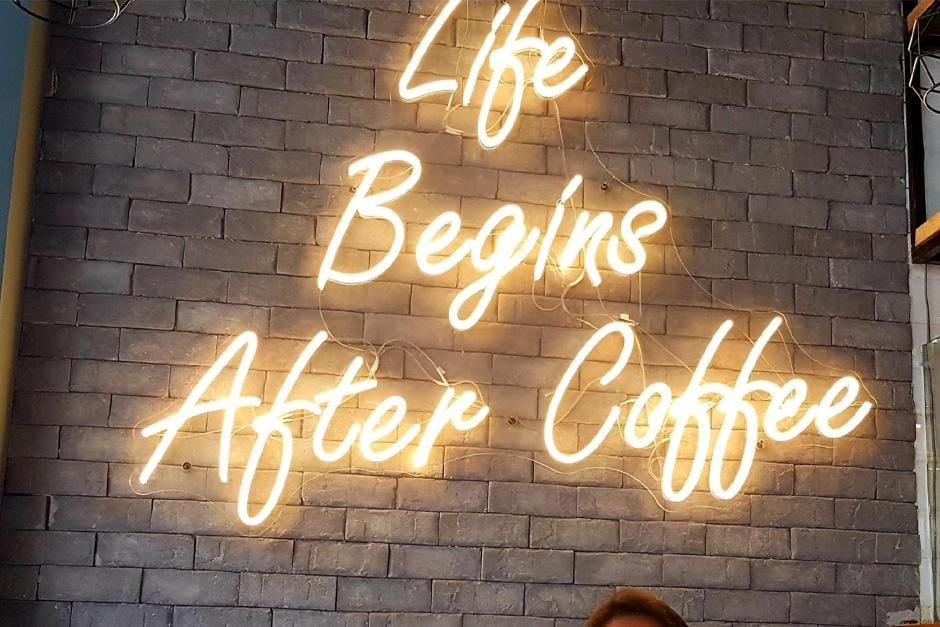
Signage does more of this heavy lifting than most owners expect. A storefront sign is the first handshake, telling people walking past what kind of place this is before they read a single menu item. Inside, a strong visual anchor gives customers a reason to raise a camera.
Plenty of independents have turned their own logo or a short phrase into custom neon logo signs that work as branding and a photo backdrop at once, so every shared snapshot quietly carries the café’s name out into the world. (One honest caveat: a glowing sign won’t rescue weak coffee or a rude welcome. It amplifies a good experience; it can’t fake one.)
The sign itself isn’t the goal. Owning a visual identity distinctive enough that customers choose to spread it for you, that’s the goal.
Steal the one trick chains actually do well.
Being fair pays off here, because chains aren’t purely a cautionary tale. The thing they nail, and the thing most independents fumble, is consistency. Same logo, same colors, same tone everywhere you meet them, repeated until the brand becomes recognizable at first sight.
An independent café can borrow that discipline without surrendering an ounce of character. Your sign, your cups, your Instagram grid, your menu board, and your storefront should look like they came from the same place, because they did. That visual consistency is what turns a nice café into a brand people can recall by name and recommend without having to hunt down the address.
It costs almost nothing to get right and quietly costs you when you ignore it. A logo that looks one way on the window, another on the cup, and a third on the app reads as “small” in the worst sense. Coffee shop branding handled with consistency reads as deliberate instead, and deliberate is what earns a customer’s trust.
The brand is what sets you apart and protects your business from competitors.
The way people find their next coffee is shifting. Discovery once started with a familiar logo near the highway exit; more and more, it starts with a search, a map, and a wall of reviews where local shops keep winning ratings. That shift rewards exactly what independents do best: being a specific place run by specific people rather than a copy of one.
You won’t out-spend the chains, and chasing that particular fight is a slow way to lose. Out-identifying them is the fight you can win. Build a brand identity worth remembering. Make the room worth staying in. Give people a reason to share it.
Do all three consistently, and the café stops competing on price and starts competing on something far harder to replace: being irreplaceable.