Two in the morning. The house is 58 degrees and falling, the dog is on your feet, and your phone says the low tonight is 19. You do not need a lecture on furnace maintenance right now. You need an order of operations.
Here is the honest truth from people who work in this trade: most “dead furnace” calls turn out to be one of four things, and you can rule out all four yourself in about twenty minutes. That does not mean you should start pulling panels off. It means you can walk into the conversation with a technician knowing exactly what you checked, which usually shortens the visit and sometimes solves the whole thing before anyone drives out. Getting the sequence right matters most when home heating repair is needed in the middle of the night, because a rushed, random check is how people miss the obvious and start replacing parts they do not need.
The plan below follows the order a good service tech would follow: safety and airflow first, controls second, fuel and power third, and then the decision point where you stop and call someone.
First: safety and airflow, in that order
Before you touch a thermostat, deal with two things that cost you nothing and prevent real problems.
- Smell gas? Leave the house, then call your gas utility or 911 from outside. Do not flip switches, do not use a lighter to check the pilot, do not “air it out and see.” That is the one item on this list with zero gray area.
- Check the filter. A filter loaded with dust and pet hair is the single most common reason a furnace shuts itself down. Pull it, hold it up to a light, and if you cannot see through it, replace it. A new filter costs less than lunch and takes ninety seconds.
I would also walk to every supply vent in the house and make sure nobody closed them. Closing vents to “save money” in one room starves the system and can trip a high-limit switch. Open them all, including the basement ones you forgot about in October.
Next: the thermostat, then the breaker
Most people mash the thermostat first thing. That is fine, but do it with intent. Open the battery door and swap the batteries even if the screen looks alive, because a weak battery can power the display while failing to send a call for heat. Set the fan to “on” rather than “auto” and listen. If the blower runs on its own but the system never fires, you have just narrowed the problem to the heating side rather than the air handler.
Then go to your electrical panel. Find the breaker labeled for the furnace or air handler and check whether it is tripped, meaning the switch sits between on and off rather than firmly in either position. While you are there, look for the light switch that feeds the furnace closet. It sounds ridiculous, but plenty of no-heat calls trace back to a switch flipped off during a home heating repair or a move-in.
Now the part that surprises homeowners: a furnace that runs for a few minutes and then shuts down is often doing its job. Modern units have safety switches that lock out the burners when something is wrong. A locked-out furnace is a unit that is protecting you.
Old house or new build? The checklist changes
Your building tells you where to look. Older homes with a boiler and radiators fail differently than a newer house with a high-efficiency furnace and PVC exhaust pipes, and you can skip a lot of guessing by starting in the right place.
| System type | Most likely culprit | What you can check yourself
|
|---|---|---|
| Older furnace, metal flue | Pilot out, dirty flame sensor, clogged filter | Filter, breaker, thermostat batteries, visible pilot flame |
| High-efficiency furnace, PVC pipe out the side wall | Blocked intake or exhaust, condensate drain frozen | Clear snow, leaves, or ice from both pipes; check for water in the drain line |
| Boiler with radiators or baseboard | Low water pressure, air in the lines, circulator trouble | Pressure gauge reading, thermostat call, cold radiators on one side of the house |
| Heat pump | Defrost cycle confusion, outdoor unit iced over | Watch for a normal defrost cycle before assuming failure; clear the outdoor unit |
That last row causes more panic than anything else in the table. A heat pump that reverses into defrost and blows cool air for a few minutes is working correctly, and shutting it off mid-cycle makes things worse. Give it fifteen minutes before you decide anything is broken.
The hour is up. Now what?
Here is my rule, and I will defend it: if you have swapped the filter, confirmed power, cleared the outdoor vents, and the unit still will not fire, stop. Everything past this point involves gas lines, control boards, or igniters, and none of that belongs in a homeowner’s toolkit on a cold night.
Call a licensed technician and tell them four specific things: what the thermostat is set to, whether the blower runs, whether you smell anything unusual, and what you already checked. That short report often lets the dispatcher send the right person with the right part on the first trip. In our own house, the tech found a cracked igniter in under ten minutes because we could tell him the blower ran but the burners never lit. One visit, one part, heat back by breakfast.
Preventing the 2 a.m. call
Most emergency no-heat visits are the same handful of failures wearing different hats. A little maintenance in the fall keeps you off this list.
Change the filter on a schedule tied to your house, not the calendar on the box. Homes with pets or a busy return grille clog filters faster than the label suggests, so check monthly and replace when it looks gray and matted. Keep the area around the furnace clear, because stored paint cans and holiday boxes near the unit are both a fire risk and a service obstruction.
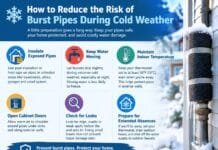
Then there is the freeze problem, which is where national guidance gets useful. Homes in cold regions lose heat for hours or days after winter storms, and frozen pipes become the expensive part of the story, not the furnace itself. The Department of Energy publishes seasonal guidance on protecting a home during extreme cold, and the short version is worth repeating: know where your main water shutoff is, drip a faucet during deep freezes, and open cabinet doors under sinks on exterior walls.
If you rent, your responsibilities end at filter checks and reporting the issue in writing. If you own the place, the highest-return habit is a fall tune-up. An annual service visit costs a fraction of a mid-winter emergency call, and it catches the cracked igniters and dirty sensors that cause most sudden failures.
Record-keeping pays off more than you think
Write the model and serial number of your furnace somewhere you can find it, along with a photo of the data plate. When something fails, a technician can look up parts and age before arriving instead of guessing at the door. It is a five-minute job that saves real time on the worst possible evening.
Two other habits are worth adopting. Keep a cheap indoor thermometer in the coldest room in the house so you can give the tech actual numbers instead of “it feels cold in here.” And if your system has a history of problems, start a running note of what broke and when. Patterns in that list often point to a failing component long before it stops working entirely. There is a reason appliances carry a data plate in the first place: manufacturers expect people to look at it, and the National Institute of Standards and Technology has done extensive work on how reliable measurement underpins good decisions, whether that decision is a manufacturing spec or a furnace replacement.
While you are putting a plan together, think about the bigger picture too. If your furnace is old, needs frequent repairs, and your home is drafty, the question shifts from repair to replacement. The National Park Service maintains guidance on preserving the character of older homes, and its advice to renovate thoughtfully applies here: fix what is sound before replacing what is not.
Your one-screen version
Smell gas, leave and call from outside. Check the filter. Check the thermostat batteries. Check the breaker and the furnace switch. Clear the outdoor vents on high-efficiency units. Give a heat pump fifteen minutes. If none of it works, call a licensed technician and hand over your checklist.
That order turns a panic into a process, and it puts you in control of the part you can actually control. So here is a question worth answering tonight, before the next cold snap: who would you call, and do you have their number saved?