The world’s top marketing thought leaders share a consistent conviction: facts inform, but stories move people. At every major marketing conference, in every leadership development conversation, the same principle surfaces — the brands that win long-term loyalty are the ones that have mastered the art of communicating why they exist, not just what they sell.
Compelling stories travel farther than any product advertisement because they give people something to believe in. This is the principle that distinguishes marketing leaders from marketing managers — the ability to see past campaign metrics to the narrative that creates lasting connection between a brand and its audience.
What’s changed in 2026 is the production infrastructure available to act on this conviction. AI-powered video generation has made cinematic brand storytelling accessible to marketing leaders who have always understood its strategic importance but have been constrained by the production resources required to execute it consistently.
AI Movie Maker: From Brand Vision to Visual Narrative
The capability that AI movie generation represents for marketing leadership is the ability to translate written creative vision into finished video content — capturing the emotional register, visual atmosphere, and narrative structure of a brand story without the production overhead that has historically separated vision from execution.
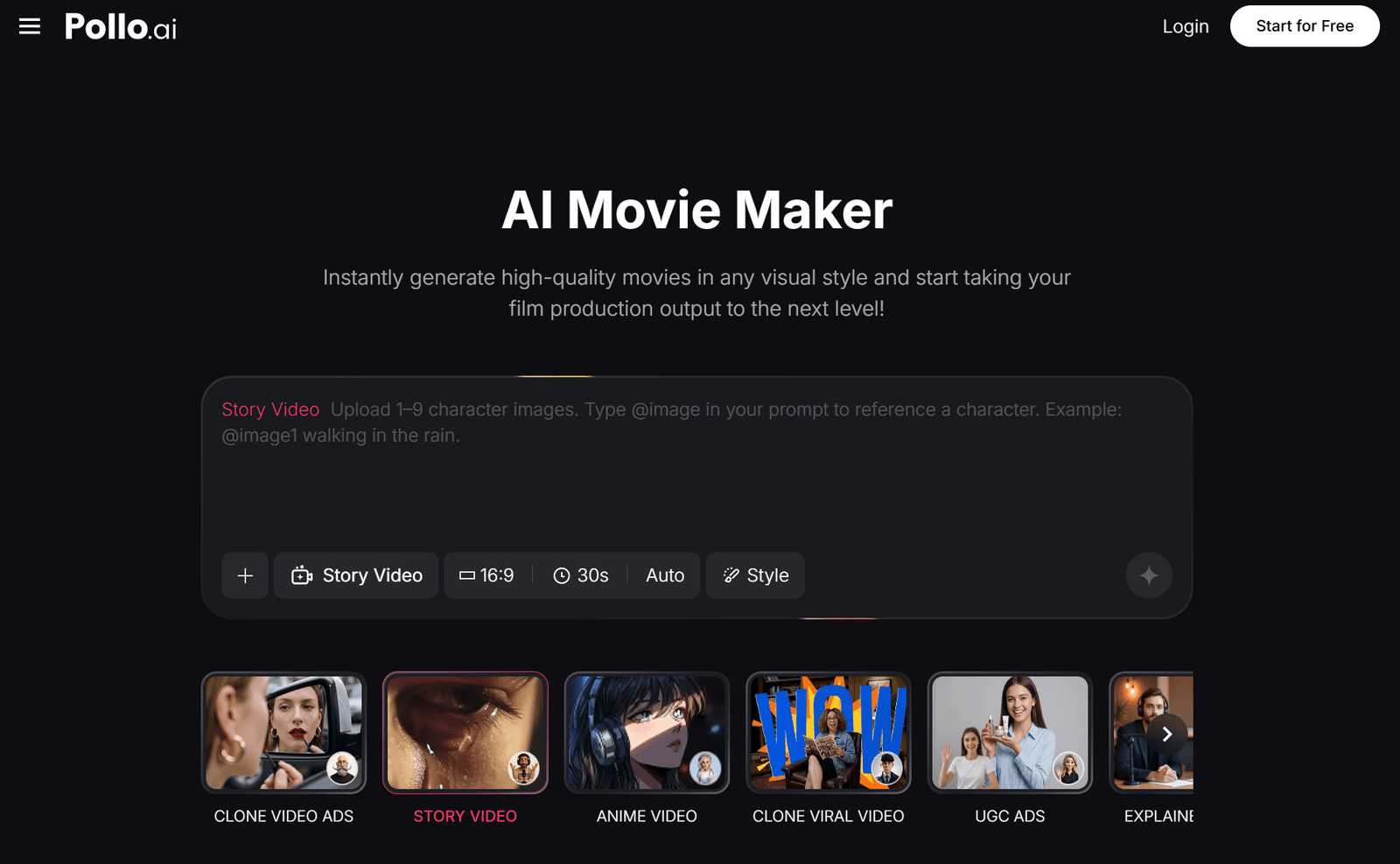
Pollo AI’s AI Movie Maker inside its Creative Studio brings this capability into a multi-model environment where different generation approaches can be matched to different storytelling objectives. A brand origin story requires different cinematic treatment than a customer transformation narrative, which requires different visual language than a thought leadership piece positioning an executive as an industry voice. Having access to multiple generation models within one platform on shared credits means the generation approach can serve the story rather than constraining it.
For marketing leaders who think about brand storytelling strategically — not as a content production task but as the primary mechanism through which brand values become audience beliefs — this changes the practical question from “can we afford to produce this?” to “what story should we tell and how should it be told?” The production constraint recedes; the creative and strategic judgment becomes the primary variable in the quality of the output.
Storytelling is the cornerstone of effective marketing, and the global marketing leaders who build the most durable brands are those who understand that this principle is not metaphorical — it is operational. Every piece of content either advances the brand narrative or dilutes it. AI movie generation is the tool that makes advancing it consistently, at scale, operationally viable.
Why Brand Film Matters More Than Brand Awareness
Marketing thought leaders from Paul Roetzer to Seth Godin have consistently argued that the marketing landscape has shifted from interruption to permission, from broadcast to conversation, from awareness to meaning. Brand film — short cinematic content that communicates a brand’s values, origin, purpose, or customer transformation — sits precisely at the intersection of these shifts.
It is not advertising, which asks for attention. It is not content marketing, which earns attention through utility. Brand film creates meaning — and meaning is what converts a customer into an advocate, a transaction into a relationship, and a product into an identity.
At every level, from the startup founder establishing why their company exists to the global brand reinforcing its purpose narrative, brand film has been recognized as one of the highest-leverage content investments a marketing leader can make. The constraint has never been strategic clarity about why it matters. It has been production — the resources, the timeline, and the organizational will to commission and complete video production at the quality level that brand film requires.
AI movie generation removes that production constraint in a way that makes the strategic opportunity finally executable for marketing organizations that have always understood the value but struggled to act on it consistently.
Marketing Studio: When Brand Story Meets Campaign Performance
Brand storytelling and performance marketing have often been positioned as competing priorities — the long-term brand investment versus the short-term conversion campaign. The most sophisticated marketing leaders have always understood this as a false dichotomy: brand stories that move people also convert people, when distributed in the right contexts.
Pollo AI’s Marketing Studio extends the Creative Studio’s movie-making capability into the campaign performance layer — producing advertising and promotional video calibrated for platform format requirements and the pacing that drives action in paid social environments. For marketing leaders managing both brand investment and performance marketing simultaneously, having both capabilities within one platform on shared credits means the brand story and the performance campaign can share visual and narrative assets rather than operating as completely separate production efforts.
The world’s best marketing strategies never stand still — they evolve with consumer expectations and technology. The brands that are building the most effective content marketing operations in 2026 are the ones that have understood brand storytelling and performance marketing as complementary rather than competing, and have found production infrastructure that serves both.
Vmaker AI and the Evolving Video Production Landscape
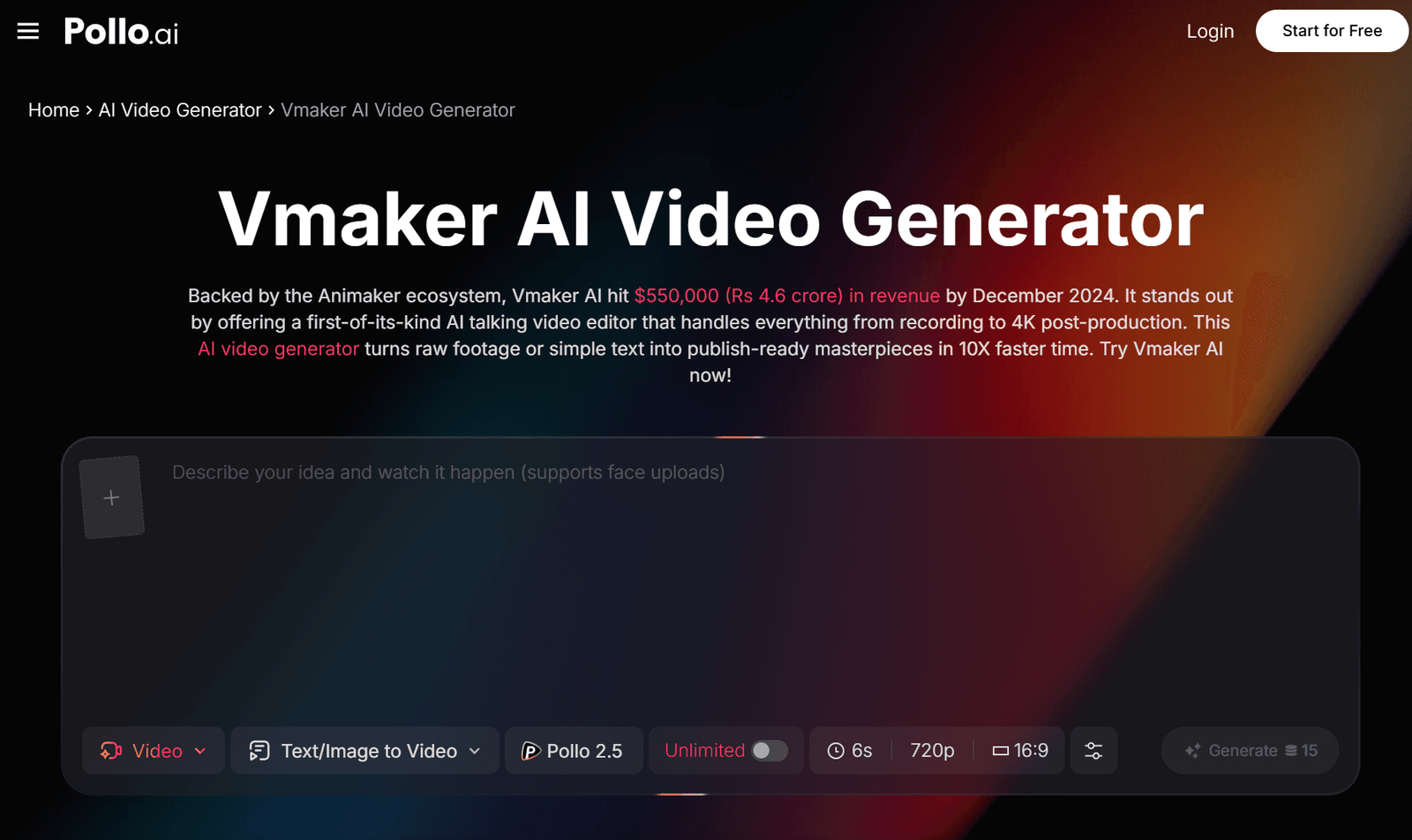
Building a complete understanding of the video production landscape helps marketing leaders make more informed decisions about which tools belong in their organization’s content stack. Vmaker AI has developed capabilities in screen recording and video creation that serve specific content production needs — particularly useful for marketing and sales teams that produce product demonstration content, tutorial videos, and internal communication video alongside their external brand content. For organizations whose video content spans both cinematic brand storytelling and functional product demonstration, understanding where different tools are optimized helps allocate production work to the right capability at each stage.
The distinction for brand film specifically is between tools optimized for functional video production — recording and editing existing content — and those designed for generative storytelling, where the visual narrative is created from creative direction rather than captured from existing reality. Both serve legitimate and important marketing functions; the most effective content operations use each where it fits best rather than applying one tool to every video production need.
The Leadership Imperative: Building a Story-First Marketing Culture
Global Gurus has ranked the world’s top thought leaders across leadership, management, and marketing since 2007 — and one of the consistent characteristics of the individuals who appear on these lists is that they understand communication not as a department function but as a leadership capability. The ability to tell a story that creates belief, that aligns teams around a shared purpose, that moves customers from indifference to loyalty — this is leadership as much as it is marketing.
AI movie generation is not a replacement for that capability. It is the production infrastructure that makes executing on it consistently possible for marketing leaders who already have the creative vision and strategic clarity to know what stories their brands need to tell. The constraint that is removed is the production gap between having the vision and having the finished content that embodies it.
In 2026, the marketing leaders building the most durable brand presences are the ones who have treated brand storytelling as a systematic practice rather than an occasional campaign — who have found the tools to produce cinematic brand content at a pace that matches their strategic intent, and who have built organizational habits around continuous storytelling rather than episodic production. AI movie generation is the tool that makes that systematic practice operationally realistic for marketing organizations at every scale.