
Most players try to make circles in Minecraft by eye. They place a row, step back, adjust, tear down, and try again. It takes four times longer than it should and usually still looks uneven.
How to Make a Minecraft Circle: The Basic Method
The correct approach to how to make a minecraft circle starts with a generator. This minecraft circle guide for builders changes the whole process. You have a plan before placing the first block. Every row is correct the first time.
- Choose your diameter start with the finished size you want
- Open the generator and enter the number
- Study the grid identify the widest row and the total height
- Find the center of your build in-game and mark it
- Place your widest row first this anchors the whole shape
- Work outward from center in both directions, following the grid
- Check symmetry regularly the left half should mirror the right
Polygon’s building-mechanics coverage confirms that Bresenham circles are symmetric by design. If your build looks asymmetric, check which row you’re on and compare with the generator output.
Building a 100 Diameter Circle in Minecraft
A 100 diameter circle minecraft build is large but manageable with the right approach. Here’s what the scale looks like in practice:
The widest row spans exactly 100 blocks. The circle outline uses approximately 316 blocks per layer. The full height from bottom to top is also 100 blocks if you’re building a sphere.
For a 100 diameter circle minecraft outline (just the wall, not filled), expect to place around 316 blocks at the base layer. For a full sphere, the layer count goes all the way up and back down with decreasing diameters at each step.
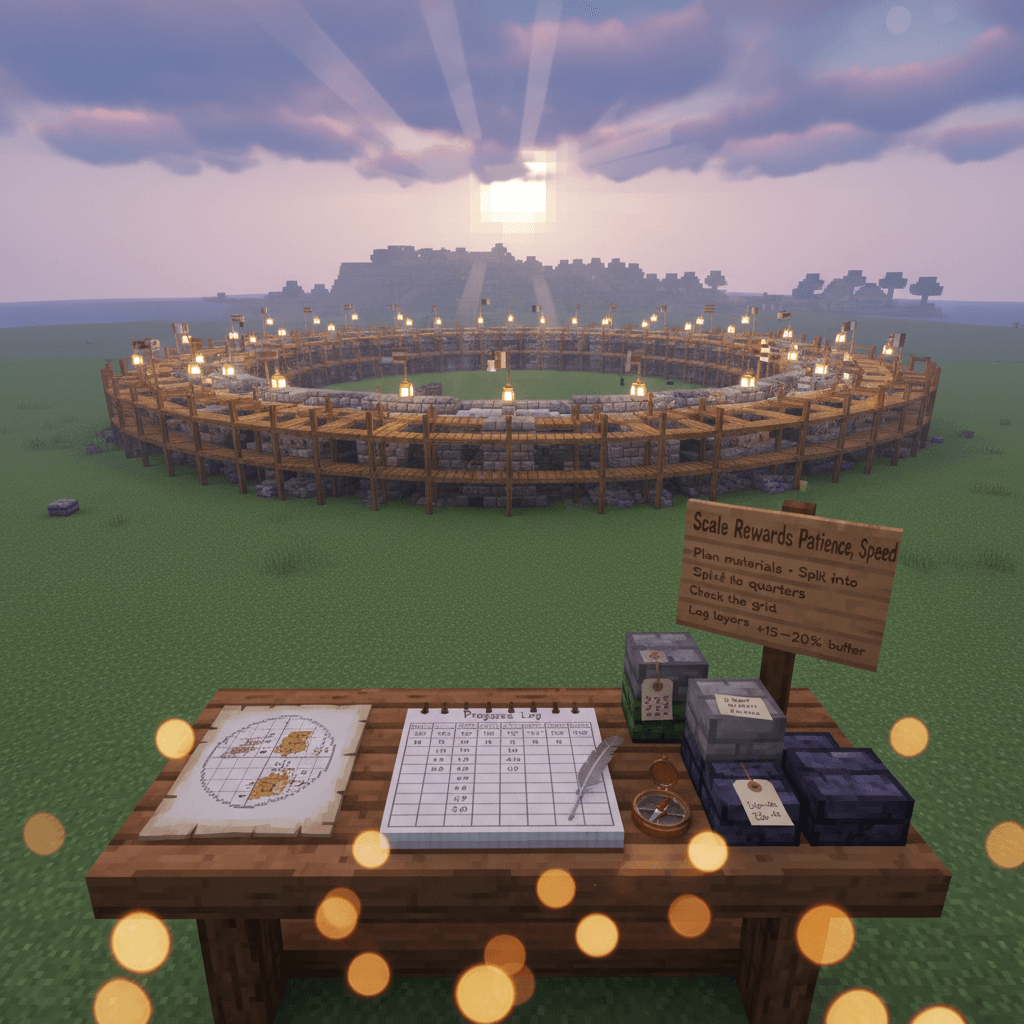
Work in sections. Mark each quarter of the circle separately. Complete one quarter before moving to the next. This prevents the common error of losing your place midway through a large arc.
 use.ai
Giant Minecraft Circle: Planning for Scale
A giant minecraft circle of 100+ blocks needs material planning before building starts. The generator makes this easy:
• Run the generator at your target diameter
• Count filled blocks in the output grid
• Multiply by the number of layers if building a 3D structure
• Add 15–20% buffer for mistakes and replacements
• Gather all materials before starting construction
Builder and content creator Mumbo Jumbo has said that the biggest mistake beginners make is “starting a build you can’t finish because you didn’t count blocks first.” The generator makes counting effortless.
Recruiting Help for a Build This Size
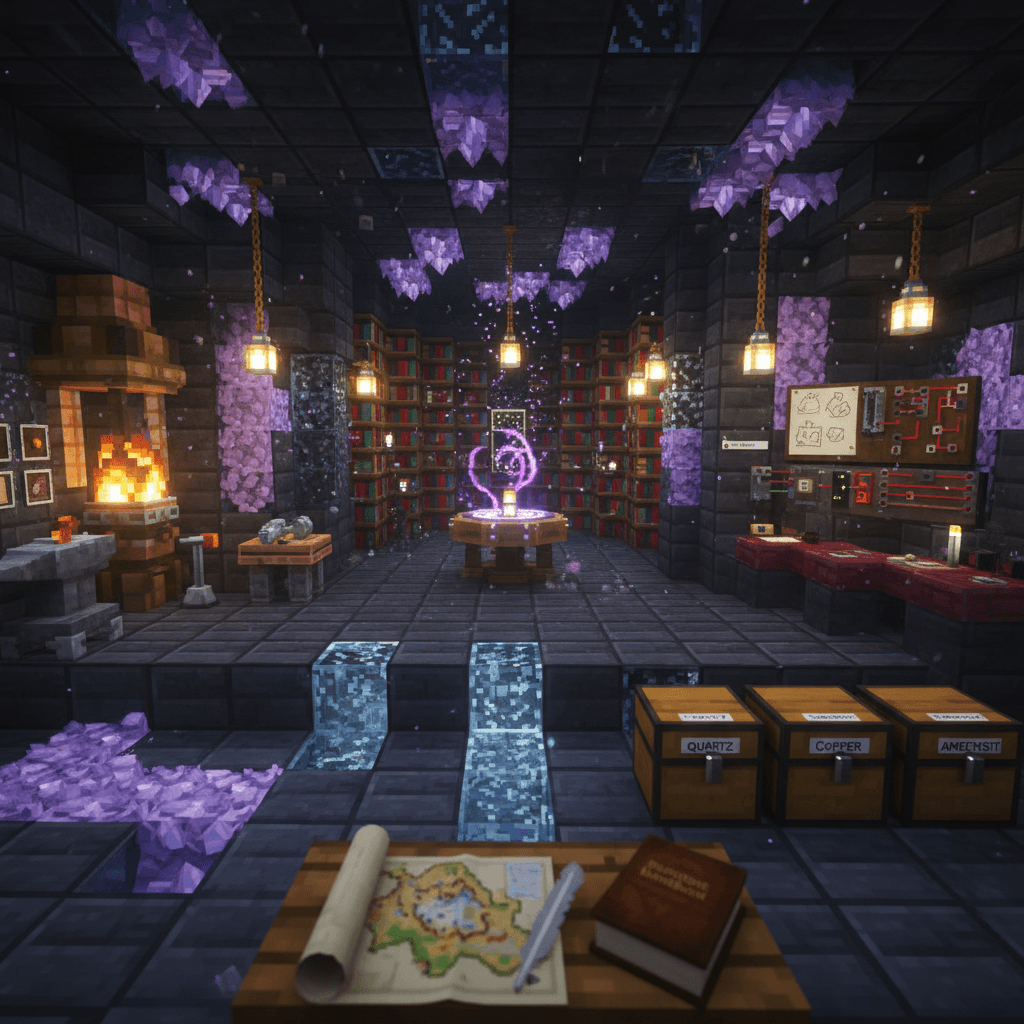
A build at 100-block scale rarely goes faster by adding more solo hours — it goes faster by adding more hands. Bringing in friends works best when each person owns one quadrant instead of everyone hovering over the same section. Give each player their own quarter to work from the shared grid, and progress stops bottlenecking around a single spot. There’s a side benefit too: a block placed slightly off-grid stands out fast to whoever’s working the neighboring quarter, even when the person who placed it walks right past it without noticing.
 use.ai
Making Large Circles on a Multiplayer Server
Building 100×100 circle minecraft structures in multiplayer creates significant server activity. Multiple players often contribute — which speeds up the build and increases chunk update pressure simultaneously.
The generator gives every player the same reference grid. A stable server keeps the block placement reliable throughout. Both make large multiplayer builds go smoothly rather than becoming sources of frustration.