
Support queues keep growing while customer patience shrinks. Dropping speed or accuracy isn’t an option, so teams are turning to advanced AI agents—virtual reps that handle routine chats, flag tough cases, and free humans for high-value work. Early adopters see the lift: DSW cut average handle time 19 percent and boosted CSAT 30 percent after adding Capacity’s AI agents.
This guide ranks ten leading platforms on automation depth, quality controls, scalability, integration breadth, and rock-solid compliance. By the end, you’ll know which tool matches your roadmap—and why Comm100’s AI agent sets a high bar.
How we compared these AI agents
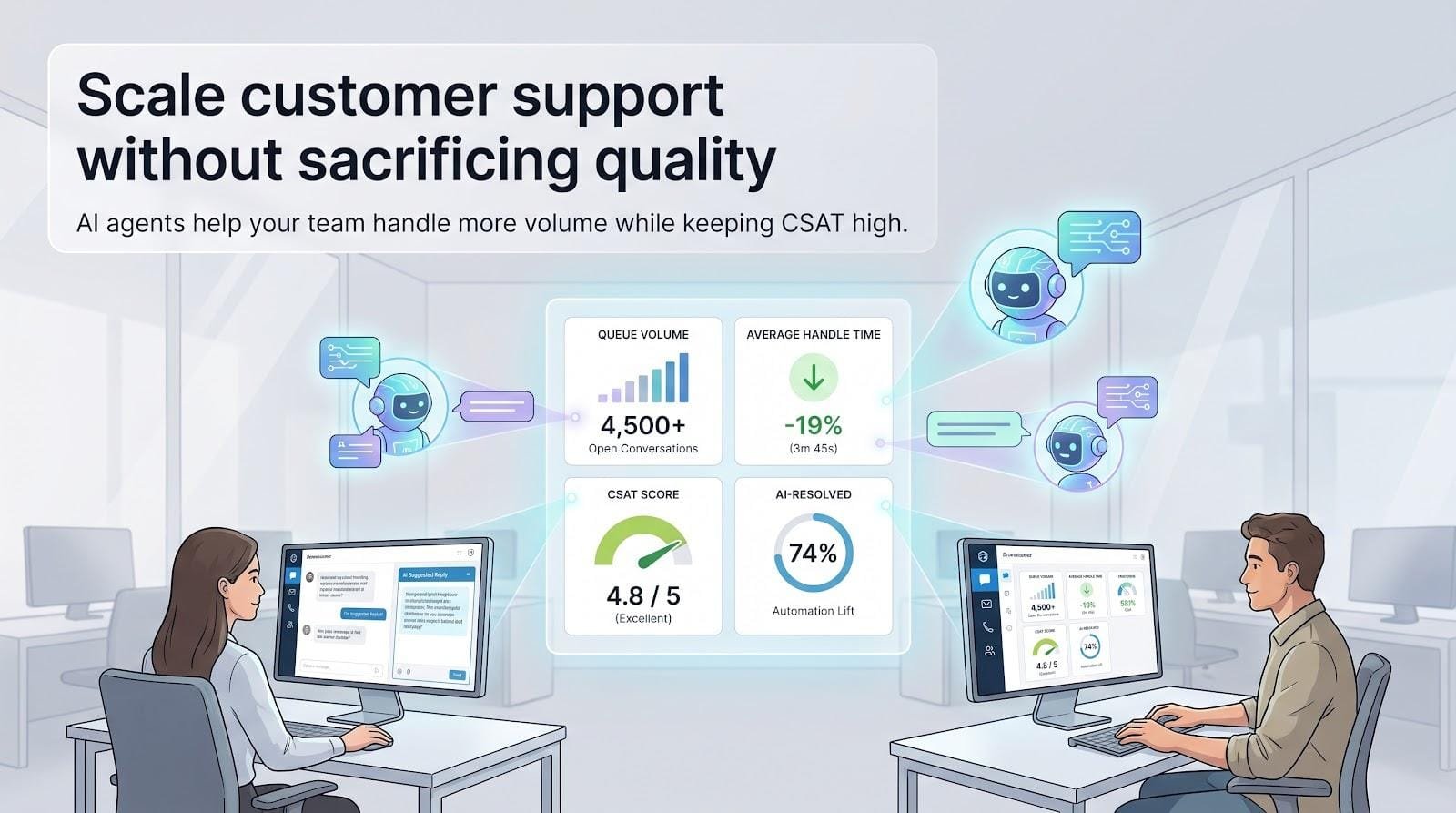
Before naming any winners, we built a yardstick that matters to busy support leaders. We looked beyond demo videos to the numbers that reveal how each platform performs when queues spike and customers grow impatient. Our guiding question: does this software handle more volume while protecting service quality?
We reviewed product docs, analyst notes, and customer case studies, then cross-checked claims against independent benchmarks and vendor data—for example, Intercom reports that Fin reaches a 76 percent average resolution rate across all customers. Five evaluation pillars emerged:
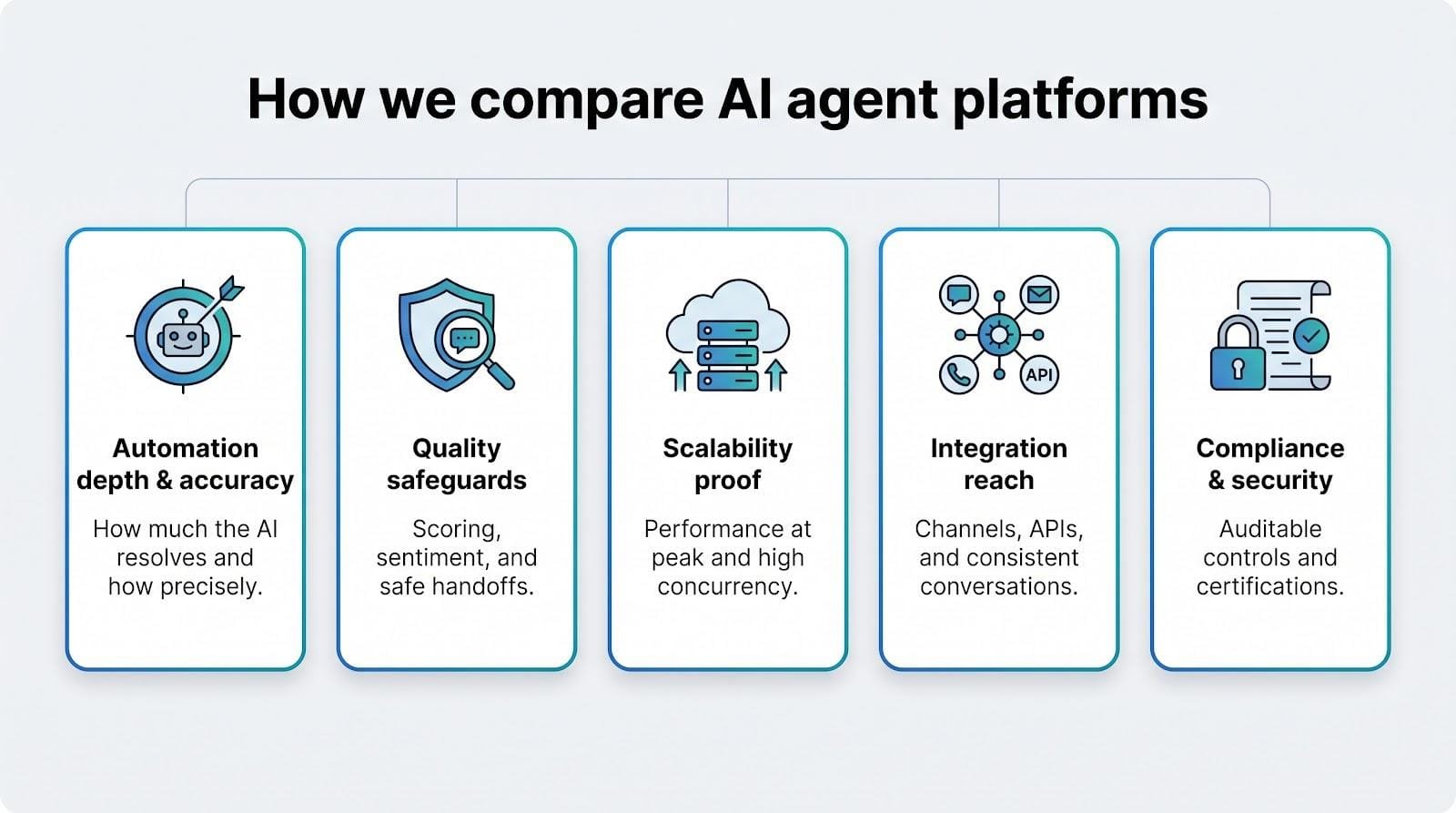
- Automation depth and accuracy – the share of tickets a bot resolves on its own and how precise those answers are
- Quality safeguards – AI scoring, sentiment monitoring, and live handoff when confidence drops
- Scalability proof – real-world high-volume deployments, concurrency stats, and resilient multi-tenant clouds that stay fast at peak load
- Integration reach – native channels plus open APIs so conversations stay consistent across chat, email, voice, and social
- Compliance and security – credentials such as SOC 2 or HIPAA and options for strict data residency
Every platform you’ll see next satisfies all five pillars; what changes is how convincingly each one delivers.
1. Comm100 – setting the standard for quality-first scale
Comm100 built its reputation on an omnichannel console that keeps every message—chat, email, social, SMS—in one clean queue. That single view matters when volume climbs. Agents never juggle tabs, and customers never repeat themselves.
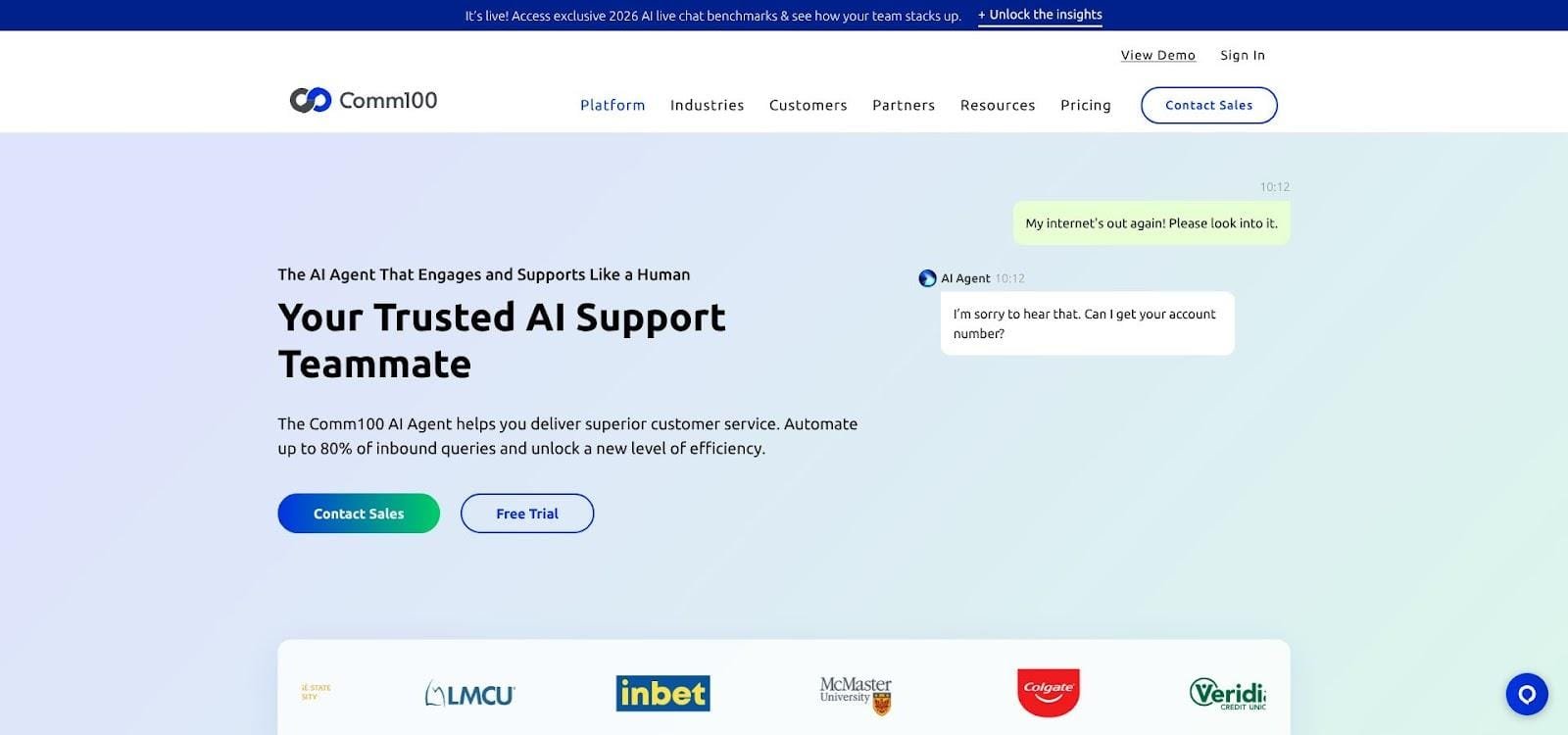
Comm100 omnichannel AI agent console and quality assurance dashboard
In April 2025 Comm100 added a full AI suite to that base. The headline feature is its AI agent for customer support, shown in recent rollouts to automate up to 80 percent of routine questions without sacrificing tone. The figure is self-reported, and Comm100 is refreshingly clear about that fact. We appreciate the transparency.
Automation is only half the story. Comm100’s AI Quality Assurance tool scores every conversation in real time, flags off-brand replies, and feeds coaching cues back to managers. Pair that with AI Copilot, an assistive sidekick that drafts responses and summaries, and human agents stay sharp while the bot handles the easy stuff.
Security and compliance round out the package. With SOC 2 Type II, ISO 27001, PCI-DSS, and an optional on-premises deployment, Comm100 fits sectors where data rules are strict, such as government portals, university help desks, and HIPAA-bound health providers.
Put it together and you have a platform that scales service without letting quality drift. For teams that need both volume and vigilance, Comm100 sets a high bar and, as you’ll see, sets the pace for the rest of our list.
2. Intercom Fin – benchmark-proven accuracy at speed
Intercom Fin lives inside the Intercom inbox, so teams already running in-app chat feel at home. Fin reads your help-center articles, responds in a human tone, and cites its source so agents can verify information.
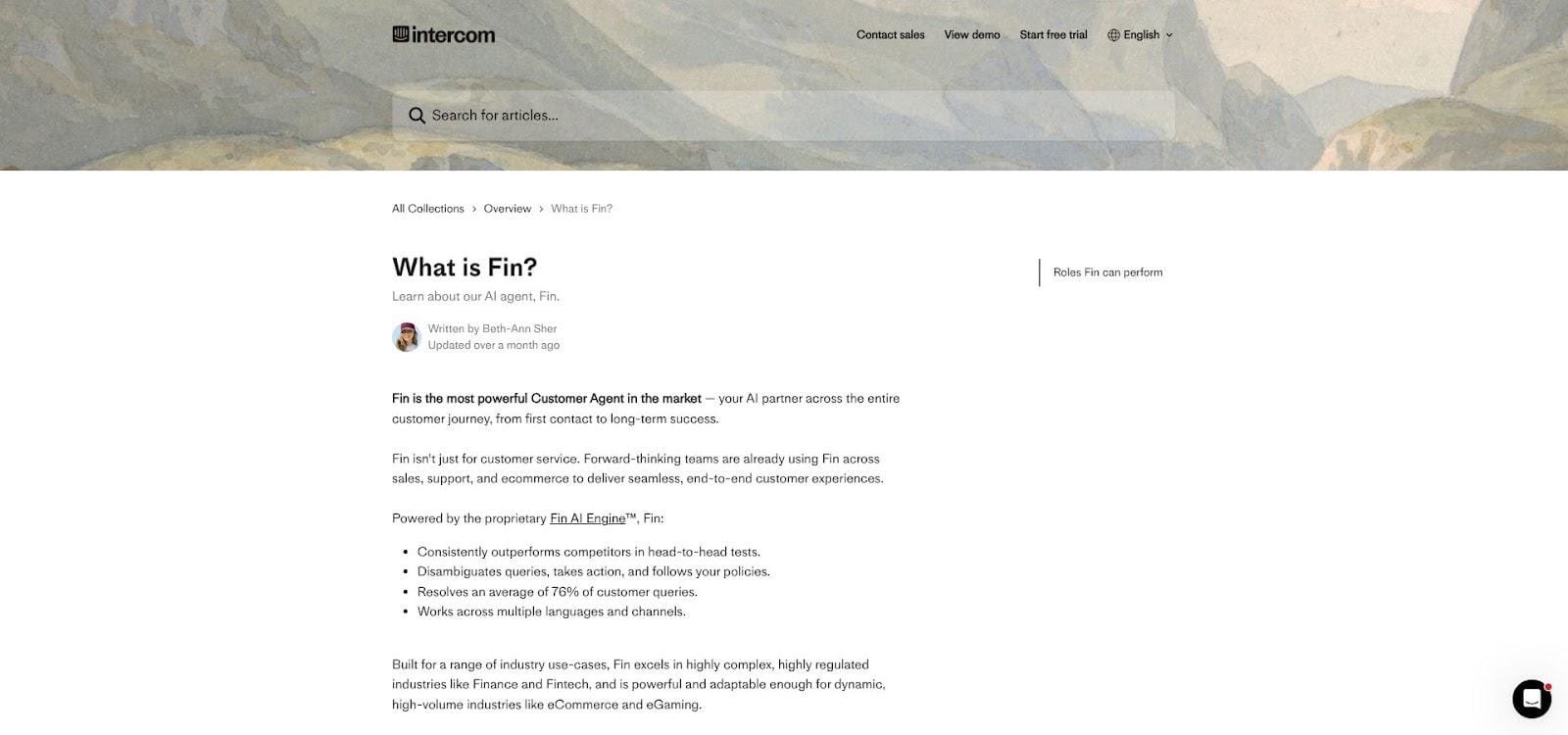
Intercom Fin AI agent embedded in the Intercom inbox
Performance data is clear. Intercom reports a 76 percent average resolution rate across all customers, with some deployments topping 80 percent. Those numbers help during post-release spikes when on-brand answers still count.
Quality guardrails stay active. A confidence threshold hands conversations to humans when certainty dips, and sentiment analytics flow into Intercom reports, letting managers surface friction quickly.
If your support plan centers on product-based chat and you need proven deflection metrics, Fin is a low-friction upgrade.
3. Zendesk AI agents – enterprise volume with familiar workflows
Zendesk is already part of many support stacks, so its AI agents fit straight into existing tickets, macros, and SLAs. Pre-training on billions of historical Zendesk conversations gives the bot a running start, producing quicker, context-aware replies.
Quality control stays active. The dashboard flags answer gaps and recommends new articles, turning every solved ticket into training material. Managers view intent heat maps and sentiment trends in one place, so they can coach reps before small issues escalate.
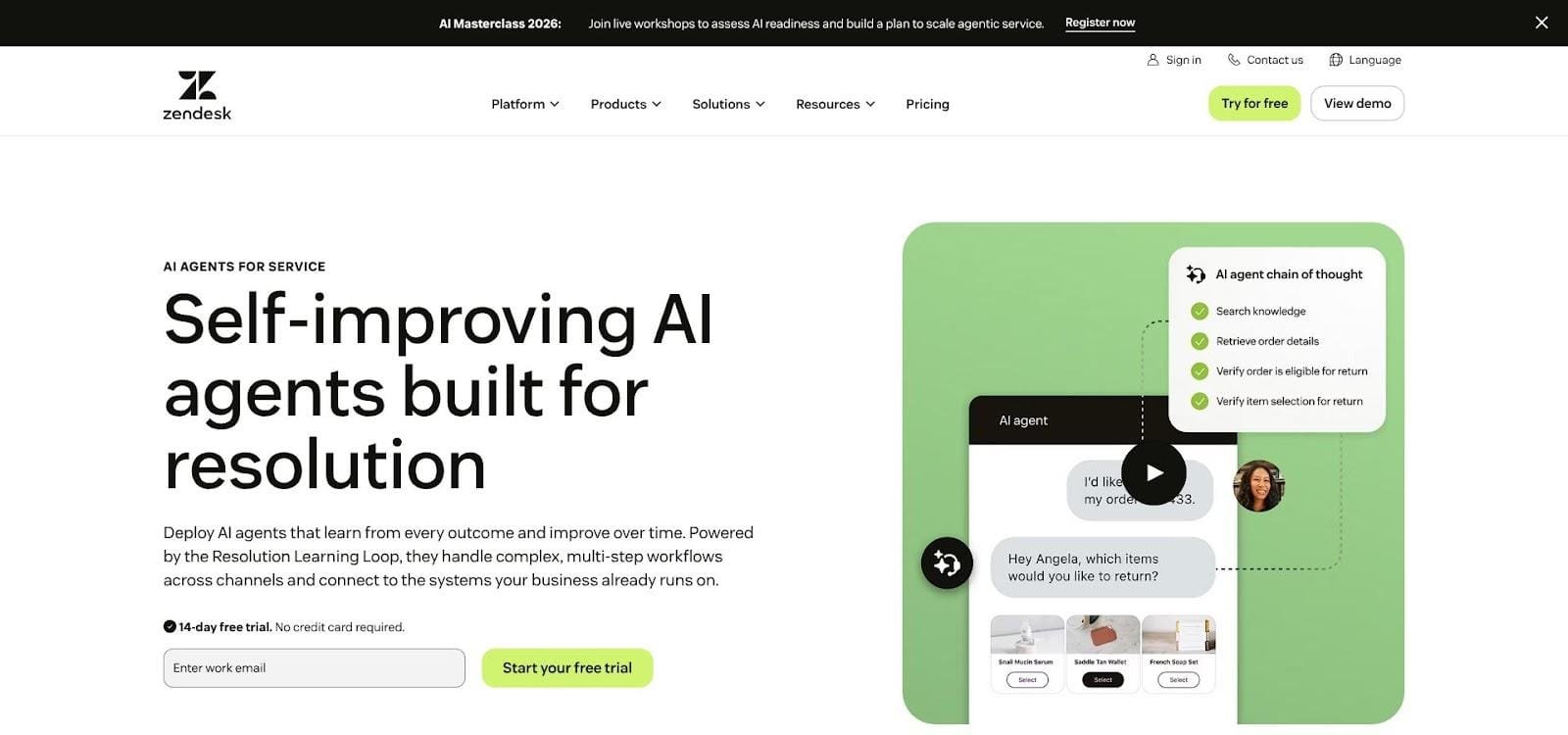
Zendesk AI agents dashboard with automated quality control and insights
Large enterprises praise the stability. Multi-brand routing, high concurrency, and global data centers keep response times steady even during seasonal peaks. Native channels include live chat, email, messaging, and voice, meeting customers on their terms.
If your organization already relies on Zendesk and wants extra headroom without changing platforms, these AI agents are the fastest route.
4. Freshdesk Freddy AI Agent Studio – no-code automation that thinks beyond tickets
Freddy started as an assist bot for Freshdesk, but the 2026 Agent Studio update made it fully autonomous. You build flows in plain English, connect Shopify, Stripe, or FedEx with a click, and Freddy retrieves order details or issues refunds without losing context.
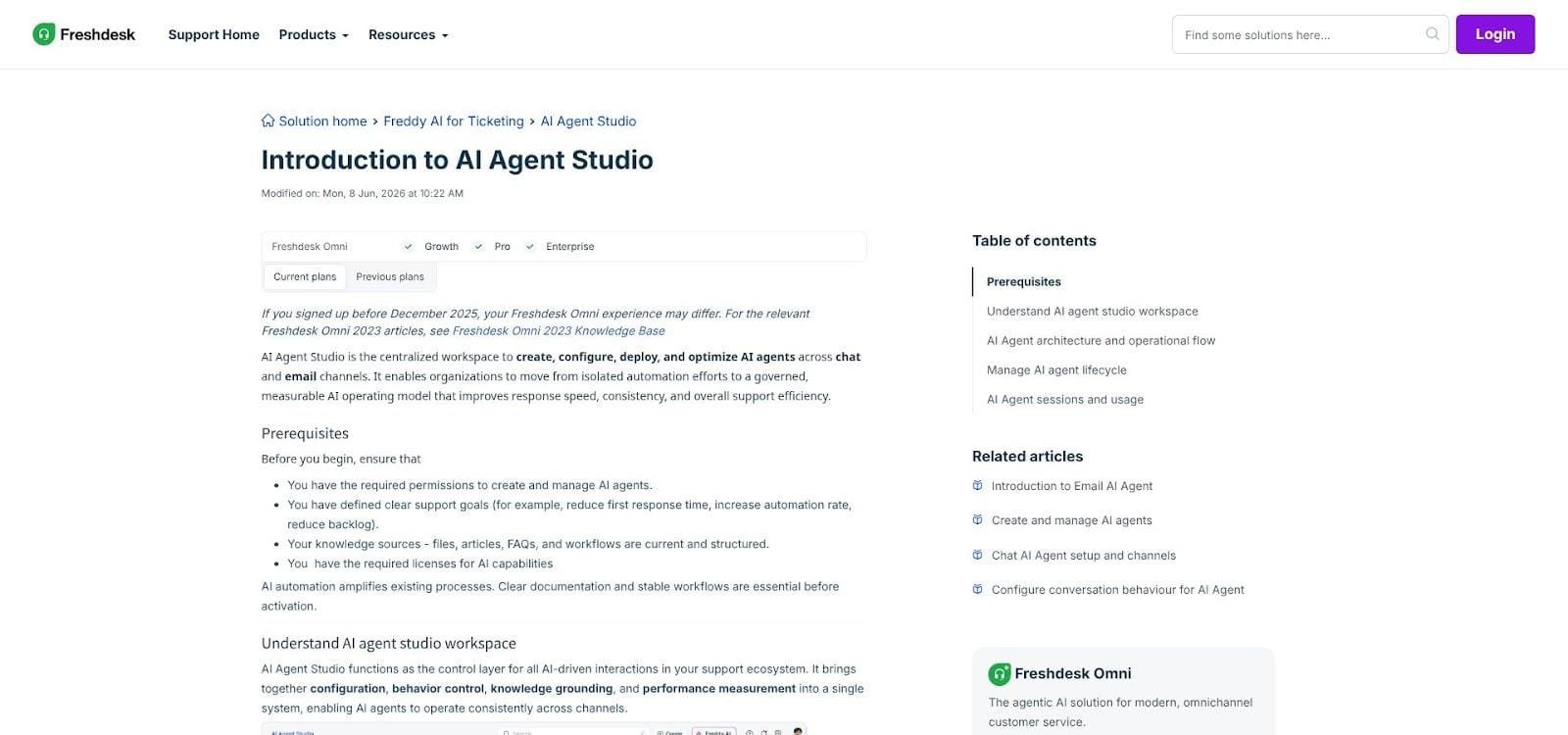
Freshdesk Freddy AI Agent Studio no-code automation builder
That end-to-end action matters because support is judged on outcomes, not only answers. By letting the AI act instead of just respond, teams clear backlogs that once required tier-two agents. A built-in confidence meter sends edge cases to humans, so quality stays intact.
Freddy’s draw is speed to value. Small teams go live in days, while enterprises stack complex workflows over time. If you want hands-on control without a data-science crew, Agent Studio turns Freshdesk into a lightweight, powerful automation hub.
5. Ada – multilingual support with revenue hooks
Ada treats support like a growth funnel: automate the top, personalize the middle, and escalate the rest. Its conversational AI manages chat in more than 60 languages and voice in over 40, detecting intent in milliseconds and switching languages mid-stream when customers do.
Quality stays steady through content governance. Each answer lives as a reusable block with approvals and version history, keeping brand voice consistent as your knowledge base grows. A QA module scores every conversation, flags low-confidence spots, and recommends fixes before customers feel a gap.
Ada also helps revenue teams. From chat you can trigger Shopify refunds, add Marketo tags, or update Salesforce records, turning support from a cost center into a cross-sell ally.
For brands expanding into new regions or managing several storefronts, Ada scales without a language barrier and brings the analytics to prove the lift.
6. PolyAI – voice-first mastery for call-center scale
Most AI platforms start in chat and tiptoe into voice. PolyAI flips that script. It trains conversational IVR agents that speak naturally, handle accents, and keep latency near human reaction time. For high-volume phone queues in utilities, airlines, and telcos, that shift cuts hold times without forcing callers through keypad menus.
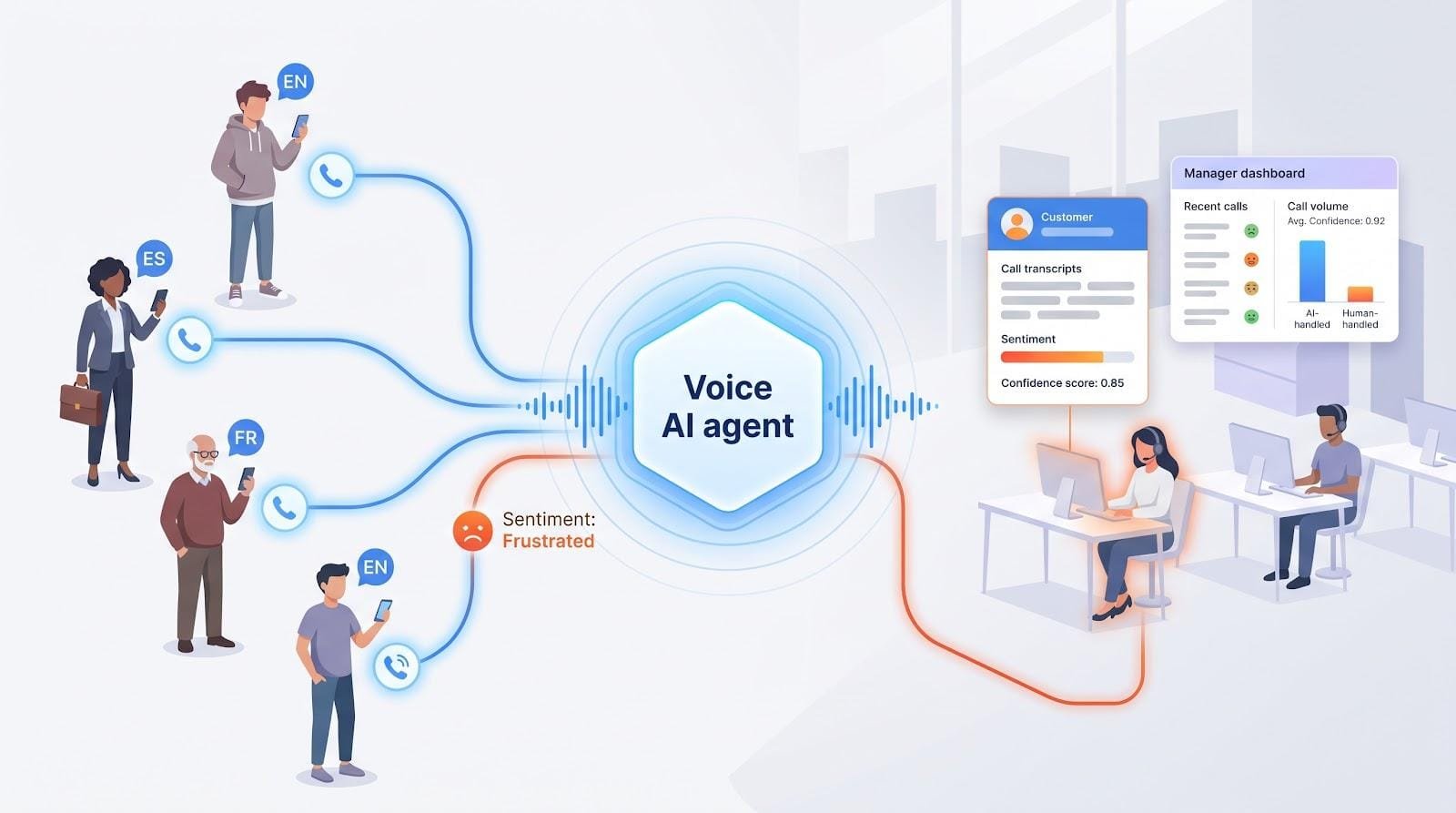
Quality control happens mid-call. Real-time sentiment models detect frustration and route customers to a person before the experience sours. After each interaction, managers review transcripts with confidence scores, making it easy to coach agents or tweak prompts.
PolyAI’s strength lies in multilingual speech recognition built in-house. One model can serve English, Spanish, and French callers in a single deployment, giving global brands consistent service without juggling separate setups.
If your largest backlog still rings instead of pings, PolyAI turns voice from bottleneck to competitive edge.
7. Ultimate.ai – coach-grade QA baked into every conversation
Ultimate.ai started in European contact centers, and that background still shapes the product. The bot speaks 109 languages, but its real edge is how rigorously it measures every interaction.
Each chat earns a quality score for resolution, sentiment, and policy alignment. Low-scoring snippets land in a coaching inbox where supervisors add feedback and feed the data back into training. Over time the system learns not only what to answer but how your best agents phrase it.
An API-first design lets Ultimate connect to any stack: Salesforce today, a custom logistics tool tomorrow. That versatility appeals to global BPOs juggling multiple client brands and seasonal surges.
If your priority is “scale fast while lifting quality,” Ultimate provides the dashboard and discipline to show gains week after week.
8. Kustomer IQ – CRM context turns answers into relationships
Most chatbots respond to the words they read. Kustomer IQ responds to the customer behind those words. Sitting on Kustomer’s timeline-style CRM, the AI checks every past interaction, order, and tag before it answers. A refund request becomes more than a policy lookup; the reply reflects lifetime value and open opportunities.
Deflection is solid, but personalization is the bigger story. The bot greets a VIP by name, softens tone for a first-time buyer, or surfaces tracking data without moving the customer to another team. If escalation is needed, the full history travels with the ticket, so no one repeats details.
For brands aiming for white-glove service at scale, Kustomer IQ shows that automation and empathy can work side by side.
9. Salient Agents – enterprise-grade automation for consumer lending
Consumer lending still relies on dated, manual workflows, and that slows service. Salient Agents closes the gap with an AI-first automation platform built for lenders. It manages borrower interactions over voice, text, email, and chat, streamlining tasks like payment collection, payoff processing, and insurance updates.
Compliance stays front and center. Salient’s agents follow federal and state rules, with automated policy tests and detailed interaction logs. The platform also monitors human agents, flagging potential issues so every conversation stays exam-safe.
Early adopters see real savings. Fintech firm Yendo uses Salient for collection calls and phone payments, noting costs about 90 percent lower than a human-only approach, with stronger results.
If high-volume, regulation-heavy phone queues are stalling your operation, Salient offers a purpose-built path that keeps conversations natural and auditors satisfied.
10. Tidio Lyro – affordable AI that levels the SMB playing field
Many small shops assume AI is a luxury for venture-backed rivals. Lyro proves otherwise. Start on Tidio’s free tier, train the bot by pointing it at your FAQ page and a few sample chats, and within an afternoon it answers common questions, books appointments, and syncs basic customer data to Shopify or WordPress.
Quality remains central. A confidence slider lets you decide when to pass chats to humans, while a sentiment widget flags conversations that need fast review. Translation spans more than forty languages—enough for most cross-border storefronts.
Pricing stays predictable: you pay per resolved conversation, not per seat, so higher volume won’t punish lean teams. For budget-conscious businesses seeking automation without big-brand costs, Lyro offers a practical starting point.
Conclusion
Every platform here clears the five pillars, so the winner is the one that matches your roadmap. Pick Intercom Fin or Zendesk if you’re deepening an existing stack, PolyAI or Ada for voice and multilingual reach, and Tidio Lyro on an SMB budget. But for quality-first scale under strict compliance, Comm100 still sets the bar.