
Whether you’re moving across the country or relocating a new hire, the price of shipping a car comes down to a few variables you can predict and partly control.
This guide brings together recently published quote data, explains per-mile pricing and covers what employers should know when relocating an employee’s car.
Key insights
- Distance sets the base price, but the per-mile rate falls on longer trips. In quotes gathered in August 2026, a 600-mile open-carrier trip averaged USD 1.58 a mile, while a 2,800-mile trip averaged USD 0.56.
- Enclosed transport costs about 40% to 60% more than open transport. Two independent sets of quotes both fall in that range.
- Bigger and non-running vehicles cost more. A pickup truck cost about 38% more than a standard car on the same 500-mile route, and an inoperable vehicle adds roughly USD 100 to USD 300.
- Driving is rarely the bargain it looks like. At the IRS business mileage rate for the second half of 2026, a 2,800-mile drive works out to USD 2,128 before hotels or meals. The average open-carrier quote for that distance was USD 1,579.
- Check every shipper in FMCSA’s Motus system. The older Licensing and Insurance database has shown only historical records since May 14, 2026.
Average cost to ship a car
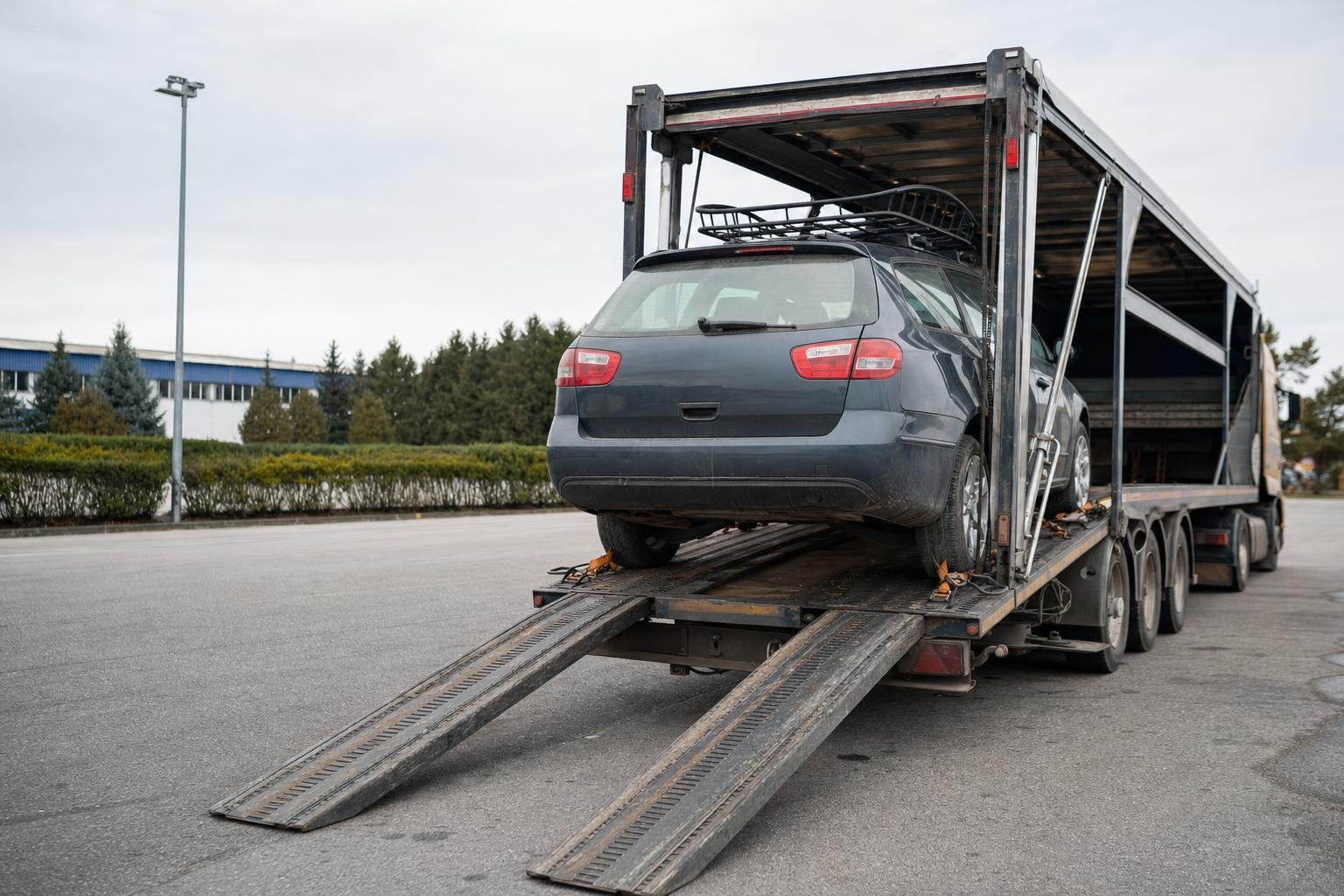
The fastest way to set a budget is to look at real quotes for comparable trips. Two recent editorial quote studies point the same way.
Cost to ship a sedan on an open carrier, by distance
Forbes Advisor collected quotes in August 2026 for a 2021 Hyundai Sonata shipped from Brooklyn, New York, on open carriers.
| Route | Distance | Average quote | Quote range | Cost per mile |
|---|---|---|---|---|
| Brooklyn, NY to Charlotte, NC | About 600 miles | USD 946 | Not published | USD 1.58 |
| Brooklyn, NY to Kansas City, MO | About 1,200 miles | USD 1,331 | USD 1,219 to USD 1,529 | USD 1.11 |
| Brooklyn, NY to Los Angeles, CA | About 2,800 miles | USD 1,579 | USD 1,392 to USD 1,735 | USD 0.56 |
Source: Forbes Advisor car shipping cost guide (updated Oct. 30, 2026). Cost per mile is the average quote divided by the distance.
Open vs. enclosed costs on four routes
Move.org published quotes, current as of October 2026, for a running 2025 Toyota Camry booked one week ahead.
| Route | Distance | Open carrier | Open cost per mile | Enclosed carrier | Enclosed premium |
|---|---|---|---|---|---|
| San Diego, CA to Boston, MA | 3,038 miles | USD 1,403 | USD 0.46 | USD 1,992 | 42% |
| Portland, OR to Denver, CO | 1,241 miles | USD 976 | USD 0.79 | USD 1,510 | 55% |
| Dodge City, KS to Roswell, NM | 435 miles | USD 873 | USD 2.01 | USD 1,253 | 44% |
| Greensboro, NC to Charlotte, NC | 94 miles | USD 404 | USD 4.30 | USD 612 | 51% |
Source: Move.org vehicle transport cost guide (last modified Nov. 4, 2026). Per-mile rates and premiums are calculated from the published quotes.
Taken together, a standard car on an open carrier costs about USD 400 to USD 500 for a trip of around 100 miles and roughly USD 1,400 to USD 1,750 coast to coast.
How to calculate the cost per mile to ship a car
Divide the total quote by the driving distance between pickup and delivery. A USD 1,331 quote for a 1,200-mile trip works out to about USD 1.11 a mile.
Use per-mile rates to compare quotes, not to predict them. Fixed costs such as broker fees and loading time make short trips pricier per mile. Benchmarks for an open carrier, based on the quotes above:
- Under 100 miles: more than USD 2 a mile, and USD 4.30 on Move.org’s 94-mile route
- About 400 to 600 miles: roughly USD 1.60 to USD 2.00 a mile
- About 1,200 miles: roughly USD 0.80 to USD 1.10 a mile
- 2,800 miles or more: roughly USD 0.45 to USD 0.60 a mile
If a quote is well below these ranges, ask what could change the final price before you book.
Factors that affect car shipping costs
Vehicle size
Larger vehicles use more trailer space and weight capacity. On a 500-mile open-carrier trip from Baltimore to Myrtle Beach, Move.org found:
| Vehicle | Running | Inoperable |
|---|---|---|
| 2023 Dodge Challenger (car) | USD 696 | USD 978 |
| 2023 Honda CR-V (SUV) | USD 743 | USD 1,001 |
| 2023 Ford F-150 (pickup) | USD 959 | USD 1,055 |
The pickup cost about 38% more than the car.
Time of year
Demand and rates peak in spring and summer, and snowbird routes get busier in the fall. ConsumerAffairs estimates that shipping in summer can add USD 200 to USD 300 per trip.
Shipping distance
Longer trips cost more in total but less per mile. The route matters too. In the Move.org data, the 435-mile Dodge City to Roswell trip cost USD 873 on an open carrier, only about USD 100 less than the 1,241-mile Portland to Denver trip. Forbes Advisor notes that door-to-door service is priced at a premium in remote areas.
Carrier type (open vs. enclosed)
Open carriers are the standard option and the cheapest, but they expose the car to weather and road debris. Enclosed carriers add protection for classic, luxury or low-clearance vehicles.
Forbes Advisor puts the premium at about 40% to 60% more per mile. Its Brooklyn to Charlotte quotes averaged USD 1,053 for open transport and USD 1,590 for enclosed, a gap of about 51%.
Ask for both prices on the same dates so you can see the real gap for your route. Cross Auto Transport offers both open and enclosed transport nationwide with door-to-door service, which makes that side-by-side comparison simple.
Delivery time frame (rush or standard)
A flexible pickup window lets a dispatcher fit your car onto a truck already heading your way. Expedited service costs more; ConsumerAffairs estimates rush delivery adds USD 200 to USD 500. If a shipper offers a guarantee, ask whether it covers the pickup date, the delivery date or both.
Delivery location
Door-to-door delivery is standard, while terminal-to-terminal service can be cheaper where available. Large car haulers can’t always reach narrow residential streets, so agree on a meeting point the truck can reach, such as a parking lot.
Whether your car runs
A car that can’t be driven onto the trailer needs a winch or extra handling. Move.org estimates this adds roughly USD 100 to USD 300; in its own sample the extra cost ranged from USD 96 to USD 282. Tell the shipper upfront whether the car starts, rolls, steers and brakes, since each affects how it’s loaded.
How the carrier is assigned
Many shipments involve two companies. The FMCSA describes a broker as the middle person between a shipper and a motor carrier: brokers arrange transportation but don’t haul the vehicle or take responsibility for it. The motor carrier operates the truck and moves the car. Carriers choose which loads to accept, so a price set too low for a route can take longer to attract a truck.
What is the cheapest way to ship a car?
The lowest prices come from combining an open carrier, flexible dates, an off-peak season and, where available, terminal-to-terminal service. Booking ahead also helps. Forbes Advisor recommends booking three to four weeks ahead in peak season and about two weeks ahead in slower months.
Car shipping discounts
Shippers commonly advertise discounts for military members, students, seniors, returning customers and multi-car orders. Ask which ones apply, and confirm in writing whether the quoted price is guaranteed and what could change it.
How to ship a car
1. Decide how you want your car delivered
Choose door-to-door delivery for convenience or terminal-to-terminal service to save money. Give every company the same details: pickup and delivery ZIP codes, the vehicle’s year, make and model, any modifications, and your available dates.
2. Determine what type of carrier you need
Open transport suits most everyday vehicles. Choose enclosed transport for a high-value, classic or low-clearance car, and weigh the 40% to 60% premium against the protection.
3. Find out how much it will cost (in writing)
Get each quote in writing, along with the conditions that allow the price to change, the payment schedule, and cancellation and refund terms. Then check the company:
- Role: Ask whether you’re dealing with a broker or a carrier. If it’s a broker, ask for the assigned carrier’s name once one is confirmed.
- Registration: Look up the USDOT or MC number in FMCSA’s Motus registration system. The FMCSA says its older Licensing and Insurance system has held only historical records since May 14, 2026, and doesn’t reflect Motus filings.
- Coverage: Ask for the carrier’s insurance details, its coverage limit and exclusions, any deductible and who pays it, and the deadline for reporting damage.
4. Schedule when your car will be picked up and delivered
Treat the pickup date and the delivery date as separate commitments, because delivery dates are usually estimates. Before pickup, take dated photos of every side of the car, including the roof, wheels and interior. At delivery, compare the car with those photos and check the condition noted on the bill of lading before signing.
If the car belongs to a relocating employee, work backward from their first workday and budget the move like any business trip, counting lost productive time as well as the ticket price, an approach this guide to KPIs that make executive travel more strategic explains.
Is shipping a car worth it?
Over long distances, driving costs more than it looks. The IRS business mileage rate, based on the fixed and variable costs of operating a car, is 76 cents a mile for travel from July 1 through Dec. 31, 2026; check IRS.gov for the 2027 rate.
At that rate, a 2,800-mile drive comes to USD 2,128. Assume about 500 miles a day, add five nights of lodging and six days of meals at the federal FY 2027 standard rates (USD 113 a night and USD 68 a day), and the total reaches about USD 3,100. The average open-carrier quote for that distance was USD 1,579.
Employers can apply the logic used for business travel and count the cost of each productive hour, not just the ticket price, as this guide to KPIs that make executive travel more strategic explains. A new hire who spends a week on the road starts later and puts thousands of miles on the car.
Driving still makes sense for short trips or anyone who needs to bring belongings along. For cross-country moves and employee relocations, shipping often saves money, time and mileage.
FAQ
Does it cost more to ship a car out of state?
Not because of the state line. Distance, route, vehicle size, carrier type and timing set the price, so a long in-state trip can cost more than a short interstate one.
Is employer-paid car shipping taxable for the employee?
Generally, yes. The One Big Beautiful Bill Act made permanent the suspension of the tax exclusion for employer-paid moving expenses, so reimbursements for most employees count as taxable wages reported on Form W-2. Active-duty military members and certain members of the intelligence community are exceptions. Confirm the treatment with payroll or a tax professional.
Can I pack personal items in the car?
Most carriers discourage it, and personal items usually aren’t covered by the carrier’s cargo insurance. If a carrier allows items, get its weight limit and coverage terms in writing.
How do I check whether a car shipping company is legitimate?
Ask for its USDOT or MC number and look it up in FMCSA’s Motus system. Confirm the authority is active and matches the company’s role: broker authority for a broker, carrier authority for a carrier.
How far ahead should I book car shipping?
About three to four weeks ahead in spring and summer and about two weeks ahead in slower months, according to Forbes Advisor.