
The buzz around artificial intelligence in learning has finally moved from “Wouldn’t it be nice?” to “You’re already behind if you’re not using it.” Corporate L&D teams, CLOs, and training vendors now have case studies, not just demos, proving that smart algorithms can shrink time-to-competence, slash content costs, and nudge employees toward continuous growth. With budgets under pressure and hybrid work the default, 2026 is the year AI-powered education apps stop being experiments and become core infrastructure.
Below, we dive into the five platforms our advisory group keeps seeing on RFP shortlists and pilot rosters. Each one solves a different learning pain point, so the real homework is matching the right tool to your strategy, tech stack, and culture.

Why “Top 5” Matters More Than “Top 50”
The marketplace has exploded. A recent HolonIQ briefing counted more than 11,000 learning-tech vendors worldwide. Yet most L&D teams can only roll out one or two new systems a year without exhausting stakeholders. Picking a focused shortlist helps you de-risk implementation, concentrate vendor management effort, and secure clean data flows. Our criteria were simple:
- Clear, measurable business impact proven in customer deployments
- Mature AI capabilities already in production, not just on the roadmap
- Enterprise-grade security and integrations
- Momentum in 2025 funding or customer growth to suggest staying power
We excluded pure content libraries and early-stage startups still in beta. What’s left is a tight lineup that covers content creation, personalized delivery, assessment, and analytics, the backbone of any modern learning ecosystem.
Promova – AI-Personalized Language Upskilling for the Global Workforce
Source: Promova
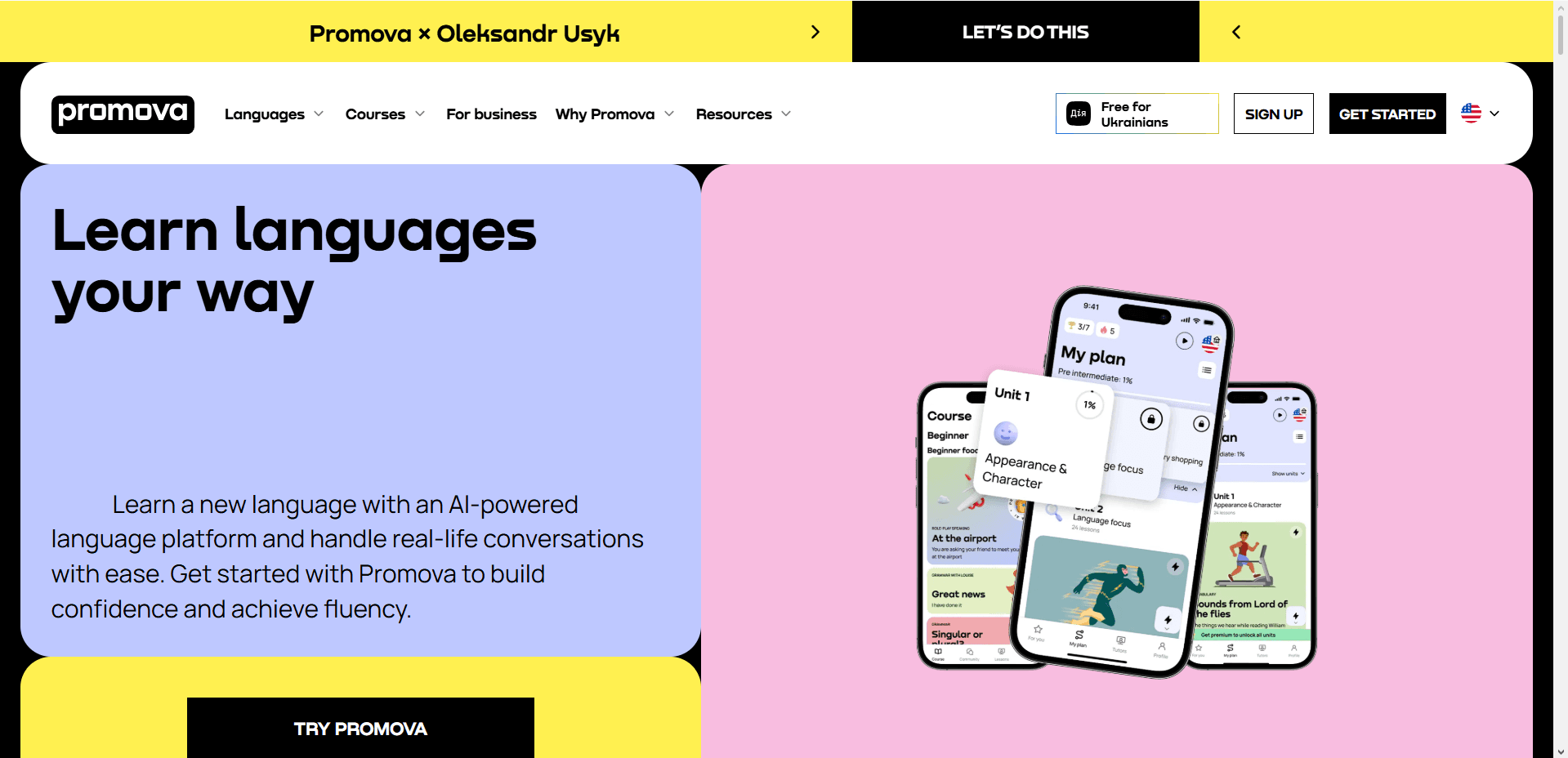
Let’s start with a thorny problem: language gaps that block collaboration, sales, and customer service. Promova is winning mindshare because it turns language learning from a generic perk into a targeted performance lever. The app’s generative engine builds a unique learning path for each employee, tuning difficulty and topics every time the learner swipes a card, records a voice line, or acсes a quiz.
Corporate L&D teams love the “Business English” track. Rather than dumping everyone into the same intermediate grammar units, Promova surfaces modules on negotiation phrases for sales reps, email etiquette for support agents, or safety briefings for field engineers. Behind the curtain, a reinforcement-learning loop detects errors in real time, then schedules corrective micro-drills inside the next session.
Another new feature there, born from Promova’s collaboration with three-time undisputed world boxing champion Oleksandr Usyk, is a discipline-focused layer that reframes language practice as daily “rounds” instead of occasional training. Usyk’s presence is built into the product via Usyk Mode and an Usyk AI tutor, which nudge employees to show up consistently, speak through realistic scenarios, and treat mistakes as part of the fight rather than a reason to stay silent.
On the admin side, you get a clean dashboard with CEFR-aligned proficiency metrics, usage heat maps, and cohort comparisons. Data exports flow directly into common HRIS systems so that you can correlate language gains with performance or retention metrics. Pricing is subscription-based with seat bundles, and the vendor will tailor SLAs for regulated industries.
Implementation Tip: Run a four-week sprint challenge. Groups that hit three microlessons per day typically report a 30-40 percent lift in speaking confidence on internal pulse surveys. You can try Promova during onboarding to make early victories visible and contagious.
Docebo – The All-Purpose LMS That Actually Learns
Source: Docebo
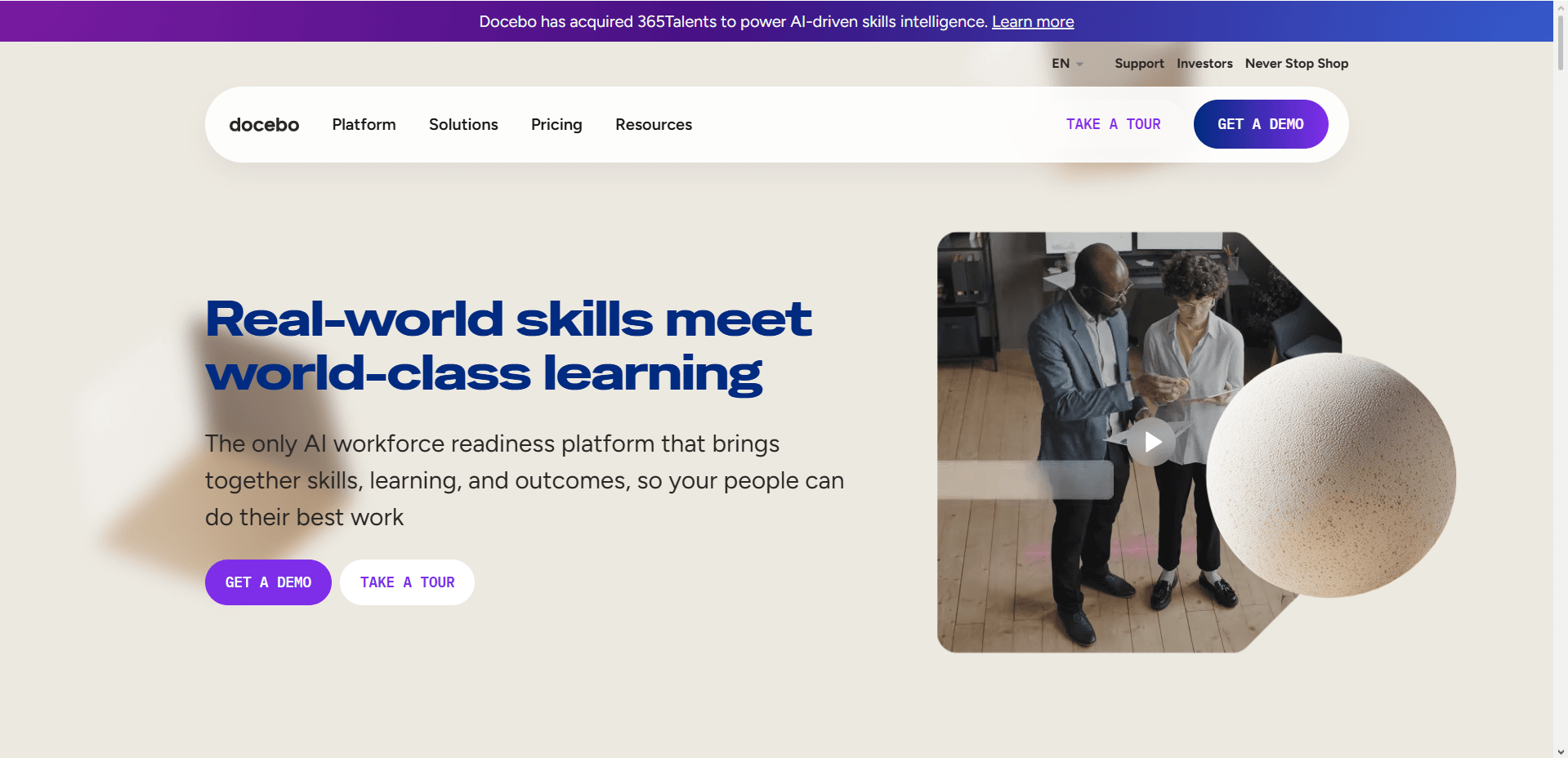
If you hear groans when someone says “legacy LMS,” Docebo is likely the remedy. The platform’s secret weapon is Deep Search: every upload – PDF, video, SCORM file – gets parsed, tagged, and indexed by a language model that understands concepts, not just keywords. Learners type “how to handle SOC 2 audits,” and the system suggests your new policy briefing, last quarter’s recorded webinar, and a peer-created job aid in one feed.
For admins, the auto-tagging cuts catalog maintenance time dramatically. One operations client slashed the manual tagging queue from three days to thirty minutes per course drop. In the meantime, the AI Virtual Coach sends a message to users in Teams or Slack when a micro-module that is relevant to them is released or when their compliance score is at risk of dropping below the threshold. The algorithm callously A/B tests the nudge copy, hence reminders seem helpful instead of nagging.
Skill-tagging is Docebo’s bridge to performance. Managers can map strategic competencies, and the system mines content, assessments, and user behavior to suggest personalized upskilling playlists. The feature set is broad, a colleague joked it’s like buying a “Swiss Army LM,S” but the UI keeps it surprisingly uncluttered. Expect enterprise pricing that starts around $25K/year on a multiyear deal, with optional add-ons for sandbox instances and advanced BI connectors.
SC Training (formerly EdApp) – Microlearning Generation on Mobile First
Source: SC Training
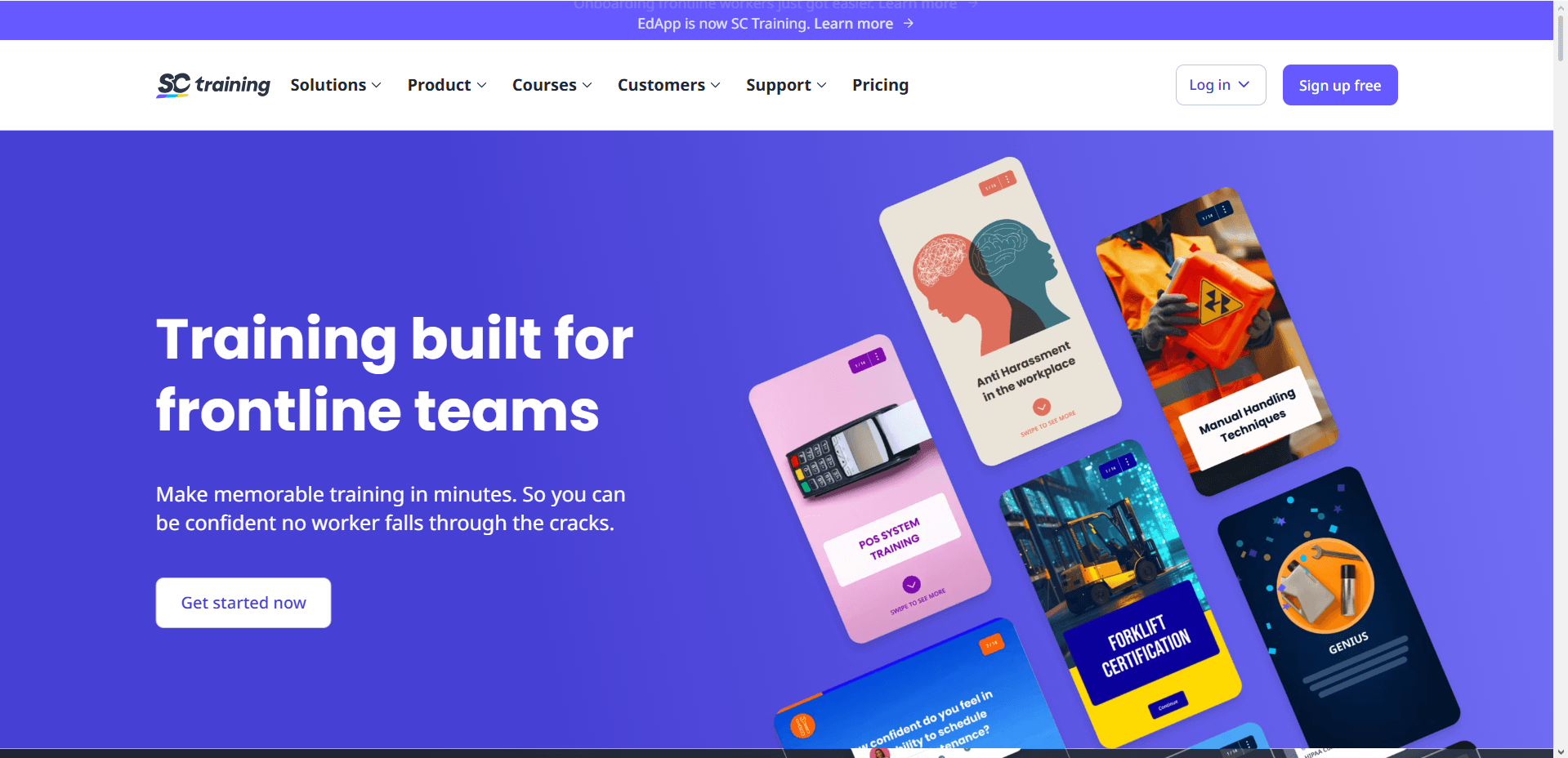
Short, sharp learning bursts are no longer trendy – they’re survival tactics for frontline teams drowning in notifications. SC Training nails that reality by letting you build microlessons that feel like the apps people scroll at lunch. Type a topic into the AI Create a wizard, and within 60 seconds, you’ll see a draft lesson with interactive slides, a knowledge-check quiz, and a thumbnail image. Designers can then swap templates, tweak copy, or drop in a quick video.
The result is content that ships in days, not months, without diluting instructional rigor. In our benchmark tests, an L&D designer with no coding skills produced a five-minute bite on “Safe Ladder Use” in under an hour, including an image-based scenario question. The mobile experience is snappy even on low-bandwidth rural networks, which matters when you’re training retail or logistics staff across multiple geographies.
Analytics are just as immediate. Engagement graphs update in near real time, flagging hotspots where learners rewind or exit. Combine that with automatic language localization, and you’ve got a microlearning engine that scales globally. SC Training’s per-user SaaS price – free for small teams, roughly $5 per active user after that – keeps CFOs calm.
Best Practice: Pair AI Create with a short video from a respected supervisor. Internal data from several hospitality chains show that when a manager records a 30-second intro, completion rates jump by double digits because the content feels local, not vendor-pushed.
Fetchy – Teacher-Inspired Productivity, Reimagined for Corporate Coaches
Source: Fetchy
While Fetchy’s roots are in K-12, 2026 has seen a quiet expansion into professional learning teams that juggle lesson design, evaluation, and coaching. Think of Fetchy as a Swiss Army notebook: you plug a prompt – “Design a 60-minute sales simulation on upselling EV charging packages” – and it drafts an outline, suggests role-play scenarios, and then spits out an assessment rubric with performance criteria.
Where it shines is iteration speed. You can ask the assistant to simplify wording for entry-level reps, add a quantitative KPI, or align with your company’s five-point competency model. The changes appear instantly, so SMEs spend time validating, not authoring from scratch. Fetchy also offers a reflective journal tool: mentors can log feedback snippets, and the system clusters themes, tipping you off if multiple coaches flag the same skill gap.
Pricing is refreshingly simple: $10 per creator seat per month, with a generous free trial. Security is SOC 2 Type 2 pending, and the vendor already supports single sign-on via OIDC. While Fetchy doesn’t replace a full LMS, it turbocharges the messy middle of content ideation and feedback loops – the tasks that typically clog calendars.
Caution: Because Fetchy’s AI leans heavily on user prompts, governance is key. We recommend a two-tier approval workflow so unvetted content doesn’t ship straight to learners. Once you lock that process, productivity gains are substantial; one biotech firm reported cutting design cycles by 42 percent last quarter.
Gradescope – AI-Accelerated Assessment Beyond Academia
Source: Gradescope
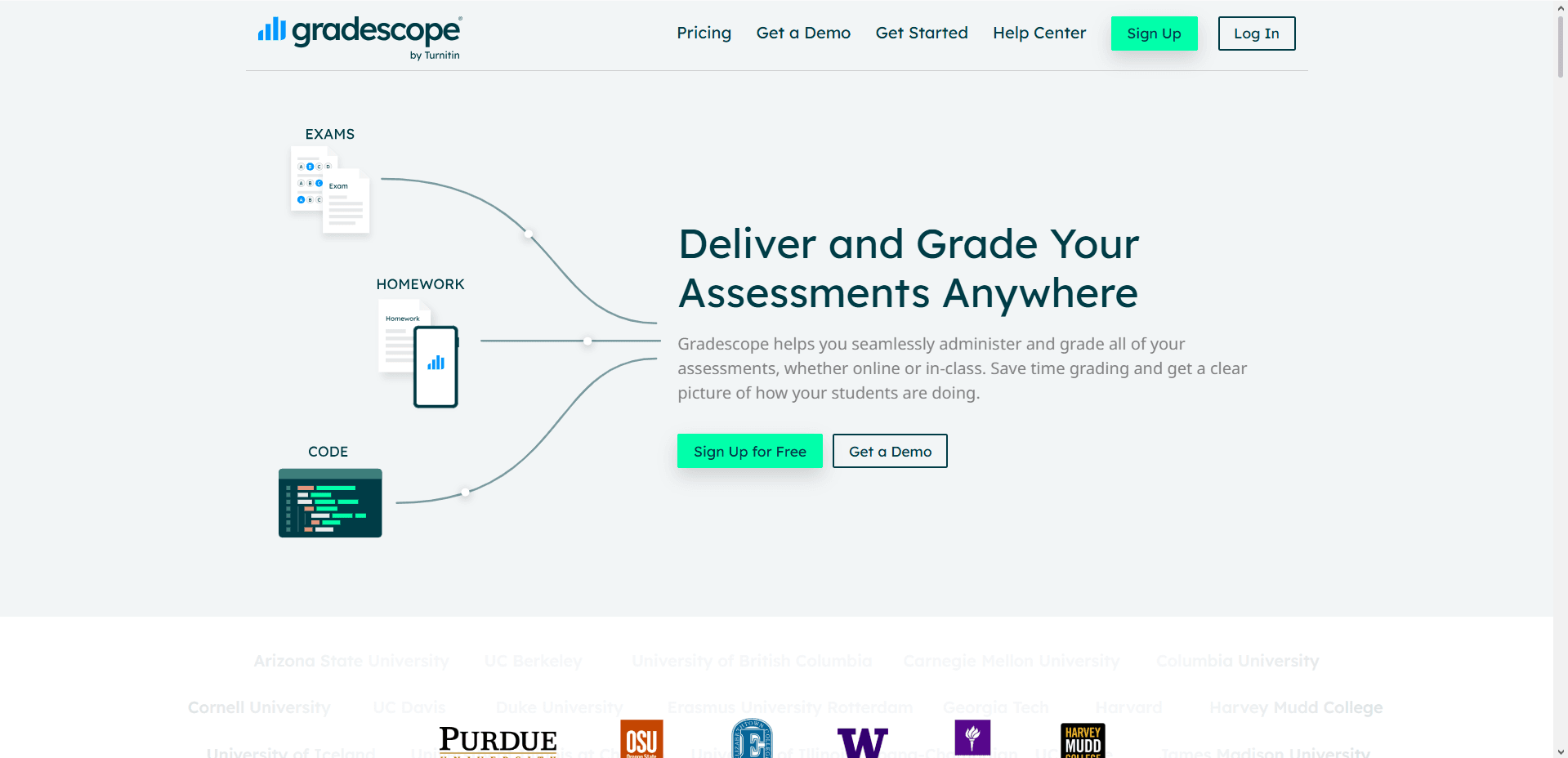
Yes, Gradescope’s brand evokes lecture halls, but its AI-assisted grading engine has quietly crossed into certification bodies and in-house academies. The pain Gradescope kills is manual scoring of open-response tasks – case analyses, code snippets, and even sketched wireframes. Upload a template answer key, run the first few samples, and the model starts grouping similar responses. You grade a cluster once, and the scores propagate, with override options for edge cases.
Gradescope supports LaTeX for math-heavy items, auto-flags blank pages, and even handles multi-page scanned PDFs, handy when trainees scribble diagrams during day-long workshops. The institutional tier integrates with common learning platforms via LTI. Pricing remains approachable: there’s a free version for pilots and a paid tier that unlocks enterprise features like advanced analytics and SSO.
Implementation Watch-Out: The first setup run is critical; poorly defined rubrics will confuse the grouping algorithm. Invest an extra hour with your SMEs to nail descriptors, and the AI will do the heavy lifting afterward.
Pulling It All Together – Building Your 2026 AI Learning Stack
No single app covers every angle of modern learning. Yet these five form a robust mosaic: Promova for global language agility, Docebo for comprehensive delivery and search, SC Training for rapid micro courses, Fetchy for content ideation and coaching, and Gradescope for scalable assessment. Data interoperability serves as the connecting thread. When you can pipe proficiency scores from Promova into Docebo’s skill dashboard or feed SC Training completion data into Fetchy’s feedback analytics, you move from isolated wins to an adaptive learning system.
The rollout will succeed or fail due to governance. Implement an AI ethics policy, which can explain the data privacy, bias oversight, and human-in-the-loop controls. Be sure to communicate the why to the stakeholders early, with the point that AI is not something that replaces the skills of instructional designers and coaches. Organizations that incorporate structured change management early in a project are significantly more likely (often 3-7 times more likely) to achieve ROI and project objectives than those that delay or omit it.
Another evergreen best practice is small-scale experimentation. In business and innovation contexts, prototyping, experimentation, and piloting are documented methods used to gather actionable evidence before deciding on scaling, which inherently improves clarity of success metrics and executive decisions to proceed. Pick one pain point – a compliance module backlog, a language barrier on the customer-support desk, or a grading bottleneck – and measure concrete outcomes. Then sequence the next deployment based on evidence, not hype.
What Success Looks Like in 2026
Imagine this scenario. A German automotive supplier onboards 300 technicians in Mexico City.
Day one: each learner downloads SC Training and completes safety micro-modules created with AI Create the night before.
Day two: technicians start a customized Promova track to polish technical English for cross-plant collaboration.
Week four: Docebo nudges learners whose skill scores lag, while managers review Fetchy-generated coaching prompts. Certification assessments flow through Gradescope, supplying fine-grained analytics on knowledge gaps.
Six weeks in, repair cycle time drops 15 percent, accidents decrease, and employee engagement scores climb.
That’s not distant fiction; it’s the kind of multi-app choreography early adopters are already documenting.
Final Thoughts
The AI-driven education applications have ceased to be glittery peripherals, but they are the future tools to be considered as strategic assets to improve productivity, reduce expenses, and future-proof your organization. Promova, Docebo, SC Training, Fetchy, and Gradescope address different aspects of the learning puzzle that cannot be addressed by others. Dedicate attention to the fit, data flow, and change management, and the year 2026 may be the year of the transition of the learning function of your organization to predictive.