
At first, your brand identity was likely a quick decision.
You picked colors you liked, hired the cheapest designer, and launched fast. And it worked, because early on, speed matters more than precision.
But then you raised prices. Landed bigger clients. Entered new markets.
Now you’re talking strategy instead of survival—except, your brand is whispering the wrong story.
Investors ask, “Are you positioned for enterprise?”
Prospects say, “I thought you were more entry-level.”
Someone compares you to a cheaper competitor, and they’re not wrong based on what they see.
That’s the moment when you want—no, scratch that—need a rebrand.
The thing is, early branding is built for traction, but later branding must signal authority. The logo you picked because it felt cool at 2 a.m. can’t carry a company that now sells six-figure projects.
That’s why directories like DesignRush exist—so founders who’ve grown into leaders can look for partners who can translate growth into perception.
Because when your visuals reflect your past instead of your current direction, they hold back the leadership you’re trying to show.
1. How Leadership Vision Shapes Brand Perception (and What Happens When It Doesn’t)
Underneath every brand people see sits a chain reaction that looks something like this:
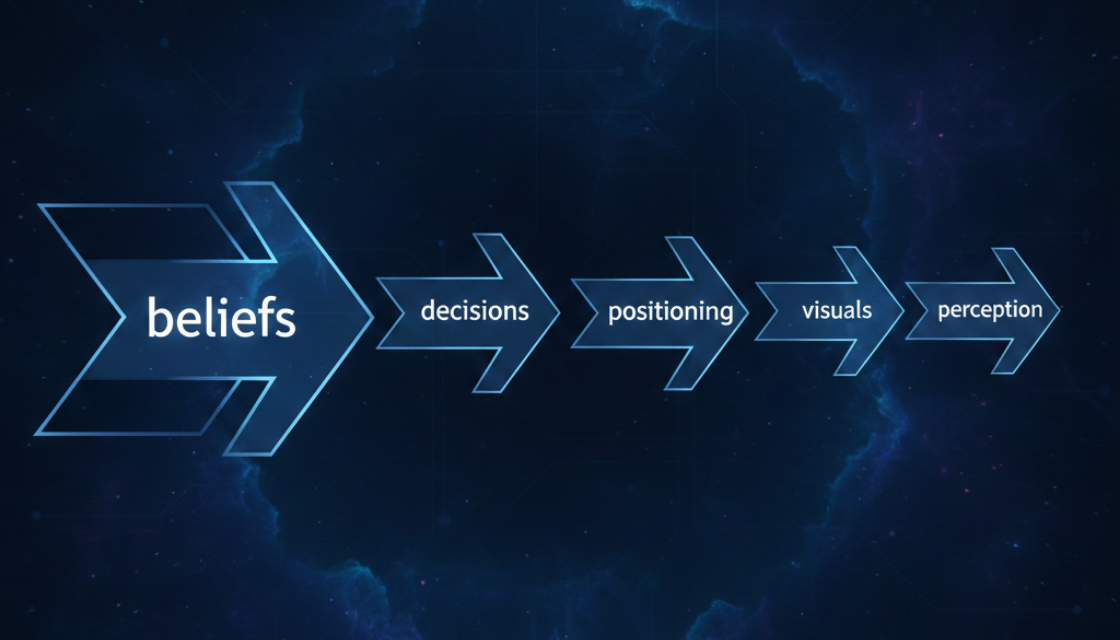
In other words, what you believe about your company shapes the choices you make. Those choices define how you position yourself, positioning dictates what your brand looks and sounds like, and that’s what the market reads.
Break the chain anywhere, and perception breaks with it.
Say you see your firm as a strategic partner. If your website talks only about deliverables, the clients will treat you like a vendor. Or you’ve shifted to premium work, yet your visuals still feel “startup-cheap.” Suddenly price objections appear—not because you charge too much, but because you signal too little.
Misalignment leaks and you notice it when:
- leads ask for discounts before understanding your offer;
- bigger clients hesitate;
- you keep explaining what you actually do.
Most founders assume this is a design problem, but design only translates what strategy decides.
If your perception is off, it’s because the thinking behind it is now outdated, and it’s time for your brand to catch up with the leader you’ve become.
2. How to Build a Brand That Reflects Leadership Vision
To turn leadership vision into a brand that actually works, you need a clear process.
We’ll go through three essential steps that lay the foundation before any designer even touches colors or fonts:
1. Clarify Leadership Intent
Before any design starts, get brutally clear on what your company stands for now.
Ask yourself:
- What kind of clients do we want more of—and fewer of?
- What work do we want to be known for in two years?
- What do we refuse to compete on anymore?
- What do we do differently that actually matters?
Put it in writing, because these answers become direction for your next design.
2. Define Desired Perception
Most founders say they want their brand to feel professional, trustworthy, and innovative. And the fact that everyone says that is the issue, because it signals nothing.
Perception needs context. Not “premium,” but premium compared to whom?
Not “modern,” but modern for which audience?
Specific beats impressive.
Example:
Instead of saying, “We want to look high-end.”
Say, “We want to look like the firms Fortune 500s hire when stakes are high.”
That level of clarity tells a designer what game you’re playing.
3. Translate Strategy Into Visual Language
You don’t need to choose fonts or colors at this stage yet; strong designers handle that. They know how visual cues shape perception.
What does help is knowing your strategic intent:
- Are you positioning as a bold challenger or an established authority?
- Do you want to feel exclusive or accessible?
- Should the brand signal speed, precision, warmth, or dominance?
Those signals guide every creative decision. Color, spacing, typography, imagery—all of it.
3. What Strategic Branding Includes That Most Design Processes Miss
Most design processes start with visuals, but strategic branding starts with questions (and not the “what colors do you like” ones).
Strategic branding partners ask what market you want to dominate and why you haven’t yet. They also have superb:
- Research phase—we’re talking about market position, competitor signals, audience expectations, etc. Because if your brand looks like everyone else in your space, it will be treated like everyone else.
- Positioning work—before a single visual concept appears, someone should define where you stand in the landscape. Are you the specialist? The premium authority? The disruptive alternative? Without that decision, design has no job.
- Messaging alignment—your visuals and your words must tell the same story. If your brand looks elite but your copy sounds casual, trust drops instantly.
- Internal clarity sessions—strong branding teams often run workshops with leadership to extract the thinking that actually drives perception. This step alone prevents months of revisions later.
Directories like DesignRush list top agencies that sell processes like these over logos, so you can quickly tell who’s offering decoration—and who’s offering direction.