
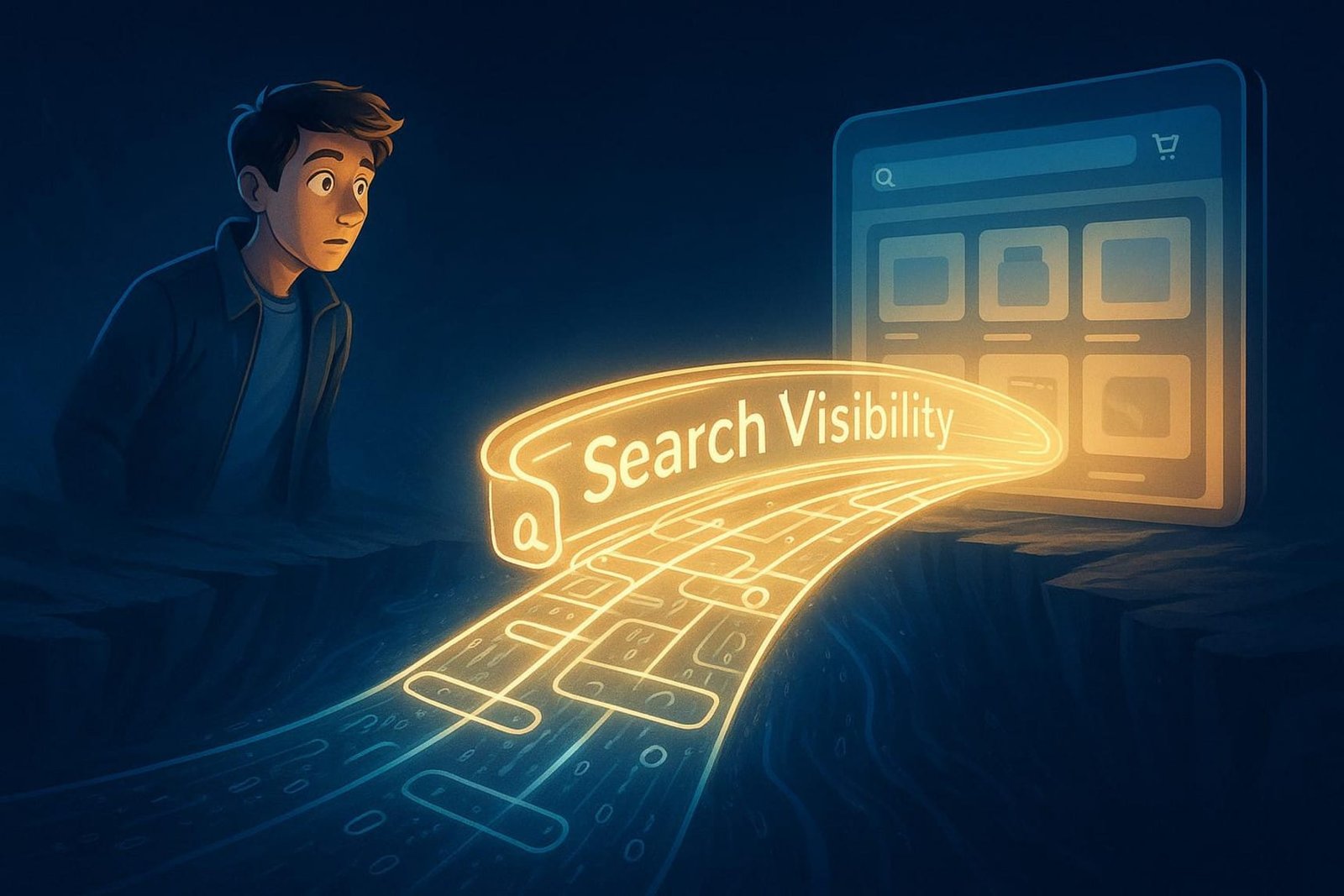
In online retail, having a great product or a good price is no longer enough. The real question for leaders is not whether people are searching for their products, but whether those people can actually find them. Turning search visibility into real business growth takes a joined-up plan that helps your store show up clearly and often across digital channels. It means turning “being online” into a steady driver of sales, repeat customers, and long-term growth.
For many businesses, search engines are still the main bridge between customers and products. If shoppers can’t find your store, even great products and strong pricing may not bring steady sales. As more buying shifts to digital-first habits, search visibility becomes a core part of long-term ecommerce success. Ignoring it is like opening a beautiful store on a quiet back street-if no one can see it, it’s hard to grow. Building strong search visibility-through careful SEO work to improve WooCommerce rankings or smart paid campaigns-is the base for lasting online growth.
Why Search Visibility Is Critical for Online Retail Business Growth
Your online store only performs well if people can discover it. Today, shoppers can compare thousands of stores in seconds. Because of that, visibility is not a bonus-it can decide whether a retailer grows or gets left behind. That’s why search visibility needs to sit at the center of strategic planning for online retail leaders.
How Search Engines Influence Consumer Purchase Decisions
Most people don’t buy online without searching first. Search engines shape the whole buying path, from early research to the final purchase. Many shoppers start with broad questions like “best running shoes for flat feet” or “eco-friendly kitchen gadgets,” then narrow down their choices step by step. Others search straight for a product type, a brand name, or even “same-day delivery” when they need something quickly.
Retailers that show up well across these moments-from early research to ready-to-buy searches-are more likely to attract visitors who intend to purchase. Showing up often also builds familiarity and trust, which helps move people closer to buying.
A 2024 consumer survey found that Google Search is now the top place people start product searches, with almost 37% choosing it. That’s a shift from the year before, when Amazon led. Amazon still remains a strong second, with about one in three shoppers starting there. This makes it clear that visibility on these key platforms is a must. The same survey also showed that nearly half of shoppers only look at the first page of results, and around 19% strongly prefer items listed in the top 5 results. This makes one point clear: showing up is good, but showing up near the top matters much more.
Organic Search vs. Paid Search Impact on Retail Success
Paid ads can bring quick traffic and fast visibility, but organic visibility usually supports stronger long-term results. Paid search is like renting a billboard: it works right away, but the moment you stop paying, your exposure drops. Organic search is more like owning a good location: once you build it, it keeps bringing visitors over time. Strong organic rankings can bring steady traffic, lower reliance on ads, support brand credibility, build customer trust, and help long-term growth.
Strong visibility can keep paying off for months or years when it is supported by regular updates and improvements. It also helps you reach people at different stages of the buying journey without the constant rising costs that often come with paid ads. Many shoppers prefer organic results: 52% say they prefer organic listings, and over 20% only use organic results. Only 6.5% prefer paid results, while 41% say they don’t mind either way. This is a strong reason to invest in solid SEO for long-term retail success.
The Role of Search Visibility in Building Consumer Trust
Many shoppers connect high search visibility with trust. Brands that appear near the top of results again and again often feel more reliable than brands that are hard to find. This can shape buying decisions, especially for first-time shoppers who don’t know the brand yet. In a crowded market, trust matters a lot-and search engines can influence how that trust is built.
Visibility also creates repeat exposure. Even if someone doesn’t buy right away, seeing your brand often in search results helps build recognition and comfort over time. When they are ready to buy, they are more likely to choose a name they’ve seen before. It’s about building a steady, dependable presence long before someone clicks “add to cart.”
Key Challenges Facing Online Retailers in Achieving High Search Visibility
Search visibility matters, but getting it is not simple. Digital retail keeps shifting, and retailers face many obstacles when trying to stand out and reach the right audience.
Rising Competition and Saturation in Ecommerce Search Results
Ecommerce is one of the most competitive areas online. It’s much easier than before to start an online store thanks to simple ecommerce platforms, digital payments, and delivery services. While that is great for new businesses, it also means competition has grown fast. Retailers often compete with many other stores-across their country and internationally-for the same search traffic and the same limited spots on page one. In tough categories, getting onto the first page can strongly affect sales and brand awareness.
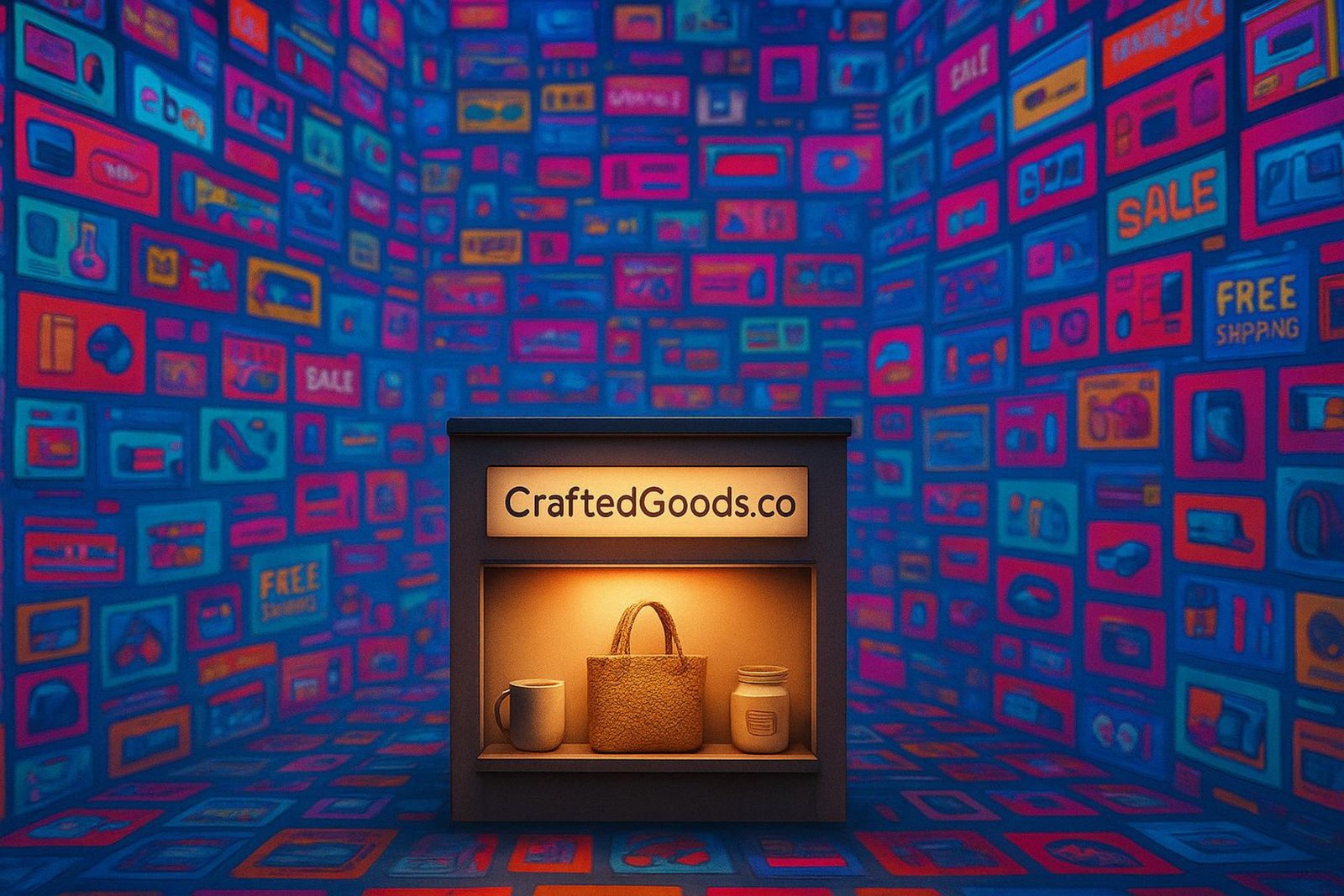
Retailers that don’t invest in search performance can lose ground to competitors that treat SEO as part of their growth plan. It’s not enough just to exist online; you need to compete for attention. Even smaller niche markets can fill up quickly, making it hard for new or small brands to get noticed without steady work to improve search visibility.
Balancing User Experience with Search Engine Optimization
Search engines look at much more than keywords now. User experience (UX) plays a big role in rankings, which creates a real challenge: improve rankings without making the site harder for people to use. Retailers need to focus carefully on areas like:
- Mobile-friendly design so the site works well on any screen
- Fast page speed so shoppers don’t leave and search engines don’t downgrade the site
- Clear navigation and site structure so users and search engines can understand product categories
Content quality also matters, along with complete and accurate product details. Search engines try to rank pages that help users quickly and safely. Retailers that improve usability often see gains beyond SEO, including better engagement and higher conversion rates. The goal is to match the technical needs of SEO with a smooth shopping experience, while also showing clear safety and trust signals.
Common Technical Obstacles Limiting Product Visibility
SEO for online stores can be hard because ecommerce sites are large and complex. Unlike a simple blog, a store has many products, product variations, category pages, filters, and common issues like duplicate content. All of this must be managed well so search engines can index and rank the right pages. Indexing problems-like product pages not being found, or filter pages being indexed when they shouldn’t-can reduce visibility if they aren’t handled properly.
This is why many retailers work with specialists, such as an ecommerce SEO agency, to build strategies that fit ecommerce needs. These strategies often include technical SEO fixes, product page improvements, content planning, keyword targeting, and site structure work to improve rankings and user experience. If these technical issues are not solved, even great products can stay buried in search results.
Strategic Actions Retail Leaders Can Take to Boost Search Visibility
Turning search visibility into business growth takes active work. Retail leaders need clear steps that help products get seen and also help turn that attention into sales.
Optimizing Product Content for Better Discovery
Product content quality and completeness strongly affect visibility. Over 57% of consumers say they leave a product page when descriptions are too thin or when images are missing. That shows a simple truth: if product information is weak, you can lose shoppers before they even think about buying. Retailers should focus on clear descriptions, strong images, and (where helpful) videos that answer common questions.
That said, brand reputation can soften the impact. People may accept less detail if they already trust the brand. A strong return policy can also help shoppers feel safe buying, even if product details are not perfect. So product content work is not just about keywords-it is about trust and confidence. It also helps to keep product data accurate and consistent across platforms so shoppers and search engines don’t get mixed signals.
Leveraging Omnichannel Strategies to Expand Reach
In 2026, ecommerce results depend on how well a brand connects its sales plan, omnichannel marketing, and execution. A strong omnichannel plan gives customers a smooth experience across touchpoints like social media, marketplaces, and your own site. This includes:
- Keeping product data consistent across marketplaces
- Keeping messaging aligned across social, search, and retail platforms
- Offering flexible purchase options like “buy online, pick up in-store”
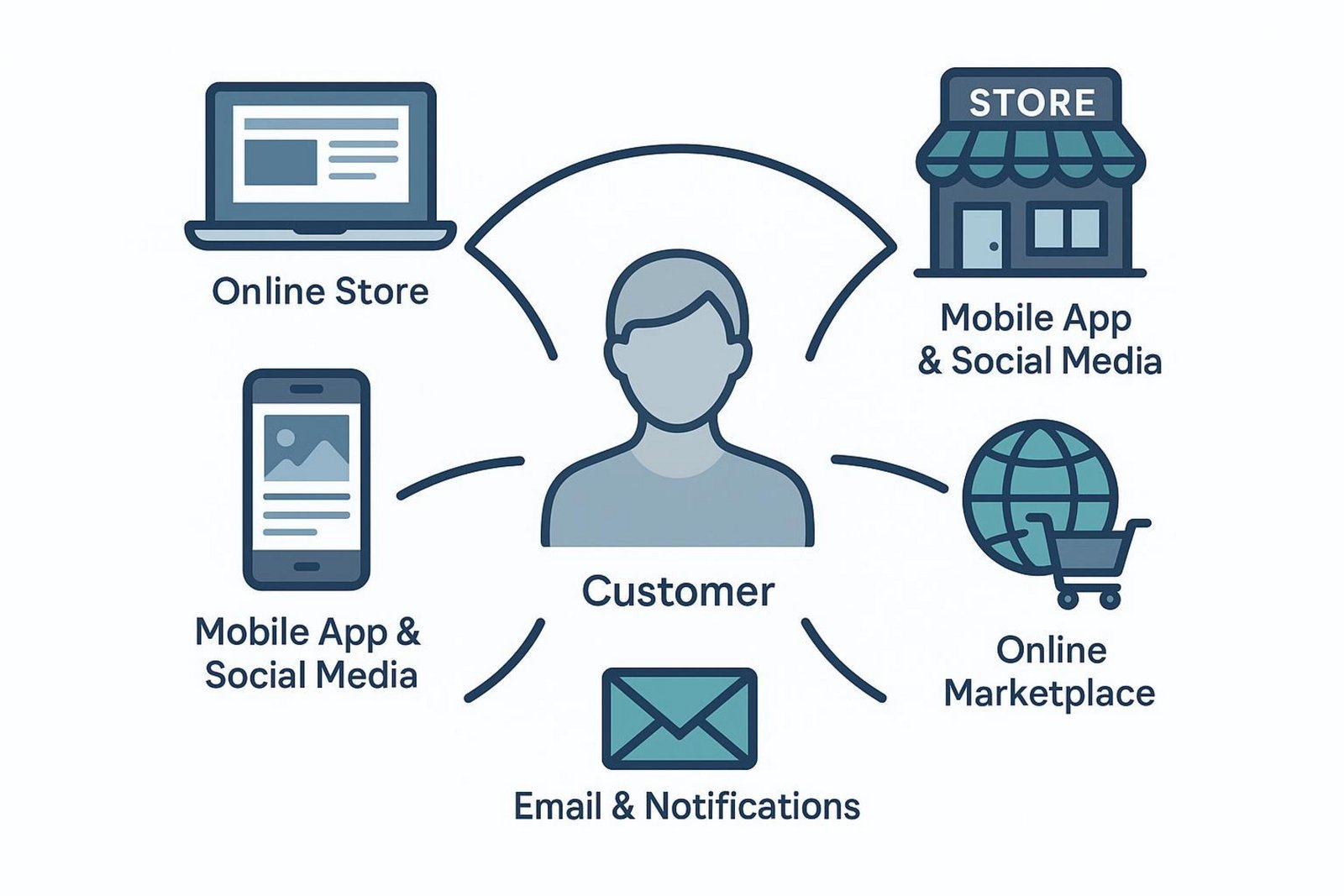
The goal is not just to show up in many places, but to feel consistent everywhere.
This joined-up approach supports customer acquisition, engagement, and revenue. By encouraging shoppers to identify themselves and by collecting customer data across touchpoints, retailers can learn what customers want and use personalization to match those needs. Omnichannel strategy expands reach by meeting people where they already are, and it builds loyalty by making the experience feel connected and personal.
Using Data-Driven Approaches for Continuous SEO Improvement
Technology helps close the gap between plans and real execution. To boost search visibility and keep growing, retail leaders should use data to guide decisions. This means using analytics tools to find insights that lead to action, not just reporting numbers. Automating repeat tasks can cut errors and free up time for higher-value work. It also means tracking KPIs that link to business goals, not just surface-level metrics.
The aim is a system where decisions come from data and improvements happen regularly, so you can keep up with search updates and customer behavior shifts. This also connects to dynamic pricing, which should reflect competitor pricing, demand changes, and where a product sits in its lifecycle. Competitive benchmarking and other data-heavy work becomes much easier with strong technical support that allows faster response.
Innovations in Ecommerce Search: AI, Personalization, and Automation
New technology is changing how products get discovered and bought. AI, personalization, and automation are now practical tools that help retail leaders build lasting growth.
AI-Powered Product Recommendations and Demand Forecasting
AI is changing both store operations and customer experience. AI-based demand forecasting and inventory optimization can improve cash flow, service levels, and reduce the need for deep markdowns. Machine learning models that use sales history, promotions, events, and local factors can produce practical reorder points and safety stock levels. The goal is simple: fewer out-of-stocks, fewer overstocks, and faster inventory movement. That helps customers find what they want when they search, which supports both visibility and conversion.
For forecasting to work well, you need clean data coming in from POS, ecommerce, and supply systems. Feature stores and model registries help keep work repeatable and auditable, so forecasts stay reliable. AI recommendations should feed back into replenishment systems with clear limits, as part of an ongoing improvement cycle. On the customer side, AI also drives product recommendations that improve discovery and lift average order value by suggesting related or upgraded items based on browsing and buying patterns.
Omnichannel Personalization and Cross-Channel Engagement
Active personalization helps build loyalty, especially with new customers. The shopping experience should feel clearly matched to a person’s needs. To deliver strong personalization across touchpoints, brands need shared data and connected marketing across channels like email, SMS, on-site experiences, social media, and more. A cross-channel approach helps retailers collect more complete data, send coordinated messages, and use feedback to improve future campaigns.
This means using customer data to adjust content, understand which channels each person prefers, and choose the right message frequency. Personalized content, predictive search, and context-based offers can make shopping faster and more rewarding, especially in mobile apps. Push notifications linked to live inventory and price changes can bring back high-intent shoppers. Loyalty programs also help by tying rewards to everyday actions, increasing repeat visits and purchases.
Incorporating AR/VR, Mobile, and Automation for Frictionless Experiences
Mobile apps that are truly useful sit closest to the customer. They can raise purchase frequency and basket size through personalized content, predictive search, and context-based offers. They can also connect to store operations, letting customers schedule pickup, ask product questions, or check fitting room availability, which creates a more connected experience. Beyond mobile, virtual try-ons and AR/VR experiences can help shoppers feel confident before buying-especially for apparel, eyewear, home goods, and beauty. These tools reduce uncertainty and can lead to larger orders.
In-store automation and faster checkout options help when labor is limited and routine work needs to be simplified. Computer vision, RFID, and connected scales can reduce manual stock counts, speed up receiving, and help control shrink. Smart carts, shelf sensors, and self-checkout can shorten lines without making customers work harder. The best results come from clean connections with systems like POS, inventory, and security, avoiding fragile custom code, and running pilots in different store settings to test performance under pressure.
How Enhanced Search Visibility Drives Tangible Business Growth
The point of all this work is measurable growth. Better search visibility is not only about getting attention-it is about turning that attention into stronger business results.
Increasing Site Visits and Conversion Rates
The clearest benefit of better visibility is more site visits. When retailers show up high in results for the right searches, more potential customers click through. But traffic alone is not enough — the intent of that traffic matters. Retailers that appear across different stages of search are more likely to bring in shoppers who are ready to buy. Once those visitors arrive, the focus shifts to conversion.
Work done on UX — mobile-friendly pages, speed, clear structure, and strong product details — supports both rankings and conversions. Search engines rank sites higher when they provide useful, fast, and trustworthy experiences. That means improving visibility often improves the shopping experience too, leading to better engagement and more sales per visitor — this is exactly the kind of outcome that e-commerce SEO agencies like NON.agency are built around.
Improving Customer Retention Through Search Personalization
Search visibility often focuses on getting new customers, but it can also support retention when paired with personalization. When customers return to search for related products or revisit your brand, a consistent and personal experience builds loyalty. With shared customer data across channels, retailers can adjust search results, recommendations, and offers based on past actions. This makes shopping feel more personal and helps customers feel connected to the brand.
Omnichannel personalization also supports consistent pricing, availability, and offers across channels, so shoppers can move between mobile, desktop, and in-store without confusion. A shared cart, wish list, and identity profile lets someone start on one device and finish on another smoothly. This kind of consistent experience-often supported by search-can raise satisfaction and repeat purchases.
Aligning Retail Media and Product Readiness to Maximize Returns
Retail media networks can drive visibility and sales by letting brands advertise inside marketplaces where shoppers already want to buy. But the results depend on product readiness. Before increasing ad spend, brands need accurate product details, competitive pricing, and enough stock. Running a big campaign that sends people to a weak product page-or to an out-of-stock item-wastes money and frustrates customers.
If retail media and product readiness are not aligned, ad spend becomes less efficient and opportunities are lost. Strong brands connect systems and data across platforms, linking content, pricing, and availability. This coordinated execution helps each advertising dollar lead to better visibility and a higher chance of conversion, supporting steady business growth.
Choosing the Right Strategies and Tools for Sustainable Retail Growth
Online retail changes fast, so leaders need to choose where to spend time and money with care. The right strategies and tools should deliver quick wins while also supporting long-term growth.
Which Search Visibility Initiatives Offer the Highest ROI?
To find the best ROI, retail leaders should link each initiative to clear business outcomes. Results come from picking work that delivers value quickly, uses reliable data, and connects cleanly to existing systems. Prioritize projects that move KPIs like gross margin, conversion rate, or inventory turns-not projects that simply sound good. For example, improving page speed and mobile performance often brings quick gains in rankings and customer satisfaction, which can lift conversion.
A focused sales strategy-such as putting more effort into top-performing categories and matching product choices to marketplace strengths-can lift conversion while cutting unnecessary complexity. Improving product content so it is complete, accurate, and persuasive solves a common problem for both shoppers and search engines. By mapping the customer journey and removing friction points that can be fixed quickly, retailers can build steady small wins that keep funding secure and leadership focused on what matters most.
Factors to Consider When Selecting Ecommerce SEO and Marketing Technologies
Many retailers carry heavy technical debt across commerce platforms, POS, ERP, and marketing tools. When selecting new ecommerce SEO and marketing technology, leaders should prioritize tools that connect cleanly without relying on custom code that breaks during upgrades. A modern stack with clear governance supports clean data, faster releases, and fewer problems in production, which can lead to better forecasts, tighter inventory, and smoother customer experiences that improve profit.
Data quality issues are also common, blocking accurate reporting and forcing teams to spend hours cleaning data. The hidden cost is time not spent improving promotions or checkout. Any new tool should support better data flow and cleaner pipelines. Also, retailers often buy many tools but use only a small part of them. Selection should focus on tools that fit real workflows, with clear ownership and training that fits weekly routines, so budget is not burned on isolated projects that never scale.
Measuring Success and Iterating for Long-Term Competitiveness
Sustainable growth is ongoing work, not a one-time project. Measuring success needs a clear setup: a baseline, control groups for comparison, and weekly reviews that guide the next update. For example, with AI demand forecasting, leaders keep checking models for bias and drift and keep feeding results into replenishment systems with clear limits. This steady loop keeps strategies effective as conditions change.
Pilots for new work should have clear boundaries, success targets, and a plan to scale without needing to rebuild everything. This disciplined approach-combined with choosing initiatives based on KPIs, data readiness, and operational timing-speeds up time to value. A steady stream of small, measurable wins helps keep funding and leadership attention, showing ongoing progress. By measuring, learning, and adjusting, online retail leaders can keep a pipeline of improvements that deliver value faster with less risk, supporting long-term competitiveness.
Common Questions About Turning Search Visibility Into Business Growth
Search visibility and business growth often bring up practical questions for online retail leaders. Clear answers help set priorities and avoid common mistakes.
What Is the Best Starting Point for Improving Search Visibility?
A strong starting point is a two-part approach: fix core SEO basics and start identifying visitors. Start with your site’s technical health and user experience. Make sure the site is mobile-friendly, fast, easy to navigate, and filled with strong product content. Search engines can push down sites that create a poor experience, even if the keywords are fine. Fixing issues like duplicate content or indexing problems matters so products can be discovered at all.
Next, focus on understanding who visits your site. Up to 98% of visitors may stay anonymous, so retailers need a smart plan for capturing information. Go beyond a basic email box on the homepage. Use helpful, low-disruption, good-looking pop-ups that offer real value, like recommendations or discounts, to encourage sign-ups. When you can recognize returning shoppers and build subscriber lists, you create more chances for personalized follow-up and future purchases.
How Should Retailers Prioritize Search Versus Other Marketing Channels?
Instead of treating search as a separate channel that competes with others, retailers should use a connected omnichannel plan where search plays a central role. In 2026, results come from connected execution, not isolated tactics. Search engines are still a main gateway between customers and products, so search visibility supports long-term ecommerce performance. But it works best when linked with other channels.
For example, organic rankings can bring steady traffic and reduce reliance on paid ads, while omnichannel marketing keeps product data and messaging consistent across social, email, SMS, and marketplaces. A connected approach also helps collect data across touchpoints, send coordinated messages, and use feedback to improve campaigns. The goal is not to choose one channel, but to create a consistent experience across them all, with search supporting first discovery and later re-engagement.
What Are the Main Risks to Avoid in Search-Driven Retail Strategies?
Several risks can weaken search-led growth plans. A major one is teams working in silos. For example, marketing may drive more traffic with ads while operations separately manage limited stock. Without coordination, demand rises for items that are not available, leading to wasted spend and lost sales. Another risk is inconsistent product data across platforms; mismatched titles, descriptions, or images can hurt discovery and reduce trust.
Slow reactions to market changes-like competitor price moves or new promotions-can also lead to lost visibility and sales. Retail moves fast, and brands that depend on slow manual steps often fall behind. Another common problem is buying expensive tools and then not using them fully. If key features are ignored and insights don’t lead to action, the business gets more complexity without better results. Avoiding these risks requires connected execution: shared data, aligned teams, and coordinated content, pricing, and availability so decisions can be made faster and with better information.
Key Takeaways for Online Retail Leaders on Search Visibility and Growth
As online retail keeps changing quickly, moving from “being online” to real growth is ongoing work, not a finish line. What we see in today’s market is clear: tools matter, but leadership choices and the ability to adjust quickly are what drive lasting growth. Beyond traffic and conversions, search visibility also supports long-term strengths like reputation, authority, and the ability to handle change.
Innovation keeps moving fast, from smarter AI systems to more immersive AR/VR experiences. Strategies that felt advanced yesterday can become basic expectations quickly. For leaders, that means investing in tools and also investing in the ability to connect them smoothly and improve quickly. Building a culture that uses data for decisions, supports teamwork across departments, and stays close to customer behavior will separate winners from the rest. Future ecommerce success depends on keeping up with search changes while building digital experiences that people actually enjoy-so visibility turns into lasting leadership and customer loyalty.