
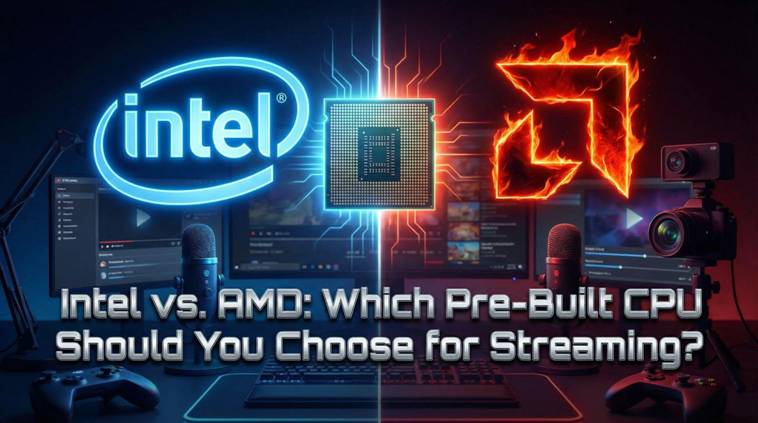
Selecting the right processor for a streaming setup requires evaluating how hardware handles simultaneous gaming and video encoding. Many creators looking for high-performance Intel CPU Gaming PCs prioritize high clock speeds and the inclusion of dedicated media engines for background tasks. Hyper Cyber offers pre-built systems that eliminate the guesswork of component compatibility, providing a ready-to-use solution for professional broadcasting. Choosing between the two major chipmakers involves understanding how their architectures manage the heavy multitasking demands of live content creation.
Intel Core processors and the QuickSync advantage
Intel utilizes a hybrid architecture that separates tasks between performance cores and efficiency cores. This design utilizes Intel Thread Director to intelligently distribute workloads: demanding games stay on performance cores, while background apps like Discord or Chrome run on efficiency cores to prevent stuttering. This separation prevents minor background tasks from causing stuttering during gameplay. Intel chips offer several specific technical benefits for live broadcasters:
- Intel QuickSync Video uses the integrated GPU for encoding, reducing the workload on your primary graphics card during resource-heavy gaming sessions.
- High single-core frequencies: Faster clock speeds on i7 and i9 models translate to higher frame rates in competitive shooters like Valorant or Counter-Strike.
- Thunderbolt 4 support: This connection standard is useful for streamers using external high-bitrate capture cards or professional audio interfaces.
- Broad memory compatibility: Intel platforms maintain stability across a wide range of DDR5 RAM speeds, which is important for heavy multitasking.
These features make Intel a reliable choice for streamers who prefer to offload their encoding to the CPU’s internal components. Using QuickSync often results in a smoother experience for the streamer because the main GPU remains dedicated solely to rendering the game’s visuals.
AMD Ryzen and the power of 3D V-Cache
AMD processors have gained a significant following among streamers due to their thermal efficiency and massive L3 cache sizes. The Ryzen 7 and Ryzen 9 X3D series are specifically designed to minimize latency by keeping more data close to the processor. This architecture maintains stable minimum frame rates (1% lows), ensuring a stutter-free experience for the player and a consistent high-quality output for the audience. Modern Ryzen chips focus on efficiency and high-speed data access:
- 3D V-Cache technology: Large cache reserves reduce the time the CPU spends waiting for data from the RAM, improving 1% low frame rates.
- High thread counts: Ryzen 9 chips offer up to 16 cores and 32 threads, providing enough overhead for high-quality software encoding (x264) without dropping frames.
- Energy efficiency: These chips deliver high performance with lower power consumption, resulting in less heat and quieter fan noise in a pre-built case.
- Platform longevity: The AM5 socket is expected to support several future generations, making it easier to upgrade the CPU later without changing the motherboard.
For streamers who play CPU-intensive titles like simulators or strategy games, the extra cache on AMD chips provides a tangible performance boost. This architectural edge allows the PC to handle the game’s logic and the stream’s data processing simultaneously without significant performance penalties.
Making the final decision for your setup
The choice between these two giants depends on your specific workflow. If you plan to use a single-PC setup and want a backup encoder, Intel’s integrated graphics provide a safety net. If you prioritize raw gaming performance and a cooler system, AMD’s X3D line is the current industry leader for gaming stability.
Hyper Cyber offers carefully curated configurations that cater to both preferences, pairing these CPUs with optimized cooling systems for long-term stability. Before buying, check if your most-played games benefit more from Intel’s high clock speeds or AMD’s massive cache. Both brands provide enough power for a 1080p or 4K stream, provided the rest of the system is balanced correctly.